We may earn a commission when you buy through links on this page, at no extra cost to you. How this works.
This guide is for CPAP users who need reliable backup power during camping trips, home power outages, or travel situations where wall outlets are unavailable or unreliable. If you use a standard full-featured CPAP machine - including models with heated humidifiers - and want a portable solar generator solution that can keep your therapy running for at least one night, this information will help you make an informed choice.
We do not cover travel-sized CPAP machines in this guide, since their lower power demands create different sizing requirements. We also assume you plan to recharge your solar generator between uses or have access to solar panels for daytime charging. If you need uninterrupted, multi-night, off-grid power without any recharge method, you will need a larger battery bank or multiple units, which falls outside the scope of this guide.
The three decision variables that matter most are capacity (measured in watt-hours), compatibility between your CPAP's power input and the generator's output options, and realistic runtime expectations based on your machine's settings. Understanding these factors before you shop will help you avoid underpowered units, compatibility mismatches, and disappointment in the field.
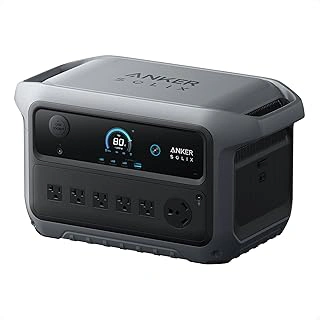
Anker SOLIX C2000 Gen 2 Portable Power Station 2400W (4000W Peak) 2048Wh LiFePO4
The Anker SOLIX C2000 Gen 2 delivers 2048Wh of LiFePO4 battery capacity with a continuous output of 2400W and a surge capability up to 4000W, positioning it for users who need extended runtime or want to power multiple devices alongside a CPAP. With this capacity, a typical CPAP drawing 50 - 60W could run for more than 30 hours on a single charge, though actual runtime depends on your machine's pressure settings, humidifier use, and heated tubing.
The unit supports both AC and DC outputs, which matters if your CPAP includes a DC power option - DC conversion avoids the efficiency loss of running through an inverter. The inverter handles peak surges well, so CPAPs with heated humidifiers that briefly spike at startup should run without tripping the station. Recharge options include wall AC, car DC, and solar input, giving you flexibility during extended outages or off-grid trips.
At 2048Wh and 2400W continuous, this station sits in a higher capacity and power tier than compact models under 300Wh. That makes it less portable for backpacking but suitable for car camping, home backup, or situations where you need multi-day autonomy without daily solar recharge. The LiFePO4 chemistry supports thousands of charge cycles, which extends the usable lifespan compared to older lithium-ion designs.
The display shows real-time input and output wattage, remaining battery percentage, and estimated runtime, helping you monitor consumption and plan recharges. Passthrough charging allows the station to recharge while simultaneously powering your CPAP, useful during partial-sun days or when grid power is intermittent.
Weight and footprint are trade-offs: higher capacity means more bulk, so evaluate your transport and storage constraints before committing. If your CPAP usage is occasional or your power needs modest, a smaller station may be more practical. For users who want margin for accessories, extended trips, or simultaneous loads, the extra watt-hours and inverter headroom justify the size.
- ✅ 2048Wh capacity provides multi-day runtime for typical CPAP machines
- ✅ 2400W continuous and 4000W surge handles heated humidifiers and startup spikes
- ✅ LiFePO4 battery chemistry supports long cycle life
- ✅ AC and DC outputs offer flexibility for efficient CPAP power
- ✅ Passthrough charging allows simultaneous use and recharge
- ⚠️ Higher capacity adds weight and bulk compared to compact portable stations
- ⚠️ Price point may exceed budget for users with minimal backup power needs
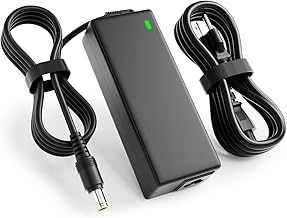
Jackery 24V 90W AC Adapter Charger for Explorer Portable Power Stations
Faster wall charging becomes an option when you add a dedicated AC adapter designed for higher input wattage. The Jackery 24V 90W AC Adapter is built for compatibility with Jackery Explorer series portable power stations, delivering multiple of input power to shorten recharge times compared to many in-box chargers that often top out at multiple or less. If you travel frequently between campsites or need to cycle through wall outlets quickly, this midrange input speed cuts hours off a full recharge cycle without requiring solar panels or car charging.
This adapter is a recharge accessory, not a device that powers your CPAP directly. You plug it into the wall, connect it to your portable power station, and the station stores the energy for later use. Compatibility matters: Jackery Explorer models use specific barrel-plug sizes and voltage tolerances, so verify your station model before ordering. The 90-watt input is faster than basic USB-C or lower-wattage bricks but slower than the high-wattage or higher adapters bundled with larger stations. For users with smaller Explorer units who want a speed boost without upgrading the entire power station, this adapter offers a practical middle ground.
Consider this upgrade if you rely on wall charging between trips and your current adapter feels too slow, or if you need a spare to leave in a second location. If your station already ships with a high-wattage or higher adapter, the benefit shrinks. The 4.5-star rating and low price make it a low-risk way to improve recharge logistics without changing your CPAP setup or power budget.
- ✅ 90-watt input speeds up recharges versus typical in-box adapters
- ✅ Designed for Jackery Explorer series compatibility
- ✅ Affordable spare or upgrade at $17.99
- ⚠️ Requires matching barrel plug and voltage for your specific Explorer model
- ⚠️ Slower than 120-watt adapters bundled with larger stations
- ⚠️ Does not directly power CPAP - charges the station only
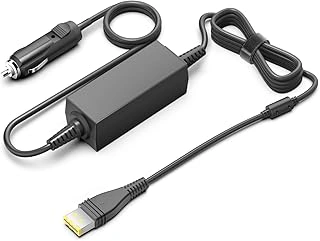
TAIFU 65W 12-24V DC Car Charger for ResMed AirSense 11 CPAP Machines
Using a DC car charger with compatible CPAP machines can extend battery runtime by multiple% compared to running the machine through an AC inverter. The TAIFU 65W 12-24V DC Car Charger connects directly to a power station's 12V DC output port, eliminating the efficiency loss that occurs when DC power is converted to AC and then back to DC inside the CPAP's standard power supply.
This adapter is designed for ResMed AirSense 11 machines and accepts multiple input, making it compatible with most portable power stations that offer a regulated 12V DC car socket or similar output. The 65W rating covers the AirSense 11's operating requirements without humidification; if you plan to use heated humidification, confirm your power station can handle the additional draw, which typically pushes total consumption above 65W.
The direct-DC connection means fewer conversion steps, less heat generation, and more usable watt-hours from your battery. For overnight use on a mid-sized power station, this efficiency gain can translate to an extra hour or more of runtime. The adapter cable is long enough for bedside placement, and the barrel connector fits the AirSense 11's DC input port securely.
Keep in mind this adapter works only with ResMed AirSense 11 models. If you own a different CPAP brand or model, verify both the voltage range and connector type before purchasing. For users who prioritize maximizing battery life during camping, travel, or power outages, a DC adapter is a straightforward upgrade that delivers measurable efficiency improvement.
- ✅ Direct DC connection improves efficiency by 10 - 15% over AC inverter use
- ✅ 65W rating suitable for AirSense 11 without humidification
- ✅ 12 - 24V input works with most portable power stations
- ✅ Extends runtime on mid-sized batteries by an hour or more
- ⚠️ Compatible only with ResMed AirSense 11 machines
- ⚠️ Does not cover full power draw when heated humidification is active
- ⚠️ Requires power station with regulated 12V DC output port
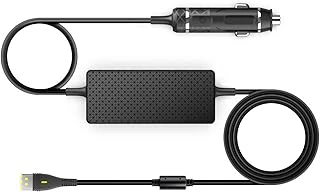
HKY 12-24V DC Car Charger Adapter for ResMed AirSense 11 CPAP Machines
The HKY 12-24V DC Car Charger Adapter offers a direct-current option for ResMed AirSense 11 CPAP machines, working with the same voltage range as many solar generator DC outputs. This adapter allows you to bypass AC inverters entirely, which can improve efficiency and reduce energy draw from your solar generator.
Priced at $33.99 with a 4.7/5 rating, this adapter provides a comparable alternative to other DC power solutions for the same machine series. The 12-24V input range matches the DC output commonly found on portable power stations, making it straightforward to connect your CPAP directly to the DC port.
Before purchasing, verify that the connector type and barrel size match your specific AirSense 11 model, and confirm the polarity is correct. Using DC power instead of AC reduces inverter losses, which can extend your runtime by multiple% compared to using the standard AC power supply - a meaningful difference when battery capacity is limited during travel or power outages.
This adapter is best suited for users who already own or plan to buy a solar generator with 12V DC output and want to maximize battery efficiency. If your solar generator lacks a suitable DC port or if you need to power multiple devices through AC, a standard AC adapter may offer more flexibility.
- ✅ Works with 12-24V DC outputs common on solar generators
- ✅ Bypasses AC inverter to reduce energy loss
- ✅ Compatible with ResMed AirSense 11 series
- ✅ Higher customer rating at 4.7/5
- ⚠️ Requires verification of connector type and polarity for your specific model
- ⚠️ Only useful if your solar generator has a compatible DC output port
Calculate Your Actual Power Requirement
Determining the correct solar generator capacity starts with understanding your CPAP machine's actual power draw, which typically ranges from 30 to 60 watts depending on the model and pressure settings. To calculate your minimum watt-hour requirement, multiply your CPAP's wattage by the number of hours you'll run it each night, then add a 20-30% buffer to account for conversion losses and battery efficiency.
A heated humidifier can double your power consumption, often adding another 30 to 50 watts to your baseline draw. If you use a heated hose or run higher pressure settings, factor these into your calculation as well. For example, a 40-watt CPAP running 8 hours needs 320 watt-hours minimum, but with a humidifier enabled, that requirement jumps to approximately 640 watt-hours.
Most lithium battery generators advertise their total rated capacity, but usable capacity is typically lower due to discharge limits and inverter efficiency. To find the minimum solar generator capacity you need, use this formula: (CPAP watts × runtime hours) ÷ 0.85 efficiency factor. This accounts for the typical 15% loss during DC-to-AC conversion and battery protection circuits. A CPAP drawing 50 watts for 8 hours would require a generator with at least 470 usable watt-hours, meaning you should look for models rated 550 watt-hours or higher to maintain a safe margin.
Check your CPAP's power brick or user manual for the precise wattage specification, and consider whether you'll run the device at maximum pressure or use variable auto-adjusting modes that may reduce average consumption. Calculating conservatively ensures you won't wake up to a drained battery mid-sleep.
DC vs AC Power: Why the Difference Matters
The way your CPAP machine draws power from a solar generator - either through direct DC connection or an AC inverter - has a measurable impact on runtime and efficiency. Most CPAP machines ship with an AC power brick that plugs into a standard wall outlet, but many models also accept a 12V or 24V DC input through an optional car charger or barrel connector. Using DC power eliminates the need for the generator's inverter, reducing energy loss to around 10 - 15 percent. When you route power through the inverter to run the AC adapter, conversion inefficiency climbs to 15 - 25 percent, which shortens the hours you get from the same battery capacity.
DC connections also generate less heat inside the generator, which can improve long-term reliability and reduce fan noise during overnight use. If your CPAP supports DC input and you plan to rely on solar backup regularly, a compatible DC cable is worth adding to your kit. Keep in mind that not all CPAP models offer a DC port, and some manufacturers void the warranty if you use third-party power accessories, so verify compatibility with your specific machine before purchasing.
If you must use AC power - or if your CPAP has no DC option - confirm that the solar generator supplies pure sine wave AC output. Modified sine wave or square wave inverters can cause the CPAP motor to overheat, produce unusual noise, or fail prematurely. Pure sine wave output mimics grid electricity and protects sensitive electronics. Most quality portable power stations now include pure sine wave inverters by default, but budget or older units may not, so check the specification sheet before committing.
The takeaway: prioritize DC power when your machine supports it to maximize runtime and minimize waste heat, and always verify pure sine wave output if AC is your only option.
Understanding Runtime Claims vs Reality
Manufacturer runtime claims for solar generators typically assume minimal load conditions - no humidifier, no heated tube, and moderate ambient temperatures - which rarely reflect real-world CPAP use overnight. A station advertised to power "a CPAP for 20 hours" may be calculated using 30 watts, while your machine with humidifier and pressure settings could draw 50 - 65 watts, cutting that estimate in half.
Cold weather presents another hidden constraint: lithium battery capacity drops by 20 - 40% when temperatures fall below 40°F, meaning a 500 Wh station may deliver only 300 - 350 usable watt-hours on a winter camping trip. To calculate realistic runtime, use this formula: (station capacity in Wh × 0.85 efficiency factor) ÷ your actual CPAP wattage = hours of operation. A 500 Wh generator powering a 50-watt CPAP yields roughly 8.5 hours, not the 12 - 15 hours some charts suggest.
Be cautious of marketing that lists "device charge counts" (e.g., "charges a CPAP 5 times") without disclosing total watt-hours - these figures are often based on topping off a battery, not running the machine through a full 8-hour sleep cycle. Always verify the station's watt-hour capacity and your CPAP's measured consumption before trusting runtime estimates, and build in a 20 - 30% buffer for efficiency losses, temperature swings, and unexpected draws like brief pressure spikes during positional changes.
Solar Panel Pairing and Recharge Time
Solar input specifications determine how quickly you can recharge a generator during the day and whether off-grid CPAP use remains sustainable. Most portable power stations accept solar panels within a specific voltage range - typically 12 - 30V for smaller units and up to 60V or higher for mid-size models - and cap input at a maximum wattage, commonly between 60W and 200W depending on the station's capacity.
To estimate recharge time, divide the battery capacity in watt-hours by the panel's rated wattage, then multiply by 1.4 to account for real-world inefficiency from angle, temperature, and charge-controller losses. A 300Wh station paired with a 100W panel will take roughly four hours under ideal sun: (300 ÷ 100) × 1.4 = 4.2 hours. Cloudy weather or indirect light can cut panel output to 20 - 40 percent of rated wattage, extending recharge time significantly and making same-day recovery difficult.
For CPAP users relying on solar recharge between nights, a 100-watt or larger panel is usually the practical minimum; smaller panels may not replace the 150 - 300Wh consumed overnight before the next sleep cycle. If you camp in forested or overcast locations, plan for multi-day capacity or bring a second charging option - such as a car adapter - to avoid running short. Solar pairing works best when weather is predictable and you can reposition the panel throughout the day to follow the sun's path.
Compatibility with Your Specific CPAP Model
Your CPAP machine's power label or user manual lists the voltage, amperage, and wattage the device requires - typically 12 V, 24 V, or 110 - 240 V AC, depending on the model. Before selecting a solar generator, locate this label on the back or bottom of your machine and note both the operating voltage and the current draw in amps. Multiplying voltage by amperage gives you the continuous wattage your CPAP will consume during normal operation.
Many modern CPAP machines from ResMed, Philips Respironics, and similar manufacturers offer optional DC power adapters that bypass the built-in AC power supply, allowing you to connect directly to a 12 V or 24 V output on your solar generator. Using a DC adapter eliminates the inefficiency of converting DC battery power to AC and then back to DC inside the CPAP, often extending runtime by 10 - 30 percent. Check your manufacturer's accessory catalog or support site for the correct cable model, and confirm that the plug polarity matches your generator's DC port.
BiPAP and auto-titrating CPAP machines typically draw more power than fixed-pressure models because they adjust air pressure dynamically throughout the night. A standard CPAP may consume 30 - 60 watts, while a BiPAP or APAP unit can reach 70 - 100 watts under active pressure changes. If you use heated tubing in addition to a heated humidifier, add that draw to your total as well. Verify your specific model's rated power in the technical specifications section of the manual rather than relying on generic estimates.
Voltage and polarity mismatches can damage your CPAP or prevent it from powering on. Most 12 V DC adapters use a center-positive barrel plug, but some older or specialty models differ. If your solar generator provides multiple DC output options - such as a cigarette lighter socket, a 5.5 × 2.1 mm barrel jack, and USB-C PD - confirm which port delivers the correct voltage and that your cable or adapter is rated for continuous use at that output. Double-checking compatibility before your first overnight run avoids unexpected shutdowns and ensures your backup power setup works when you need it.
Common Purchasing Mistakes to Avoid
Undersizing your solar generator by ignoring efficiency losses is one of the most common mistakes when planning CPAP backup power. Many buyers simply divide the generator's total watt-hours by the CPAP's hourly draw and assume that result equals the number of hours they'll get, but inverter efficiency losses - typically 10 - 15% - and battery conversion overhead reduce real-world runtime. Always account for this margin when comparing station capacity to your nightly needs.
Relying on device charge counts without verifying actual watt-hour capacity can lead to disappointment. Marketing that emphasizes how many smartphones or tablets a station can charge rarely translates clearly to CPAP runtime, because those devices use far less energy per charge cycle. Check the generator's watt-hour rating and compare it directly to your machine's nightly consumption rather than counting hypothetical device charges.
Using a modified sine wave inverter with a motor-driven CPAP can cause humming, reduced motor lifespan, or outright incompatibility. CPAP blowers rely on smooth AC power to operate reliably, and modified sine wave outputs can produce excess heat and noise in motor windings. Verify that the solar generator offers a pure sine wave inverter before connecting any medical device with a compressor or motor.
Omitting humidifier power draw from your calculations will leave you short on capacity. Heated humidifiers typically add 10 - 25 watts to baseline CPAP consumption, which over an eight-hour night can require an additional 80 - 200 watt-hours. If you plan to run heated humidification, include that load in your total when sizing the station and confirm the output can handle the combined draw.
Expecting rapid solar recharge in variable weather sets unrealistic expectations. Panel output ratings assume optimal sunlight angles and clear skies; clouds, shade, seasonal sun angles, and morning or late-afternoon positioning all reduce actual charge rates. Plan for longer recharge windows or consider pairing the generator with wall charging overnight if you need daily backup reliability.
Final Takeaway
Before choosing a solar generator for CPAP backup, calculate the minimum watt-hour capacity you need: multiply your machine's wattage by the number of hours you plan to run it, then divide by 0.85 to account for inverter inefficiency. This formula ensures you size the station correctly for overnight use without relying on optimistic manufacturer estimates.
If your CPAP accepts 12 V or 24 V DC input, use a compatible DC cable instead of running through the AC inverter. DC operation eliminates conversion losses, extends runtime by 10 - 15%, and avoids the heat and battery drain associated with inverter use.
For AC-powered machines or those without a DC option, confirm the solar generator includes a pure sine wave inverter. Modified sine wave output can trigger error codes, cause the CPAP to shut down, or damage sensitive electronics over time. Pure sine wave is non-negotiable for reliable operation.
Treat solar panel recharge as a weather-dependent supplement, not a guaranteed daily recovery method. Cloud cover, panel angle, and seasonal sunlight all affect charging speed. If you camp in shaded areas or during overcast weeks, the station must hold enough capacity to cover multiple nights without a full recharge cycle.
Start by verifying your CPAP's exact wattage, input voltage options, and any pressure or humidity settings that increase power draw. Use those verified specs to select a station capacity that matches your real-world usage, then size the solar panel array based on your typical camping conditions and recharge time available each day.
Critical Specs to Verify Before Purchase
- Watt-hour capacity meets (CPAP watts × hours needed) ÷ 0.85
- Pure sine wave inverter if using AC power
- DC output voltage matches your CPAP or compatible DC adapter available
- Continuous output rating exceeds CPAP peak draw (not just surge rating)
- Battery chemistry disclosed (LiFePO4 preferred for longevity)
- Solar input wattage and voltage range for daytime recharge