We may earn a commission when you buy through links on this page, at no extra cost to you. How this works.
If you rely on a CPAP machine every night and need power outside the grid - whether camping, traveling in an RV, weathering an outage, or working in remote areas - this guide helps you match a portable power station to your therapy device. A typical CPAP draws between 30 and 60 watts during use, but humidifiers, pressure settings, and heated tubing can push demand much higher, making capacity and output quality the two most important selection criteria.
This guide focuses on portable lithium power stations designed for overnight CPAP use. It does not cover home uninterruptible power supplies, whole-house battery systems, or gasoline generators. You will learn how to calculate the watt-hour capacity you need, why pure sine wave output matters, how to estimate runtime based on your machine's settings, and what compatibility details to verify before you buy.
Understanding these four factors - capacity matching, output type, runtime estimation, and device compatibility - gives you the foundation to choose confidently without overspending or risking a night without therapy.
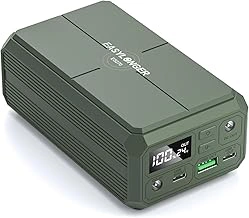
EASYLONGER ES270 99.9Wh PD 100W CPAP Battery for ResMed, Luna, Philips DreamStation
The EASYLONGER ES270 is designed for travelers who need to stay under the 100-watt-hour airline carry-on limit while still powering a CPAP machine away from home. At 99.9Wh and $139.99, this battery fits comfortably in carry-on luggage and ships with dedicated cables for ResMed, Luna, and Philips DreamStation machines, eliminating the need to source adapters separately.
Capacity determines how long the ES270 will last: users running low-pressure therapy without a humidifier can expect two to three nights per charge, while moderate settings or partial humidifier use typically yield one to two nights. High-pressure prescriptions or heated humidification drain the battery faster, often requiring a recharge after a single night. The 100W USB Power Delivery output lets you top up phones, tablets, or laptops quickly between CPAP sessions, adding versatility for short trips.
The tradeoff is straightforward. The ES270 works well for weekend camping, hotel stays, or any scenario where you can recharge daily or every other day. It is not suitable for extended power outages, multi-day backcountry excursions, or households that need backup power for several consecutive nights without access to AC or solar charging. If your therapy settings are high or you rely on heated humidification every night, plan to bring a charging cable and confirm outlet access at your destination.
At this price point and capacity, the ES270 serves travelers who prioritize portability and airline compliance over maximum runtime, and who can work around its limited reserve by recharging between uses.
- ✅ 99.9Wh capacity meets airline carry-on rules
- ✅ Includes ResMed, Luna, and Philips cables in the box
- ✅ 100W USB-C PD output for fast device charging
- ✅ Compact form factor for weekend travel
- ⚠️ Limited capacity means 1 - 3 nights depending on settings
- ⚠️ Not viable for extended outages or high-demand therapy
- ⚠️ Requires frequent recharging for multi-night trips
What Matters Most: Capacity, Waveform, and Output Stability
Selecting the right portable power station for your CPAP machine comes down to three core specifications: watt-hour capacity, pure sine wave output, and stable voltage regulation.
Watt-hour capacity directly determines how many hours your CPAP will run on a single charge. A typical CPAP draws between 30 and 60 watts depending on pressure settings and whether the heated humidifier is active. Multiply your device's wattage by the number of hours you need to estimate the minimum capacity required - most users find that 200 to 300 watt-hours covers a full night with some headroom. Keep in mind that higher pressure settings and humidification both increase consumption, so check your CPAP's specifications or measure actual draw if runtime is critical.
Pure sine wave output is non-negotiable. CPAP machines use sensitive electronics and pressure sensors that rely on clean AC power to deliver consistent therapy. Modified sine wave inverters can cause motor noise, erratic pressure delivery, or even damage to the device over time. Every reputable portable power station designed for medical or sensitive electronics will specify pure sine wave output - verify this before purchase.
Output stability ensures your CPAP receives steady voltage without sags or surges that could interrupt therapy or harm the machine. Look for stations with built-in voltage regulation and surge protection, especially if you plan to recharge the station while the CPAP is running. Stable output also matters during high-draw moments, such as when the humidifier cycles on or when pressure ramps up during sleep.
What matters less: brand prestige, the number of USB ports, smartphone app integration, and cosmetic features like RGB lighting. These add convenience but do not impact the core function of powering your CPAP reliably through the night. Focus first on capacity, waveform, and regulation - those three attributes determine whether a power station will work safely and predictably with your machine.
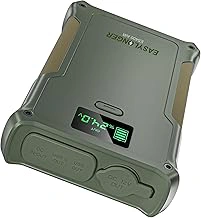
EASYLONGER ES400 AIR CPAP Battery – 148Wh Portable Backup for AirSense 10/11, AirCurve 10/11, AirMini, DreamStation 1/2, Emergency & Travel Power
The EASYLONGER ES400 AIR offers 148Wh of capacity at $179.99, making it a mid-range option for CPAP users who need more runtime than entry-level batteries without stepping up to the bulk and expense of larger power stations. It's compatible with ResMed AirSense 10/11, AirCurve 10/11, AirMini, and Philips DreamStation 1/2 machines, giving it broad device support.
At 148Wh, this battery typically delivers multiple nights of backup on low to moderate pressure settings without humidification. If you run a heated humidifier, expect closer to 2 nights per charge. That makes the ES400 AIR more useful for weekend trips, multi-night power outages, or short camping excursions where you don't want to worry about recharging every night.
The tradeoff is weight and cost: the ES400 AIR is heavier and pricier than the smaller 99Wh ES270, but it doesn't provide the capacity needed for a full week off-grid. It fits users who value portability for air travel or car camping but want a comfortable margin for multiple consecutive nights without access to shore power. If your trips are typically multiple nights and you want to save weight and cost, a smaller battery may suffice. If you're planning longer excursions or run your machine at high pressure with humidification every night, a listed-capacity+ station will be a better match.
The ES400 AIR balances runtime and portability for moderate-use scenarios, giving you enough capacity to handle most short trips and emergency situations without the bulk of a full-size power station.
- ✅ 148Wh capacity supports 3 - 4 nights on low-moderate settings
- ✅ Compatible with AirSense 10/11, AirCurve 10/11, AirMini, DreamStation 1/2
- ✅ Mid-range price at $179.99
- ✅ More runtime margin than 99Wh models for emergency backup
- ⚠️ Heavier and more expensive than smaller batteries
- ⚠️ Insufficient capacity for week-long off-grid use
- ⚠️ Runtime drops to ~2 nights with heated humidifier
Estimating Runtime: How Much Capacity You Actually Need
Runtime depends on a straightforward calculation: divide the station's watt-hour capacity by your CPAP's power draw, then multiply by an efficiency factor of 0.85 to 0.90 to account for conversion losses. A 100 Wh station powering a 40 W CPAP will deliver roughly 2 to 2.5 hours of runtime, while a 300 Wh unit extends that to approximately 6 to 7 hours under the same conditions.
Your actual draw varies widely based on pressure settings, humidifier use, and whether you enable heated tubing. A CPAP without humidification may pull 30 to 40 W, but adding a humidifier typically increases draw by 10 to 20 W, and a heated tube can push total consumption above 60 W. Higher pressure prescriptions also demand more power throughout the night.
Manufacturer runtime claims often assume minimum pressure, no humidifier, and ideal efficiency - conditions that rarely match real-world use. Measure your own device's draw with a watt meter over a full night to establish a reliable baseline, then size your portable station with at least 20 percent headroom beyond that figure.
For an eight-hour sleep cycle at 50 W average draw, you need a minimum of 470 Wh after accounting for 85 percent efficiency, which translates to a station rated around 550 Wh or higher. If you plan multi-night trips or lack daily recharge access, multiply your nightly requirement by the number of nights and add a safety margin to avoid mid-sleep shutdowns.
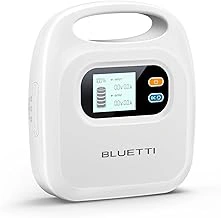
BLUETTI X30 297Wh CPAP Battery Backup with Cable Set for ResMed AirSense, AirMini
The BLUETTI X30 offers multiple-hours of capacity at $278.99, making it a higher-capacity option for users who need extended runtime away from wall power. With its included cable set for ResMed AirSense and AirMini machines, this battery backup is designed for off-grid use, extended camping trips, and multi-day power outages where recharging opportunities are limited.
Users running a CPAP without a humidifier can expect approximately the listed amount nights of use, while moderate humidifier settings typically deliver multiple nights. This makes the X30 particularly useful for those who prioritize runtime over portability, such as campers traveling to remote locations or households preparing for prolonged outages. The device is compatible with ResMed AirSense and AirMini models through the included cable set, eliminating the need to source adapters separately.
The tradeoff for this capacity is size and weight: the X30 is heavier and bulkier than lower-capacity alternatives, which may make it less practical for frequent air travel. Additionally, the 297Wh capacity exceeds the typical listed-capacity limit imposed by most airlines for carry-on lithium batteries, so users who fly regularly should verify airline policies or consider a smaller unit for in-flight backup. At this price point and capacity level, the X30 is best suited for stationary or vehicle-based off-grid scenarios rather than daily portability.
For users who value maximum runtime and already use ResMed equipment, the X30 delivers a balance of capacity and convenience with its bundled cable set, though its bulk and airline restrictions make it a better fit for dedicated backup use than travel.
- ✅ 297Wh capacity provides 6 - 7 nights without humidifier or 4 - 5 nights with moderate humidifier use
- ✅ Includes cable set for ResMed AirSense and AirMini compatibility
- ✅ Well-suited for extended camping trips and multi-day power outages
- ⚠️ Heavier and bulkier than lower-capacity models
- ⚠️ Capacity exceeds typical airline carry-on limits for lithium batteries
- ⚠️ Higher price at $278.99 compared to smaller backup options
Compatibility and Connection: What to Verify Before Purchase
- Confirm your CPAP model and required DC input voltage (typically 12V or 24V)
- Check if the power station includes the correct cable or adapter tip for your device
- Verify the output port type: DC barrel jack, cigarette lighter socket, or USB-C PD
- Confirm pure sine wave output (not modified sine wave)
- Check if your CPAP requires an additional DC converter or can run directly from the station
- Test the connection before relying on it in an emergency or travel scenario
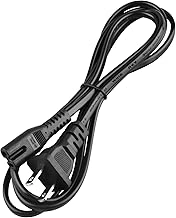
Jantoy AC Power Adapter Cord for ResMed AirSense 10 Series CPAP
The Jantoy AC Power Adapter Cord is a replacement or spare adapter for ResMed AirSense 10 series CPAP machines, priced at $9.99. This is not a portable power station or battery solution - it's a standard AC adapter that connects your CPAP to a wall outlet or to the AC outlet on a portable power station. If you're pairing a general-purpose power station with your ResMed AirSense 10, this adapter ensures compatibility when the original adapter is lost, damaged, or needed in a second location.
The adapter fits ResMed AirSense 10 models and provides a reliable power connection during travel or at home. It works with any power station that offers a standard AC outlet, allowing you to use the same CPAP setup you rely on at home. Because it does not include a battery, you'll still need a portable power station or other backup power source to run your CPAP off-grid or during outages.
This adapter is a practical, low-cost addition for CPAP users who want a backup cord or need a dedicated adapter for a travel power station setup. At under $10, it's an affordable way to avoid being without power if your original adapter fails or stays at home.
- ✅ Affordable at $9.99
- ✅ Compatible with ResMed AirSense 10 series
- ✅ Works with any AC outlet or portable power station
- ✅ Useful as a spare or travel adapter
- ⚠️ Does not provide battery backup on its own
- ⚠️ Requires a power station or wall outlet to function
CPAP-Specific Batteries vs. General Portable Power Stations
CPAP-specific batteries and general portable power stations solve the same core problem - powering your CPAP away from wall outlets - but they approach it differently. Understanding the tradeoffs between these two categories helps you match the right tool to your travel patterns and backup needs.
CPAP-specific batteries are purpose-built units designed to connect directly to your machine, often using proprietary or brand-specific cables included in the package. Most offer 100 to 300 watt-hours of capacity, which translates to one to three nights of runtime for a typical CPAP user without a heated humidifier. These units prioritize portability and weight, making them convenient for air travel or backpacking. The limitation is clear: they serve one device. If you need to charge a phone, power a light, or run anything beyond your CPAP, you'll need a separate solution.
General portable power stations deliver higher capacity options - commonly 300 to 1,000+ watt-hours - and include multiple output types: AC outlets, USB ports, and DC sockets. This versatility supports CPAP use alongside other devices during camping trips, power outages, or road travel. The tradeoff is size and weight; a 500 watt-hour station typically weighs 12 to 18 pounds compared to 2 to 4 pounds for a CPAP-specific battery. You may also need to purchase a separate DC or AC power cable compatible with your CPAP model, since general stations rarely include CPAP-specific connectors.
Frame your decision around use case. If your only goal is reliable CPAP power during short trips or flights, and you value low weight and plug-and-play simplicity, a CPAP-specific battery often makes sense. If you need multi-night runtime, want to power additional devices, or require a household emergency backup that serves more than one purpose, a general portable power station offers better long-term utility despite the added bulk.
Recharge Options and Turnaround Time
Recharge logistics determine whether your portable power station can keep pace with back-to-back nights or recurring outages. Most 100 - 300 Wh units recharge fully from a wall outlet in 3 to 6 hours, depending on the input wattage of the included AC adapter - higher-wattage bricks cut wait time. Car charging via 12 V socket is slower, often adding 8 to 12 hours for a full cycle, but it offers a practical top-up option during road trips or commutes. Solar input is the most variable: expect 6 to 12 hours in good sunlight for a mid-capacity station paired with a 60 - 100 W panel, longer on cloudy days or with smaller panels.
Recharge speed matters most when you need the station ready again quickly. Multi-night camping trips, rotating power outages, or travel schedules leave little time for a 24-hour solar trickle charge. If you plan to rely on solar regularly, confirm that your station accepts the wattage your panel supplies and that the charging port matches the cable type. Some models cap solar input at 60 W, which extends recharge time even with a larger panel.
Pass-through charging - running your CPAP while the station recharges - adds flexibility during the day. You can top up the battery from a wall or car outlet and still use it for therapy overnight, avoiding downtime. Not every station supports this feature, so check the manual or product page if simultaneous charge and discharge is part of your plan. Prioritize recharge options that align with your travel habits and backup routine so the station is ready when you need it.
Common Mistakes to Avoid
Choosing the wrong portable power station for your CPAP can waste money, add unnecessary weight to your gear, or leave you without power when you need it most. One frequent mistake is overbuying capacity - purchasing a 1000Wh station when your CPAP only requires 200-300Wh for a single night adds bulk, cost, and weight you don't need. Conversely, underbuying based on optimistic manufacturer runtime claims is equally common; these estimates rarely account for heated humidifier use or higher pressure settings, which can double actual consumption.
Another pitfall is assuming all DC outputs are compatible without verifying voltage and connector type. Many users buy a station only to discover their CPAP cable doesn't fit or the output voltage doesn't match their device's requirements. Purchasing a modified sine wave unit can also backfire - while cheaper, modified sine wave output may cause buzzing, overheating, or long-term damage to CPAP electronics designed for pure sine wave AC power.
Failing to test your setup at home before relying on it in the field is a risk many overlook. A quick overnight trial reveals whether your estimated runtime is realistic and whether all connections work smoothly. Finally, ignoring battery chemistry and cycle life means missing the long-term cost picture: a lithium iron phosphate (LiFePO₄) battery may cost more upfront but deliver 3000+ cycles versus 500-1000 for standard lithium-ion, making it cheaper per night over time. Avoiding these mistakes ensures you select a station that matches your actual needs, protects your CPAP, and delivers reliable performance trip after trip.
Final Takeaway: Match Capacity to Your Real Usage, Not Best-Case Scenarios
Matching capacity to your real usage - not manufacturer best-case scenarios - is the most important step in choosing a portable power station for CPAP use. Start by calculating your actual nightly power draw: multiply your CPAP's measured wattage by the hours you sleep, then add 20-30% to account for inverter efficiency loss, humidifier variability, and temperature swings. A machine drawing 30 watts over 8 hours needs at least 288-312 watt-hours in practice, not the theoretical 240Wh.
For weekend camping or short trips, a 100-150Wh station may suffice if you disable the humidifier and keep runtime predictable. For multi-night off-grid use or emergency backup during power outages, a 200-300Wh (or larger) capacity offers the headroom you need without daily recharging anxiety. If you rely on CPAP therapy every night, test your setup at home under real conditions before depending on it in the field - run a full night on battery and check the remaining charge in the morning.
Prioritize pure sine wave output and stable voltage regulation over flashy features you won't use, such as wireless charging pads or Bluetooth apps. The right portable power station balances upfront cost, portability, capacity, and your specific use case. A lightweight 150Wh unit that you'll actually carry is more useful than a 500Wh brick that stays home. Measure your power draw, choose honest capacity, verify compatibility with your CPAP model, and always keep a backup plan when therapy is non-negotiable.