We may earn a commission when you buy through links on this page, at no extra cost to you. How this works.
If you rely on a CPAP machine every night, a power outage can turn into a health and safety issue quickly. This guide is for CPAP users who need reliable backup power and want to choose a portable power station that will actually run their machine through the night without guessing. The core challenge is straightforward: match the power station's capacity to your CPAP's real power draw, understand voltage compatibility, and calculate realistic runtime - without overbuying a unit you don't need or underestimating what you do.
This guide will not cover solar panel sizing, hardwired AC inverter systems, or medical advice about CPAP therapy. Instead, it focuses on the practical math of watt-hours, the difference between DC and AC operation, how humidifier and pressure settings affect consumption, and the common mistakes that leave users with too little runtime or incompatible connections. By the end, you'll know how to size a power station confidently, check compatibility before you buy, and plan for real-world outage scenarios.
Who This Power Station Selection Guide Is For
This guide is for CPAP users who face regular power outages or plan to sleep off-grid and need reliable backup power for a full night. If you depend on your CPAP for safe sleep and live in an area with storm-related blackouts, aging infrastructure, or planned rolling outages, a portable power station offers silent, indoor-safe runtime without the fumes or noise of a gas generator.
A power station is the right choice when you need 6 to 10 hours of continuous CPAP operation during overnight outages. It works well for home backup, camping, RV trips, and temporary housing situations where grid power is unreliable. Unlike an uninterruptible power supply (UPS), which typically provides only 15 to 45 minutes of battery runtime and is designed to bridge brief interruptions or allow safe shutdown, a portable power station delivers extended capacity suitable for all-night use.
This article does not cover solar panel integration, daisy-chaining multiple units, or powering additional medical devices alongside your CPAP - those scenarios require separate planning. If your outages rarely last more than two hours, a smaller UPS designed for CPAP machines may be a simpler and less expensive option. Similarly, if you need whole-home backup or multi-day runtime, a standby generator or solar-charged battery bank may be more appropriate than a portable power station alone.
Focus here if your primary goal is selecting a single portable power station that will keep your CPAP running through typical overnight outages without daily recharging or complex setup.
What Matters Most When Choosing a CPAP Power Station
When choosing a power station for your CPAP machine during an outage, three factors determine whether you'll sleep through the night or wake up mid-cycle: watt-hour capacity, DC voltage compatibility, and the physical connector match.
Watt-hour capacity decides runtime. A CPAP drawing 30 watts needs a 300 Wh power station to run for roughly 10 hours, accounting for conversion loss. Check your machine's label or manual for its average consumption - most therapeutic-mode CPAPs pull between 20 and 50 watts without a heated humidifier. If you use a heated hose or humidification, expect 50 to 90 watts. Multiply your nightly hours by your machine's draw, then add 20 percent for inverter inefficiency and cold-weather capacity loss. This calculation is the floor; you cannot negotiate with physics.
DC voltage compatibility matters because nearly all CPAP machines accept 12V or 24V DC input through a dedicated port, bypassing the less efficient AC inverter pathway. A direct DC connection preserves 15 to 25 percent more battery capacity compared to running AC power through the station's inverter, then converting back to DC inside the CPAP's power brick. Confirm your machine's DC input voltage on the device label or in the technical specifications. Mismatched voltage - such as feeding 24V into a 12V-only port - can damage the machine or prevent it from starting.
Connector type seals the deal or kills it. CPAP DC cables use barrel plugs in various diameters, and polarity must match: center-positive is the most common, but some older models expect center-negative. Measure the outer and inner diameter of your CPAP's DC port in millimeters, or consult the service manual. Many power stations ship with multiple barrel tips, but verify the exact size and polarity before assuming compatibility. A snug fit is not the same as correct polarity; reversing polarity can short the machine's circuit board.
Brand reputation, lithium-ion versus LiFePO4 chemistry, and solar recharge speed are secondary considerations. They influence long-term value and convenience but do not change whether your CPAP will run tonight. Focus on the numbers: capacity in watt-hours, voltage in volts, and connector dimensions in millimeters. These three specifications predict success; everything else is preference.
Pre-Purchase Checklist: Know Your CPAP Power Requirements
- Check your CPAP machine's power label for voltage (12V or 24V) and wattage (typically 30W to 90W)
- Determine if you use a heated humidifier or tube, which can double power consumption
- Identify your target runtime (8 hours per night is standard, multiply by number of outage nights)
- Verify the DC output voltage and connector type on any power station you consider
- Calculate minimum watt-hour capacity: (CPAP watts × runtime hours) ÷ 0.85 efficiency factor
- Confirm whether your CPAP requires a DC converter cable or direct DC input compatibility
How to Calculate the Right Power Station Capacity
Calculating the right power station capacity for your CPAP machine starts with identifying your device's wattage, including whether you plan to run the humidifier. Most CPAP machines draw between 30 and 60 watts with the humidifier active, and 10 to 20 watts without it. Check your machine's label, user manual, or manufacturer website for the exact power consumption figure.
Once you have the wattage, multiply it by the number of hours you need to run the device. For example, if your CPAP draws 50 watts and you need 8 hours of runtime, the base requirement is 400 watt-hours (50W × 8h = 400Wh). Add a 15 to 20 percent buffer to account for inverter inefficiency and battery degradation over time, bringing the minimum capacity to approximately 470 watt-hours for this scenario.
Many users choose to oversize their power station by 50 percent or more to handle multi-night outages, accommodate occasional humidifier use, or leave headroom for future needs. A 50-watt CPAP running 8 hours per night would benefit from a 600 to 700 watt-hour station if you want two full nights of backup or plan to charge a phone simultaneously. Oversizing also reduces the depth of each discharge cycle, which can extend the overall lifespan of lithium battery packs.
If you use a heated hose or run your humidifier on a high setting, your wattage can spike to 90 watts or more during warm-up phases. In that case, recalculate using the higher figure, or plan to disable the humidifier during outages to stretch runtime. The key is to base your capacity decision on real wattage data and realistic usage patterns, not guesswork.
Understanding DC Voltage and Connector Compatibility
Most CPAP machines operate on either 12V or 24V DC power, and choosing the correct voltage is critical to safe operation. Many ResMed AirSense 10 models, for example, require 24V DC input, while older or portable CPAP units often use 12V. Supplying the wrong voltage can damage your machine's internal power supply or prevent it from turning on entirely, leaving you without therapy during an outage.
Power stations typically provide 12V DC outlets as standard, but not all include 24V options. Before connecting your CPAP, verify the voltage requirement printed on the machine's power brick or in the user manual. If your CPAP needs 24V and your power station only offers 12V, you will need a DC-to-DC step-up converter or a station with adjustable DC output.
Connector compatibility is equally important. CPAP machines use barrel-style DC connectors with specific outer and inner diameters, measured in millimeters, and defined polarity (center-positive or center-negative). A generic power station DC outlet will not fit most CPAP plugs directly. DC adapter cables bridge this gap by converting the power station's cigarette lighter or barrel jack into the exact connector your CPAP requires, matching both the plug size and polarity.
When selecting a DC adapter cable, confirm three details: input voltage range, output voltage and amperage, and connector dimensions. Some adapters are universal and include multiple tips, while others are model-specific. Using an adapter with the wrong polarity or voltage rating can still cause damage, even if the plug physically fits. Always cross-check your CPAP's specifications with the adapter's output rating, and avoid makeshift or unlabeled cables that lack clear voltage and polarity markings.
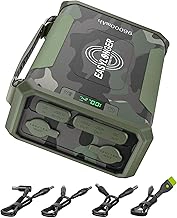
EASYLONGER ES960 PRO 297.6Wh CPAP Battery Pack for ResMed AirSense/AirCurve
The EASYLONGER ES960 PRO is a CPAP-specific battery pack engineered for ResMed AirSense and AirCurve models, offering 297.6Wh of usable capacity in a plug-and-play format. Users who want zero guesswork on connectors and voltage will appreciate the pre-configured compatibility, though this design limits flexibility if you plan to power other devices or switch CPAP brands.
With 297.6Wh on board, the ES960 PRO can run a ResMed AirSense multiple at typical multiple/multiple draw for roughly the listed amount when the heated humidifier is disabled. Enabling the humidifier at moderate settings pushes consumption to multiple, reducing runtime to approximately the listed amount. These estimates align with common ResMed power profiles, but your actual runtime will depend on pressure settings, tube temperature, and ambient conditions.
The dedicated design means the battery arrives with the correct connector and voltage profile already matched to ResMed machines, eliminating the need for adapters or manual voltage selection. This plug-and-play convenience is the ES960 PRO's primary strength, especially for first-time buyers who find universal power station menus confusing. The tradeoff is clear: you gain simplicity but sacrifice the ability to power laptops, lights, or other electronics during the same outage.
At $289.99, the ES960 PRO sits in the mid-range for CPAP battery packs. Comparable listed-capacity universal power stations often cost less and offer AC outlets or USB ports for multi-device use, but they require you to source the right DC cable and verify voltage compatibility yourself. If your priority is a single-purpose solution that works the moment you unbox it, the ES960 PRO delivers that reliability. If you want backup power for more than your CPAP, a universal station with higher capacity and multiple outputs may offer better value per watt-hour.
The 4.7/5 rating suggests consistent performance in real-world use, and the dedicated ResMed fit reduces the risk of accidental voltage mismatches. Consider this battery if you own a ResMed AirSense or AirCurve, rarely travel with other electronics, and prefer a hands-off setup over configurability.
- ✅ Pre-configured connector and voltage for ResMed AirSense/AirCurve models
- ✅ 297.6Wh capacity supports 8 - 10 hours runtime without humidifier
- ✅ Plug-and-play design eliminates adapter guesswork
- ✅ 4.7/5 rating reflects reliable real-world performance
- ⚠️ Single-purpose design limits use with other devices or CPAP brands
- ⚠️ No AC outlets or USB ports for multi-device outage coverage
- ⚠️ Higher cost per watt-hour compared to some universal power stations
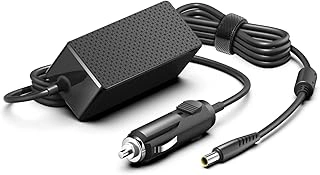
HKY 24V 90W DC Power Adapter for ResMed AirSense/AirCurve 10 CPAP Machines
The HKY 24V 90W DC Power Adapter is a connector cable designed to bridge the gap between generic 24V portable power stations and ResMed AirSense or AirCurve 10 CPAP machines. This adapter is not a battery - it's the interface that allows you to power your CPAP from a larger, multi-purpose power station that uses standard DC outputs instead of ResMed's proprietary connector.
At $27.99, this adapter offers a low-cost solution for users who already own or plan to purchase a general-purpose power station. Rather than buying a CPAP-specific battery pack, you can pair this adapter with a higher-capacity station that also charges phones, laptops, and other devices during an outage. The 90W rating matches the power requirements of ResMed AirSense 10 and AirCurve 10 models, including when using heated tubing and humidification at moderate settings.
The adapter features a multiple x multiple barrel connector on the CPAP side and a compatible plug for 24V DC outputs on the power station side. Cable length and build quality are functional for bedside use, though the adapter itself does not regulate voltage - the power station must provide stable 24V output. This means compatibility depends on your power station's specifications, not just the physical connector.
This adapter is most useful for users building a flexible power backup system. If you want one power station to serve multiple roles - camping, home backup, and CPAP use - this cable unlocks ResMed compatibility without limiting you to a CPAP-only battery. However, you'll need to calculate your own runtime based on the power station's watt-hour capacity and your CPAP's actual draw, since the adapter adds no capacity on its own.
The 4.6/5 rating reflects reliable performance as a straightforward connector. The main tradeoff is setup complexity: you're responsible for verifying voltage compatibility and ensuring your power station can sustain the load overnight. For users comfortable with that planning, this adapter maximizes the value of a larger, versatile power station.
- ✅ Low $27.99 price point for enabling ResMed compatibility
- ✅ Allows use of larger, multi-purpose power stations instead of CPAP-only batteries
- ✅ 90W rating supports heated humidification and tubing on ResMed AirSense/AirCurve 10
- ✅ Unlocks flexibility for users who want one power station for multiple devices
- ⚠️ Not a battery - requires separate 24V power station purchase
- ⚠️ No voltage regulation, so power station must provide stable 24V output
- ⚠️ Runtime depends entirely on paired power station capacity
- ⚠️ User must verify compatibility and calculate runtime independently
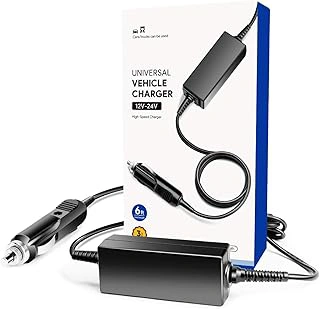
KFD 12V 24V 90W Car Charger Power Supply for ResMed AirSense 10 CPAP Machines
The KFD 12V 24V 90W Car Charger Power Supply is designed for users who need to run a ResMed AirSense 10 CPAP machine from a vehicle battery or other 12V/24V DC source. This adapter converts 12-volt or 24-volt DC power from your car's cigarette lighter socket into the voltage required by the AirSense 10, making it a practical option for camping, long road trips, or tapping a car battery during a home power outage.
At multiple, the charger provides enough capacity to operate the ResMed AirSense 10 with standard pressure settings, though users running heated humidification at high levels should expect greater drain on the vehicle battery. The dual-voltage design (12V/24V) adds flexibility for larger vehicles or RV setups that use 24-volt electrical systems.
Unlike a portable power station, this adapter does not store energy - it requires an external DC source such as a car battery, truck battery, or 12V deep-cycle battery. For outage scenarios, pairing this charger with a deep-cycle marine or RV battery can extend runtime beyond what most small power stations offer, especially when humidification is turned off. However, you will need to monitor the vehicle or external battery to avoid complete discharge, which can prevent the vehicle from starting.
The KFD adapter is a compact, lower-cost alternative to AC-powered solutions when a DC source is already available. Users who plan to sleep in a parked vehicle or have access to a portable 12V battery will find this charger more space-efficient than carrying a full power station. It is not a standalone outage solution but works well as a supplementary power option alongside other backup methods.
Compatibility is limited to ResMed AirSense 10 models; verify your machine's exact model before purchase. At $27.99 and rated 4.7 out of 5, this charger offers reliable DC power conversion for users who already have a 12V or 24V power source and want a straightforward, vehicle-friendly CPAP adapter.
Check current price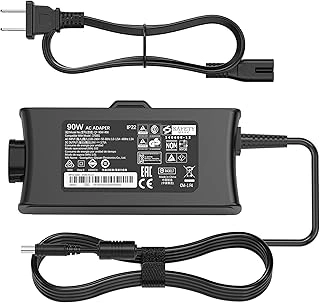
LIFKAHY 90W AC Adapter Power Cord for ResMed AirSense/AirCurve 10 CPAP
The LIFKAHY 90W AC Adapter is a replacement power cord for ResMed AirSense and AirCurve 10 CPAP machines, not a backup power solution for outages. This adapter plugs into a standard wall outlet and delivers power the same way your original ResMed cord does - it does not store energy or keep your CPAP running when the grid goes down.
Priced at $31.99, this adapter serves users who need a spare cord for a second bedroom, a travel location, or to replace a damaged original cable. The 90-watt output matches ResMed's specification for these models, and the 4.4 out of 5 rating suggests consistent compatibility. Because it requires grid power, it offers no protection during outages, brownouts, or camping trips off the grid.
If you want backup runtime during power failures, you need a portable power station with sufficient watt-hour capacity and the correct DC output or an inverter for AC adapters like this one. This cord is useful only when reliable wall power is available. It works well as a second adapter for multi-location setups or as a replacement when your original cord wears out, but it will not bridge a gap when the power goes out.
- ✅ 90-watt output matches ResMed AirSense/AirCurve 10 specification
- ✅ Affordable replacement at $31.99
- ✅ Useful as a spare for travel or multi-room setups
- ✅ 4.4 out of 5 user rating
- ⚠️ Requires grid power - provides no backup during outages
- ⚠️ Does not store energy or function as a portable power source
- ⚠️ Not suitable for off-grid or emergency use
Common Mistakes to Avoid When Choosing CPAP Backup Power
Choosing backup power for a CPAP machine becomes costly or even dangerous when common compatibility and capacity mistakes go unnoticed until an outage occurs. One of the most frequent errors is purchasing a power station with insufficient watt-hour capacity - many users estimate runtime based only on the CPAP blower without accounting for heated tubing, humidifier settings, or pressure therapy adjustments that increase draw throughout the night.
Ignoring DC output voltage compatibility is another critical misstep. CPAP machines typically require 12 V or 24 V DC input, but not every power station includes regulated barrel outputs at those voltages, and some models deliver only USB or AC inverter ports. Assuming all barrel connectors are interchangeable leads to frustration; plug diameters and polarity vary by manufacturer, and using an incorrect adapter can damage the device or fail to power it on.
Forgetting to subtract humidifier power draw from your total capacity budget can cut expected runtime in half. A heated humidifier alone may consume 10 - 15 watts continuously, and combined with heated tubing, total system draw can exceed 50 watts on higher pressure settings. Relying solely on manufacturer averages without measuring your own setup leaves you vulnerable to unexpected shutdowns.
The single most preventable mistake is not testing the entire system before a real power outage. Dry-running your CPAP on battery power for a full night reveals actual runtime, confirms connector fit and polarity, validates DC voltage stability under load, and exposes any incompatibility between the power station's output regulation and your machine's input requirements. This test also allows you to adjust therapy settings - lowering pressure ramp duration or disabling comfort features temporarily - to extend battery life when necessary.
Document your test results: record watt-hour consumption per hour of use, note any voltage sag or error messages on the CPAP display, and verify that the power station's battery management system does not enter sleep mode during low-draw periods. Keep spare connectors and a polarity diagram in your outage kit, and retest whenever you change CPAP models, replace tubing, or upgrade your power station to ensure continued compatibility and reliable runtime.
Final Takeaway: Match Capacity to Real Use, Test Before You Need It
The right power station for your CPAP is the one that matches your actual usage, not the one with the most marketing buzz. Start by calculating your watt-hour needs: multiply your machine's true power draw by the number of hours you need to run it, then add at least 20% headroom for inverter losses and battery inefficiency. Verify that the power station outputs the correct DC voltage for your CPAP and that you have the proper connector or a reliable adapter cable before an outage happens.
Test your complete setup during normal conditions for at least one full night. Document the battery drain percentage and actual runtime so you know exactly what to expect when the power goes out. Keep a spare DC cable and your test notes with your power station so you're not troubleshooting in the dark. The goal is predictable, quiet operation when you need it most, which means choosing capacity based on your specific machine and sleep duration rather than chasing the highest number on the box.
Backup power for your CPAP is about reliability and fit, not features. Size it to your real use, confirm compatibility before you rely on it, and you'll sleep through the outage without worry.