We may earn a commission when you buy through links on this page, at no extra cost to you. How this works.
When household backup demands exceed what portable power stations can deliver, modular battery systems like the EcoFlow Delta Pro and Bluetti AC300 step in to bridge the gap between consumer gear and full home energy storage. Both are designed around expandable architectures that let you add capacity in discrete steps, scale inverter output through parallel units, and integrate with solar arrays or home circuits. This comparison focuses on the attributes that matter when you're planning multi-day backup or off-grid power: base capacity out of the box, how far each system can expand, continuous and surge inverter performance, the speed at which you can recharge from wall, solar, or vehicle sources, and how each ecosystem handles accessories and third-party integration.
The Delta Pro ships as a single 3.6 kWh unit with a 3,600 W inverter and can expand to 25 kWh when paired with additional batteries and the Smart Home Panel. The AC300 is sold as an inverter head without internal cells; you purchase one or more B300 battery modules separately, each adding 3.1 kWh, and the system scales to 12.3 kWh in a single-inverter configuration or 24.6 kWh when two AC300 units run in parallel. Selection hinges on whether you value an all-in-one base unit that works the moment you open the box, or prefer to buy exactly the battery capacity you need and add more later without paying for cells you don't use yet.
We will not cover compact units under 2 kWh, budget LiFePO4 power stations without expansion ports, or DIY battery-bank builds. Pricing, portability, noise, warranty terms, and real-world charge-discharge efficiency will appear in dedicated sections below. By the end, you will understand which architecture fits your electrical panel, solar setup, and backup duration requirements.
Quick comparison
| BLUETTI B500K LiFePO4 Expansion Battery for AC Portable Power Stations | Check current price and availability |
| EF ECOFLOW RIVER 2 Pro 768Wh LiFePO4 Portable Power Station | View pricing and specs |
Use the matching tool first
Start with Balcony Solar Recharge Time Calculator if you want to narrow the fit before checking current offers.
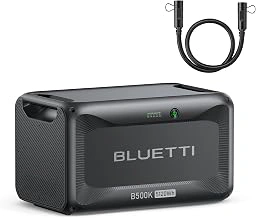
BLUETTI B500K LiFePO4 Expansion Battery for AC Portable Power Stations
The BLUETTI B500K expansion battery adds dedicated storage capacity to an AC300 system, giving users the ability to scale beyond the base unit's configuration. Each B500K is designed to connect directly to the AC300 power station, integrating through a proprietary cable interface that routes charge and discharge through the main inverter. LiFePO4 chemistry underpins the B500K, offering longer cycle life and thermal stability compared to standard lithium-ion, which becomes relevant when the battery spends months on standby or cycles frequently during seasonal outages.
Capacity per B500K unit is substantial, and the AC300 architecture supports multiple expansion batteries in parallel, allowing total system storage to reach several kilowatt-hours depending on how many units are connected. The connection process involves matching polarity, securing the cable harness, and verifying firmware recognition on the AC300 display. Once linked, the system treats the combined capacity as a single reservoir, drawing from all connected batteries evenly during discharge and distributing charge across them during solar or grid input.
Cost per additional watt-hour sits in the mid-range for LiFePO4 expansion modules. At $1,798.97 per unit, the B500K represents a meaningful investment, and users planning multi-battery configurations should account for cumulative expense as well as physical footprint. Each expansion battery occupies floor space similar to a compact dorm refrigerator, and stacking or arranging multiple units requires stable, ventilated placement. Practical limits of expansion are defined by the AC300's maximum input capacity and the physical real estate available in a garage, utility room, or designated backup area.
The B500K's LiFePO4 cells tolerate deeper discharge cycles without the same rate of degradation seen in older chemistries, and calendar aging is slower when the battery remains at partial charge. This makes the B500K well-suited for installations where the system sits idle most of the year but must deliver full capacity when called upon. Users who plan to run the system daily - cycling through solar charging and evening loads - will see the chemistry's longevity advantage compound over several years of use.
Integration with the AC300 is straightforward once the first unit is paired, and adding subsequent B500K modules follows the same plug-and-verify routine. The system firmware manages cell balancing across all connected batteries, and the AC300 display provides aggregate state-of-charge and estimated runtime. Users should confirm firmware compatibility before purchase, as older AC300 units may require an update to recognize newer B500K production runs.
The B500K's value proposition centers on modularity: buy one unit today and add another when budget or need dictates, without replacing the base station. This staged expansion path appeals to users who anticipate growing their backup capacity over time or who want to test one expansion battery before committing to a full multi-unit array.
- ✅ LiFePO4 chemistry offers long cycle life and thermal stability
- ✅ Modular design allows staged expansion as budget permits
- ✅ Direct integration with AC300 through proprietary cable harness
- ✅ Firmware-managed cell balancing across multiple units
- ⚠️ Price of $1,798.97 per unit adds up quickly in multi-battery configurations
- ⚠️ Physical footprint requires stable, ventilated placement for each module
- ⚠️ Firmware compatibility check needed for older AC300 units
Core Specifications Head-to-Head: Power, Capacity, and Output
EcoFlow Delta Pro and Bluetti AC300 both deliver serious capacity, but their approaches to power delivery differ in ways that matter when you're running refrigerators, power tools, or medical equipment during an outage.
The Delta Pro ships with 3,600Wh of battery capacity built into a single unit, paired with a 3,600W continuous inverter that can surge to 7,200W using EcoFlow's X-Boost technology. That surge headroom handles motor-startup demands from well pumps or air compressors without tripping. You get six AC outlets, four USB-A ports, two USB-C ports (one rated for 100W), two DC5521 barrel ports, and a 30A RV outlet. The battery chemistry is LiFePO₄, rated for 3,500 cycles to 80% capacity.
Bluetti's AC300 takes a modular path: the AC300 inverter unit contains no battery at all. You pair it with at least one B300 battery module (3,072Wh each) to create a working system. The AC300 inverter delivers 3,000W continuous output with a 6,000W surge capacity. A single B300 gives you 3,072Wh; add up to four modules to reach 12,288Wh total. The AC300 offers six AC outlets, one USB-C port (100W), four USB-A ports, two 12V DC outlets, a 30A RV port, and a 12V/30A DC outlet for automotive accessories. Battery chemistry is also LiFePO₄, with the B300 rated for 3,500+ cycles to 80% capacity.
The Delta Pro's integrated design means you get full power immediately - no separate battery purchase required. Its 3,600W inverter handles higher continuous loads than the AC300's 3,000W, which matters if you're running a 240V well pump using EcoFlow's Smart Home Panel or dual-unit setup. The AC300's modular battery architecture offers more flexibility: start with one B300 and expand as budget allows, or scale all the way to 12,288Wh for multi-day autonomy. However, that modularity adds cost and complexity - you're buying and managing separate components.
Both systems handle the same chemistry and cycle life, so long-term durability is comparable. The deciding factor comes down to whether you value the Delta Pro's out-of-box power ceiling or the AC300's incremental expansion path.
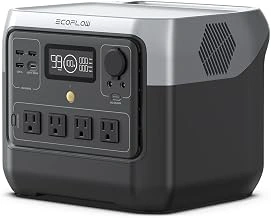
EF ECOFLOW RIVER 2 Pro 768Wh LiFePO4 Portable Power Station
The EF ECOFLOW RIVER 2 Pro offers 768Wh of LiFePO4 battery capacity in a compact package, giving users a mid-range option within the EcoFlow ecosystem. Unlike the Delta Pro's large-capacity expandable system, this unit targets buyers who need portable backup power for essential devices - laptops, phones, medical equipment, or a mini-fridge - without the footprint or investment of a whole-home solution.
LiFePO4 chemistry provides a longer lifespan than standard lithium-ion cells, and EcoFlow's X-Stream technology enables rapid AC charging, often reaching multiple% in under an hour. This makes the RIVER 2 Pro practical for quick turnaround between outages or weekend trips. The 768Wh capacity won't run central HVAC or well pumps, but it handles smaller loads reliably and weighs significantly less than the Delta Pro, making relocation between rooms or vehicles straightforward.
Where the Delta Pro excels in expandability and sheer wattage, the RIVER 2 Pro trades capacity for portability and speed. If your backup needs center on a few critical circuits rather than an entire panel, or if you prioritize fast recharge cycles over multi-day autonomy, this model aligns well with EcoFlow's broader charging infrastructure - solar input compatibility and app monitoring carry over from the flagship line.
At $359.00, the RIVER 2 Pro sits in a different budget tier entirely, offering a taste of EcoFlow's ecosystem without the commitment required for a Delta Pro or Bluetti AC300 setup. For users exploring home backup incrementally or seeking a portable companion to a larger system, it provides a concrete stepping stone with proven charging performance and chemistry longevity.
- ✅ 768Wh LiFePO4 battery for extended cycle life
- ✅ Rapid AC charging via X-Stream technology
- ✅ Compact and portable compared to whole-home units
- ✅ Compatible with EcoFlow solar and app ecosystem
- ⚠️ Limited capacity for multi-day or high-wattage backup
- ⚠️ No expandability like Delta Pro or AC300 systems
- ⚠️ Smaller inverter output restricts heavy appliance use
Expandability and Ecosystem: Building Out Your Power System
Maximum capacity differs sharply between these two systems. The EcoFlow Delta Pro supports up to two additional battery units for a combined total of 10.8 kWh when used as a single station, or up to 25 kWh when daisy-chained with a second Delta Pro and four expansion batteries. The Bluetti AC300 is a modular inverter-only design that requires at least one B300 battery (3,072 Wh) to operate, and can connect up to four B300 units for a maximum of 12.3 kWh per AC300 inverter. Pairing two AC300 inverters with the Fusion Box pushes total capacity to 24.6 kWh.
Connection method matters when you add capacity. EcoFlow uses proprietary cables and a Smart Extra Battery port on the Delta Pro, making physical expansion straightforward but locking you into EcoFlow's own battery modules. Bluetti's modular approach separates the inverter from the battery packs entirely; B300 units connect via aviation-grade connectors, and the system remains operational even if one battery develops a fault. This design offers clearer serviceability but adds more cables and connection points to manage.
Cost scales differently. Adding a single EcoFlow Smart Extra Battery typically runs around $3,000, bringing the two-battery Delta Pro system to roughly $6,600. A Bluetti AC300 with two B300 batteries (6.1 kWh total) costs approximately $5,400, and each additional B300 adds about $2,000. At maximum single-inverter capacity, the Bluetti system delivers more kilowatt-hours per dollar, though the EcoFlow option includes the inverter and one integrated battery from the start.
Ecosystem lock-in is real for both brands. Neither system accepts third-party batteries, and each manufacturer updates firmware independently. EcoFlow's integrated design limits repair options to the entire unit, while Bluetti's modular build theoretically allows swapping out a faulty battery without replacing the inverter. Future-proofing depends on whether you value integrated simplicity and higher peak expandability (EcoFlow's 25 kWh multi-unit ceiling) or modular flexibility and easier incremental scaling (Bluetti's per-inverter 12.3 kWh cap with clearer component isolation). Choose based on whether you expect to add capacity in small steps or prefer one integrated hub that can grow into a whole-home solution.
Charging Performance: Solar, AC, and Dual Charging Speeds
How quickly a high-capacity battery recharges determines how useful it is during extended outages or daily solar cycling. Both the EcoFlow Delta Pro and Bluetti AC300 support multiple charging methods, but their speeds differ in ways that matter when you need power back fast.
The EcoFlow Delta Pro accepts up to 1,600 W of solar input through its dual MPPT controllers. Wall charging delivers 1,800 W, allowing a full recharge from empty in roughly 3.1 hours under ideal conditions. When you combine solar and AC simultaneously, the Delta Pro can pull up to 3,400 W total, cutting that time to under two hours. This dual-charging capability makes it particularly effective in scenarios where you have partial sun and grid access - or when a storm is approaching and you need maximum capacity quickly.
The Bluetti AC300 supports up to 2,400 W of solar input, also via dual MPPT controllers, giving it an edge in pure solar performance when panels and weather cooperate. AC wall charging is capped at 3,000 W, which recharges a single B300 battery (3,072 Wh) in approximately one hour. Dual charging - solar plus AC together - can theoretically reach 5,400 W input, though real-world conditions rarely deliver that peak continuously. With two B300 batteries installed for 6,144 Wh total, expect around two hours to full charge using both inputs.
Real-world charge times depend heavily on solar panel wattage, angle, shading, and weather. A 1,200 W solar array under full sun will take roughly 3 - 4 hours to charge the Delta Pro or 5 - 6 hours for a dual-B300 AC300 setup, assuming typical conversion losses. The AC300's higher solar ceiling gives it an advantage if you already own or plan to install a large panel array. The Delta Pro's faster AC input and tighter dual-charging integration make it more practical when grid power is available but intermittent.
Charging speed matters most during blackout recovery. If the grid comes back for a few hours, the Delta Pro can reclaim useful capacity faster. If you rely entirely on solar and have ample roof or ground space, the AC300's higher input ceiling makes better use of a large panel array. For users combining solar with occasional AC top-ups, the Delta Pro's balanced speeds and simpler dual-charging setup often prove more convenient day to day.
Real-World Scenarios: Which is Better for Blackouts, RVs, or Off-Grid Living?
Understanding how these systems perform in typical high-demand situations helps clarify which fits your needs. Both the Delta Pro and AC300 excel at home backup, mobile power, and off-grid use, but their design differences matter when you're relying on stored electricity for hours or days.
For multi-day home blackouts, the AC300 with two B300 batteries delivers 6,144 Wh of usable capacity, enough to run a modern refrigerator for roughly 50 - 60 hours, keep CPAP machines running multiple nights, and power LED lighting throughout. The Delta Pro, at 3,600 Wh base capacity, handles about 30 - 36 hours of refrigerator runtime and supports two nights of CPAP use with margin for phones and lighting. If you expand the Delta Pro with two extra batteries, you reach 10,800 Wh, extending refrigerator runtime past four days and supporting larger loads like a window air conditioner for short bursts. The AC300's split design makes moving batteries easier during setup, while the Delta Pro's integrated wheels simplify repositioning the main unit.
In RV or van life scenarios, both systems power 120V appliances like microwaves, coffee makers, and small air conditioning units. A typical 5,000 BTU window AC draws around 450 - 550 watts and runs approximately 6 - 7 hours on a single Delta Pro or 10 - 12 hours on an AC300 with dual B300 batteries. The Delta Pro's compact footprint and single-unit portability suit smaller rigs, while the AC300's modular setup lets you distribute weight and configure battery placement around storage constraints. Both support 30-amp RV outlets and offer pass-through charging, so you can recharge from shore power or a generator while running devices.
Off-grid cabin use demands reliable solar cycling and seasonal tolerance. The Delta Pro accepts up to 1,600 watts of solar input with the Smart Extra Battery, recharging a fully expanded system in about seven hours of strong sun. The AC300 tops out at 2,400 watts of solar input, cutting full recharge time for dual B300 batteries to roughly three hours under ideal conditions. That faster solar recharge matters when you're cycling daily loads like well pumps, lighting, and kitchen appliances. Both systems handle cold and moderate heat well, but the AC300's separated architecture allows you to insulate or climate-control batteries independently from the inverter unit. If your cabin sees extended periods below freezing, keep batteries indoors or use insulated enclosures, since lithium cells lose capacity and charging ability in extreme cold.
For blackout preparedness where you need days of runtime and plan to expand over time, the AC300's higher base capacity and faster solar input give you more headroom. If you prioritize a self-contained unit with good portability and plan to add capacity later, the Delta Pro's integrated design and robust wheel system make setup and storage simpler. Match your scenario to the system's expandability limits and charging infrastructure to avoid capacity shortfalls when you need backup power most.
Usability and Smart Features: Comparing Apps and Onboard Controls
Both the EcoFlow Delta Pro and Bluetti AC300 offer mobile apps for remote monitoring and control, but their approaches to user interface and smart features differ in ways that affect daily convenience. The EcoFlow app provides real-time power flow visualization, letting you see input and output streams with numerical precision. You can schedule charging times, update firmware over the air, and adjust AC charging speed from your phone. The interface responds quickly, and the connection via Wi-Fi or Bluetooth typically holds steady once configured. Setup requires pairing through the app and entering your network credentials, a process that takes a few minutes but rarely needs repeating.
The Bluetti AC300 pairs with the Bluetti app, which also delivers remote monitoring, firmware updates, and basic control functions. The layout presents battery percentage, wattage in and out, and estimated runtime. Some users report that the Bluetti app can take longer to refresh data or occasionally loses connection, requiring a manual reconnect. Both apps let you toggle AC and DC outputs remotely, useful if you want to cut power to idle devices or restart an outlet without walking to the unit.
Onboard controls tell a similar story of capable but distinct implementations. The EcoFlow Delta Pro features a large color touchscreen that displays input, output, battery level, and remaining runtime in easy-to-read graphics. You can navigate charging mode settings, enable or disable outlets, and check system status without pulling out your phone. The Bluetti AC300 uses an LCD panel with physical buttons arranged below the screen. Information is clear, but menu navigation relies on pressing up, down, and select buttons rather than tapping icons directly. For quick adjustments in dim light or with gloves on, the tactile buttons can be easier to locate than a touchscreen.
Firmware updates arrive periodically for both systems, addressing bugs and occasionally adding features. The EcoFlow update process runs through the app with progress bars and automatic restarts. Bluetti updates follow a similar path but sometimes require you to confirm steps on the unit's screen. Neither system has shown a pattern of bricking during updates, though it's wise to start updates when the battery is above fifty percent and no critical loads are connected.
For users who prefer to set up a system once and forget about it, the Bluetti AC300's simpler app and button-driven interface may feel less fussy. If you value detailed real-time data, scheduling flexibility, and a polished app experience, the EcoFlow Delta Pro delivers more refinement and responsiveness in its smart features.
Key Decision Points: What to Prioritize Before You Buy
- Calculate your actual power needs: list essential devices and their wattage
- Determine how many days of backup you need without recharging
- Assess your solar input potential: roof space, panel wattage, and sunlight hours
- Factor in expansion costs: price per additional battery unit and maximum system capacity
- Consider charging infrastructure: do you have access to 240V outlets or only 120V?
- Evaluate portability requirements: will you move the system frequently or keep it stationary?
Design, Portability, and Build Quality
Both the EcoFlow Delta Pro and the Bluetti AC300 are large, heavy units built for stationary or semi-portable home backup rather than frequent travel. The Delta Pro weighs approximately 99 pounds and measures 25 × 11.2 × 16.4 inches, while the AC300 modular control unit alone weighs around 46 pounds but requires at least one B300 battery module at 79 pounds, bringing the combined minimum weight to 125 pounds. Neither system is designed for casual one-person transport.
The Delta Pro includes molded side handles and built-in wheels on one end, which make it easier to tilt and roll short distances across a garage or basement floor. The handle grip is wide enough for two-handed control, and the wheels are durable hard plastic suitable for smooth indoor surfaces. The AC300 and its battery modules feature top and side handles but no integrated wheels, so moving the stacked system requires lifting or using a separate dolly. For users who need to reposition their backup system occasionally, the Delta Pro offers a clear advantage in mobility.
Build quality is solid on both systems. The Delta Pro uses a high-impact plastic shell with rubberized corner bumpers and a metal frame inside for structural rigidity. The AC300 and B300 modules have a similar plastic construction with reinforced edges and a modular stacking design that locks securely. Both systems include active cooling fans that engage under load. The Delta Pro's fan runs audibly during high-output charging or discharge, producing a steady hum in the 50 - 55 dB range at one meter. The AC300's cooling is similarly audible, with fan noise increasing when multiple battery modules are connected and the inverter is working hard.
Neither unit is rated for permanent outdoor installation without additional weatherproof enclosures. The cases are splash-resistant but not waterproof, and prolonged exposure to rain, dust, or extreme temperatures will degrade components over time. Both manufacturers recommend indoor or covered storage, with occasional outdoor use in dry conditions. If you plan to keep your system in an unconditioned garage or shed, ensure adequate ventilation for the cooling fans and protection from moisture.
For users who value single-unit convenience and easier repositioning, the Delta Pro's integrated wheels and lower weight give it a practical edge. For those who prioritize modular capacity expansion and don't mind the added lifting required to stack battery modules, the AC300's design supports more flexible configuration without sacrificing durability.
Price and Long-Term Value: A Cost-Benefit Analysis
Understanding the long-term cost picture means looking past the sticker price to evaluate capacity, expansion investments, and how many cycles you'll get before replacement becomes necessary.
The EcoFlow Delta Pro starts around $3,699 for the base 3.6 kWh unit, translating to roughly $1.03 per watt-hour. A fully expanded system with the Smart Home Panel and additional batteries can exceed $15,000, depending on configuration. Bluetti's AC300 begins at approximately $2,999 for the power station alone - no battery included - so you'll need at least one B300 battery at around $1,999 (totaling $4,998 for 3,072 Wh), which works out to about $1.63 per watt-hour initially. Expanding to the maximum 12,288 Wh with four B300 batteries pushes the system cost near $10,000 or more.
Both systems use LiFePO4 chemistry rated for 3,500+ cycles to 80% capacity under typical conditions, suggesting a decade or more of regular use if you cycle the pack daily. That longevity tilts the value equation toward total energy delivered over time rather than purchase price alone. If you need 10 kWh from day one, the Delta Pro path (base unit plus two extra batteries) lands around $10,000, while the AC300 with four B300 batteries costs roughly the same but delivers slightly more total capacity.
Warranty terms favor the Delta Pro slightly: EcoFlow offers five years on the main unit and battery modules, compared to Bluetti's four-year coverage on the AC300 and B300 batteries. Both brands provide customer support and firmware updates, though EcoFlow's app ecosystem and smart-home integration features receive more frequent enhancements, which may extend functional lifespan as grid-tie and vehicle-to-load capabilities mature.
Resale value and upgrade flexibility matter if your energy needs grow unpredictably. The Delta Pro's modular battery system and stackable design make it easier to sell individual components or upgrade incrementally. The AC300's battery commitment is steeper upfront but locks you into a proven, stable architecture with fewer moving parts to troubleshoot over the years.
For budget-conscious buyers who plan moderate use - weekend off-grid trips or occasional outage backup - the AC300's lower base price and straightforward expansion offer solid value. Power-hungry households running heavy loads daily or integrating solar will recoup the Delta Pro's premium through faster charging, higher output, and more versatile connectivity, especially if you anticipate scaling beyond 10 kWh or adding vehicle charging down the line.
Final Verdict: Who Should Buy the EcoFlow Delta Pro vs. the Bluetti AC300?
The choice between the EcoFlow Delta Pro and the Bluetti AC300 depends on how you plan to use your portable power station and what trade-offs matter most in your setup.
The Delta Pro makes the most sense if you need a system that's ready to go out of the box. Its integrated battery design means you can unpack it, charge it, and start using it immediately without purchasing separate modules. The built-in handles and all-in-one form factor make it easier to move between rooms or load into a vehicle. Faster AC charging - typically reaching full capacity in under two hours - matters if you anticipate frequent charging cycles or need to top up quickly between outages. The EcoFlow app offers more granular control over charge rates, output prioritization, and firmware updates, which appeals to users who want hands-on management of their power system.
The AC300 is the better fit when maximum capacity expansion is your priority. Because the control unit and batteries are separate, you can start with one B300 battery and add up to three more as your budget or needs grow, scaling from 3,072Wh to 12,288Wh without replacing the base unit. This modular approach also makes transportation easier in tight spaces - each component weighs less than the Delta Pro's single housing. The AC300 typically costs less per watt-hour when configured with multiple batteries, which can add up to significant savings at higher capacities. If you're building a semi-permanent home backup solution and don't need to move the system often, the split design offers more flexibility in placement and wiring.
Neither system is ideal if portability for frequent outdoor use is your main goal - both are heavy, expensive, and better suited to stationary or occasional relocation scenarios. For users who need true grab-and-go power for camping or tailgating, a smaller single-unit station in the 1,000 - 2,000Wh range will be lighter and more practical. Similarly, if your primary concern is whole-home integration with automatic transfer switching, a dedicated hardwired battery backup or hybrid inverter system will offer better reliability and lower cost per kilowatt-hour than either portable option.
In practice, the Delta Pro rewards users who value speed and simplicity, while the AC300 rewards those who plan to scale capacity over time and don't mind assembling a modular system. Your decision should reflect your actual usage pattern: single-location backup with occasional portability favors the Delta Pro; long-term expansion and semi-permanent installation favors the AC300.