We may earn a commission when you buy through links on this page, at no extra cost to you. How this works.
EF ECOFLOW DELTA Pro 3600Wh Home Backup Kit with Transfer Switch
Wire gauge, connector type, and compatibility determine whether you safely double capacity or risk overload.
Use the matching tool first
Start with Balcony Solar Recharge Time Calculator if you want to narrow the fit before checking current offers.
Running two generators in parallel doubles your available wattage and runtime, but the cable connecting them needs to handle the combined amperage without overheating or voltage loss. A parallel cable routes AC output from two identical units into a single feed, distributing load evenly across both engines. If the wire gauge is too thin, resistance climbs and voltage drops before it reaches your RV panel or transfer switch. If the connectors don't match your generator's outlet configuration, the cable won't seat properly or may arc under load.
Parallel operation only works with two identical models from the same manufacturer. Mismatched wattage ratings or different voltage regulation circuits will trip overload protection or damage inverters. The cable itself must use copper conductors heavy enough to carry the combined current - typically 10 AWG or thicker for 30-amp pairs - and molded or locking connectors that resist vibration and moisture. Length also matters: every additional foot adds resistance, so a 10-foot cable will waste less power than a 25-foot run at the same gauge.
This guide compares five heavy-duty parallel cables across three categories: Honda-specific L5-30 twist-lock designs for EU-series inverters, Bluetti factory cables with proprietary plugs for their AC200 and EB-series stations, and universal RV cables that adapt TT-30 outlets for older portable units or dual-fuel models. Each entry lists wire gauge, connector type, rated amperage, and compatibility limits so you can match the cable to your exact generator pair without guessing on plug fit or current capacity.
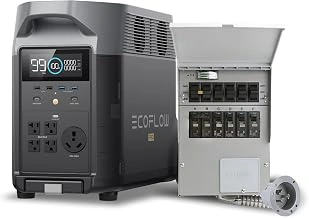
EF ECOFLOW DELTA Pro 3600Wh Home Backup Kit with Transfer Switch
The EF ECOFLOW DELTA Pro 3600Wh Home Backup Kit is a complete whole-home power solution that includes a transfer switch, not a standalone parallel cable. At $1,779.00, this price reflects an integrated home backup system rather than a simple cable accessory for portable use.
This kit positions the DELTA Pro for permanent installation in your home electrical panel. When you want to double capacity by running two DELTA Pro units in parallel, EcoFlow sells a separate proprietary parallel connection cable designed specifically for their system. The transfer switch in this package handles automatic switching between grid power and battery backup, making it practical for homeowners who want seamless power transitions during outages.
The 3600Wh capacity suits moderate home loads - essential circuits, refrigeration, and communication devices - but parallel operation extends runtime and total wattage headroom when a second unit and the matching cable are added. Because the DELTA Pro uses EcoFlow's closed ecosystem, you'll need their branded parallel cable rather than a universal Anderson or RV-style connector.
This setup makes sense if you're planning a fixed home backup installation and want room to expand with a second unit later. For portable field use or RV applications where you need only the cable and already own compatible generators, standalone parallel cables offer better value. The transfer switch adds installation complexity but removes the need to manually switch circuits during an outage.
With a 4.2 out of 5 rating, users appreciate the integrated approach for home backup, though the investment is significantly higher than buying a simple heavy-duty parallel cable for portable generators. The kit trades portability and flexibility for a turnkey home power solution.
Check current price and compatibility
- ✅ Complete home backup system with integrated transfer switch
- ✅ 3600Wh capacity with option to parallel a second DELTA Pro unit
- ✅ Automatic switching between grid and battery power
- ✅ Suitable for permanent whole-home installation
- ⚠️ $1,779.00 price reflects full system, not standalone cable value
- ⚠️ Requires separate proprietary EcoFlow parallel cable for dual-unit operation
- ⚠️ Installation complexity higher than portable parallel cable setups
- ⚠️ Closed ecosystem limits compatibility with non-EcoFlow generators
What Separates Safe Parallel Cables from Risky Ones
Wire gauge determines how much current a parallel cable can carry without overheating or causing voltage drop. For 30-amp circuits common in larger solar generators, 10 AWG copper wire is the minimum safe standard. Cables rated for 20-amp loads can use 12 AWG, but anything thinner creates resistance that wastes power and generates heat under sustained draw.
Connector type matters as much as wire thickness. Honda parallel ports use a specific keyed design that only accepts factory or certified aftermarket plugs. Bluetti systems rely on proprietary aviation-style connectors with locking collars. Generic RV-style L5-30 twist-lock plugs work across many brands but require you to confirm pin configuration and voltage rating before connecting two units.
Cable length introduces voltage drop, especially on runs longer than ten feet. A 25-foot cable will lose more voltage than a six-foot cable of the same gauge, which means slightly less usable power at the far end. For portable setups where generators sit close together, shorter cables reduce loss and cost less.
Plug quality separates durable cables from failure-prone ones. Look for molded strain relief where the wire enters the plug body, because repeated coiling and handling will crack cheap connections. Weather-resistant boots or sealed housings protect terminals from moisture when generators run outdoors. Exposed metal pins corrode quickly in humid or coastal environments.
Brand-specific cables guarantee fit and electrical compatibility because the manufacturer controls both the generator port and the cable design. Universal kits offer flexibility across different generator brands, but you must verify port type, amperage rating, and pin layout manually. Mismatched connectors may physically fit yet deliver the wrong voltage or lack proper grounding, creating shock or fire risk.
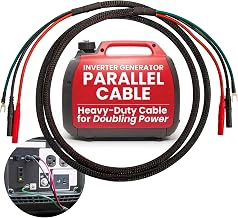
Hutch Mountain Parallel Cable Compatible with Honda Generator EU2200i, 1000i, 2000i – Heavy Duty Cable for Doubling Power – Inverter Generator Parallel Kit for RV, Camping & Emergency Power
Honda inverter generator owners looking to double their output will find a purpose-built solution in the Hutch Mountain parallel cable designed for the EU1000i, EU2200i, and EU2000i models. Priced at $41.42 with a 4.8/5 rating, this cable uses Honda's proprietary parallel port connectors to create a straightforward link between two compatible units.
The heavy-duty construction addresses the core requirement for parallel operation: maintaining stable electrical connection under variable outdoor conditions. Strain relief at both connector ends reduces wear at the plug-cable junction, a common failure point when cables are repeatedly connected and disconnected at campsites or during emergency deployments.
Compatibility is both the cable's strength and limitation. The Honda-specific connectors eliminate adapter guesswork and ensure proper pin alignment for the parallel port's multiple output configuration. If you own two Honda EU-series generators, this cable connects them without modification. However, this same design restricts use to Honda inverter models only - the connectors will not fit Bluetti, EcoFlow, or universal Anderson-style ports found on other brands.
For RV owners running dual Honda units or campers who've invested in Honda's inverter lineup, the focused compatibility reduces setup complexity. The cable handles the combined amperage from two generators running in parallel mode, though Honda's own documentation should be consulted for maximum load ratings specific to each model pairing.
At this price point, the cable sits between budget universal options and manufacturer OEM kits, offering Honda-certified fit without the premium typically attached to factory accessories. The 4.8/5 rating suggests consistent performance among users who need reliable parallel operation for extended camping trips or backup power scenarios where two Honda generators are already part of the equipment roster.
Check current price and Honda compatibility
This cable suits scenarios where Honda compatibility is required and brand-specific fit outweighs the flexibility of universal connectors.
- ✅ Honda-specific connectors ensure proper fit for EU1000i, EU2200i, and EU2000i models
- ✅ Heavy-duty construction with strain relief at connector ends
- ✅ Priced at $41.42, between budget and OEM options
- ✅ 4.8/5 rating reflects consistent performance among Honda users
- ⚠️ Limited to Honda EU-series generators only
- ⚠️ Will not work with Bluetti, EcoFlow, or universal Anderson-style ports
- ⚠️ Requires ownership of two compatible Honda units to use
How to Safely Connect Two Solar Generators in Parallel Without Overload
Connecting two solar generators in parallel can double your usable power capacity, but the process requires careful attention to matching, amperage limits, and sequencing to avoid damage or unsafe conditions.
Start by confirming that both units are the exact same make and model with identical battery capacities. Mixing different chemistries - such as lithium iron phosphate with lithium-ion - or pairing units with different amp-hour ratings creates unbalanced current flow that can overheat cables, trip internal protections, or degrade the weaker battery. Likewise, do not connect a fully charged unit to one sitting below 50 percent; charge states should be within 10 percent of each other to prevent one generator from attempting to charge the other through the parallel cable.
Before making any physical connection, power off both generators completely. Calculate the combined maximum output current you expect to draw and verify it stays within the cable's wire gauge rating: 10 AWG cables safely handle continuous loads up to 30 amperes, while 12 AWG cables top out around 20 amperes. Exceeding these thresholds generates heat in the conductors and risks insulation failure.
Attach the parallel cable to the dedicated parallel ports on each unit, seating twist-lock or proprietary connectors firmly until you hear or feel them lock. Loose connections create resistance hot spots. Once both ends are secure, power on the primary generator first, wait for the display to stabilize, then switch on the secondary unit. Most systems will display a combined wattage or current readout; confirm that the numbers reflect both batteries contributing evenly.
Test your paralleled setup incrementally by plugging in a low-wattage lamp or fan, then gradually add higher-draw appliances such as a refrigerator or power tool. Monitor the combined output and cable temperature during the first few minutes under load. If the cable feels warm to the touch or either unit shows an overload warning, reduce the total draw immediately. After use, reverse the shutdown sequence: power off the secondary unit first, then the primary, and finally disconnect the cable. Inspect the cable ends and connector pins for discoloration, melting, or carbon deposits before storing; any of these signs indicate overheating and warrant cable replacement.
Following this connection and testing routine keeps current balanced, prevents thermal runaway, and extends the service life of both your generators and your parallel cable.
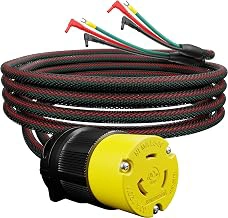
Journeyman-Pro 30A Parallel Cord Kit for Inverter Generators, L5-30R RV Ready
Owners of inverter generators with L5-30 twist-lock outlets gain a flexible RV-ready parallel solution with the Journeyman-Pro 30A kit. The cable pairs two generators equipped with L5-30R ports and routes the combined output through a dual-receptacle box designed for standard RV shore-power hookups, making it useful for tailgating, job sites, or emergency home backup where you already run RV-style distribution.
The 30-amp rating supports sustained loads up to 3,multiple at multiple, enough for typical RV air conditioners or contractor-grade power tools when both generators run in sync. The twist-lock connectors resist accidental disconnection under vibration or cable tension, a practical advantage over straight-blade plugs in outdoor environments.
At $59.99, the kit includes the parallel cord and the dual receptacle box, reflecting heavier-gauge wire and metal housings rather than molded plastic ends. Construction quality matters when cables carry sustained high current; undersized conductors or loose terminals generate heat and voltage drop, reducing usable power at the load.
This kit works only if both of your generators feature matching L5-30 outputs. Before ordering, verify the outlet configuration on each unit - many compact inverter models use proprietary parallel ports or multiple household plugs instead of L5-30 twist-locks. If your generators already carry L5-30 receptacles and you plan to feed RV circuits or a transfer switch, the Journeyman-Pro kit provides a standardized connection without brand-specific adapters.
The dual receptacle box lets you plug two separate RV shore cords or extension cables simultaneously, distributing the combined generator output across different circuits. This flexibility suits users who want to run one heavy appliance and several smaller loads at the same time, rather than funneling all power through a single outlet.
Rated 4.8 out of 5, the kit earns consistent feedback for solid connectors and reliable current delivery. The main limitation remains compatibility: without L5-30 ports on both generators, you'll need adapters or a different parallel solution entirely. For setups that already use L5-30 twist-locks, the Journeyman-Pro kit delivers a straightforward, RV-compatible bridge between two inverter generators.
- ✅ L5-30R twist-lock connectors resist accidental disconnection
- ✅ 30A rating supports up to 3,600 watts combined load
- ✅ Includes dual receptacle box for RV shore-power compatibility
- ✅ Heavier-gauge wire and metal housings for sustained high current
- ⚠️ Only compatible with generators that have L5-30 outlets
- ⚠️ Requires manual verification of outlet configuration on both units
When Parallel Cables Won't Work: Compatibility Limits You Need to Know
Not every pair of solar generators can be linked together, even with the right cable. Mismatched battery chemistries - such as pairing a lithium unit with a lead-acid model - create voltage imbalances that can damage both systems or trigger shutdown protection circuits. Different battery capacities within the same brand family can also cause uneven charging and discharging cycles, shortening the lifespan of the smaller unit.
Generators lacking dedicated parallel ports cannot be safely connected through improvised wiring. These ports regulate voltage synchronization and load balancing; bypassing them risks overheating, inverter failure, or voiding warranties. Even when both units feature parallel ports, they must be identical models with matching firmware versions to ensure proper communication between charge controllers.
Universal cables require manual verification of port pinouts, amperage ratings, and connector types before use. A 30-amp cable connected to a 15-amp port will not provide additional protection - the lower-rated component becomes the this product and potential failure point. Brand-specific cables eliminate guesswork but still demand identical unit pairing; connecting a 2,000 Wh model to a 1,500 Wh model from the same manufacturer will force the larger unit to operate within the smaller unit's limits.
Exceeding the combined inverter rating is another common misstep. Two 1,800-watt generators in parallel do not produce 3,600 watts of continuous output - they share the load up to the maximum rating of a single inverter, with the second unit acting as extended battery capacity. Running appliances that exceed this threshold will trip overload protection on both units simultaneously. Check the manufacturer's parallel operation manual for rated continuous and surge wattage before connecting high-draw devices like air conditioners, power tools, or electric heaters.
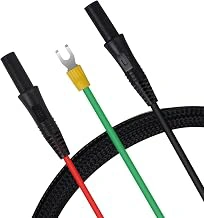
Parallel Cables for Honda Generators EU1000i, EU2200i, EU3000i (HPK123HI)
Honda EU-series owners looking for an affordable parallel solution will find the HPK123HI cable built specifically for the EU1000i, EU2200i, and EU3000i models. At $26.39, this cable costs roughly half the price of universal heavy-duty options while delivering the correct connector configuration for these three popular Honda inverter generators.
The model-specific design reduces the guesswork of adapter shopping. Connectors mate directly to the parallel ports on EU1000i, EU2200i, and EU3000i units without modification or additional hardware. This targeted fit explains the lower price point - the cable serves a narrow range of equipment rather than universal compatibility.
The 4.8 out of 5 rating reflects solid performance for its intended use case: occasional paralleling for moderate loads. The cable handles the typical amperage requirements of two Honda EU-series generators running together, but the lighter construction and shorter length mean less headroom for sustained high-current operation compared to thicker gauge alternatives like the Hutch Mountain cable.
This tradeoff makes sense for weekend campers or backup power users who parallel generators a few times per season rather than daily. The cable provides reliable connectivity for charging batteries, running appliances, or supporting a small RV setup when single-generator output falls short. For users who run two Honda generators at full capacity for extended periods, investing in a heavier-gauge cable offers better thermal margin and voltage stability.
The compact size also simplifies storage in a generator bag or toolbox. Less cable to coil and lighter weight to carry makes this a practical choice when portability matters as much as budget. Honda EU owners who prioritize cost efficiency and already know their power needs stay within moderate limits will appreciate the direct fit and straightforward functionality.
Check current price and Honda model fit
This cable suits recreational and light backup use where occasional paralleling solves a capacity gap without demanding maximum continuous amperage. Users planning frequent high-load operation should compare wire gauge and thermal capacity against their specific duty cycle before choosing based on price alone.
- ✅ Model-specific fit for EU1000i, EU2200i, and EU3000i eliminates adapter guesswork
- ✅ $26.39 price point roughly half the cost of universal heavy-duty cables
- ✅ Compact size simplifies storage and portability
- ✅ Direct connector compatibility with Honda parallel ports
- ⚠️ Shorter length and lighter construction limit headroom for sustained high-current use
- ⚠️ Narrower compatibility compared to universal cables
- ⚠️ Less thermal margin for extended full-load paralleling
Choosing the Right Parallel Cable for Your Setup
Wire gauge and connector type determine whether your parallel cable will safely deliver the power your setup demands. A cable with inadequate gauge creates voltage drop and heat buildup, while mismatched connectors simply won't fit your generator's parallel port - two problems that no amount of troubleshooting will fix after purchase.
Honda EU-series owners should stick with Honda-branded parallel cables designed for their specific models. These cables use proprietary parallel outlets and eliminate compatibility guesswork. Bluetti AC240 users need the P480A cable to enable 240V split-phase output, a feature that matters most for whole-home backup scenarios where you're powering hardwired appliances. RV setups with L5-30 twist-lock receptacles benefit from the Journeyman-Pro's 10-gauge wire and locking connectors, which handle high current without loosening during travel. EcoFlow DELTA Pro users should choose the official dual-voltage kit if they plan to run both 120V and 240V loads simultaneously.
Verify your generator's parallel port type before you order. Check the manual or look at the physical port: round twist-lock designs, rectangular household-style outlets, and proprietary brand-specific connectors all require different cable ends. Universal cables work across many brands, but brand-specific options reduce the risk of a non-functional purchase. If your generator lacks a dedicated parallel port, a parallel cable won't add capacity - you'll need a model that explicitly supports parallel operation in its design.
Choose based on the highest sustained load you expect to run. A 30-amp cable works for most portable power stations and mid-size inverter generators, but if you're planning to power an RV air conditioner or multiple kitchen appliances simultaneously, look for 10-gauge wire rated for continuous duty at that amperage. Thinner cables and lower amp ratings might work for occasional use, but they're not built for the thermal stress of extended high-draw scenarios.
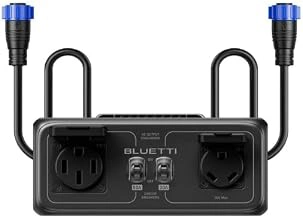
BLUETTI P480A Parallel Box for AC240
The BLUETTI P480A is not a cable but a dedicated parallel box engineered exclusively for connecting two AC240 power stations. At $179.00, it delivers intelligent load balancing and integrated monitoring that standard Y-cables cannot provide. The proprietary design simplifies the physical connection - no manual wire routing or terminal crimping - and the built-in display shows real-time load distribution across both units.
This box locks you into the Bluetti ecosystem entirely. It will not adapt to EcoFlow, Jackery, Goal Zero, or any other brand, and it serves no purpose if you don't own two AC240 units. That narrow compatibility is the tradeoff for plug-and-play ease and firmware-level load management. If you already run an AC240 and plan to add a second for long-term capacity expansion, the P480A handles voltage balancing automatically and reduces the risk of uneven discharge that can occur with passive parallel wiring.
The higher price reflects the embedded electronics and BLUETTI's proprietary connector architecture. For AC240 owners committed to scaling within one brand, the investment brings peace of mind and a cleaner install. For users exploring multi-brand setups or occasional parallel use, a universal cable offers more flexibility at lower cost.
- ✅ Intelligent load balancing with integrated display
- ✅ Plug-and-play connection - no wire stripping or crimping
- ✅ Firmware-level monitoring reduces uneven discharge risk
- ✅ Purpose-built for AC240 stability and long-term expansion
- ⚠️ Exclusively compatible with BLUETTI AC240 - no other brands or models
- ⚠️ Higher $179.00 price reflects proprietary electronics
- ⚠️ Offers no value if you own only one AC240 or use mixed brands