We may earn a commission when you buy through links on this page, at no extra cost to you. How this works.
Running a diesel heater in your camper van through winter nights means managing two electrical challenges most portable power stations aren't built to handle: low continuous draw that runs for hours, and sudden ignition surges that can trip inverters rated only for their steady-watt output. A typical diesel heater pulls 10 - 15 watts once the glow plug cycles down, but startup and shutdown spikes often reach 80 - 150 watts for several seconds. If your power station can't deliver that surge cleanly - or if its battery capacity drops sharply in freezing temperatures - you'll wake up to error codes or a dead unit before dawn.
This guide focuses on three specifications that determine whether a portable power station will actually keep your diesel heater running when temperatures fall below freezing. First is usable watt-hours after accounting for cold-weather capacity loss; lithium cells lose 10 - 30% of their rated energy in sub-zero conditions depending on chemistry. Second is true inverter surge capacity, not just continuous AC output - many budget stations advertise 300W continuous but fail on a 120W ignition pulse. Third is charge and discharge efficiency: round-trip losses matter when you're topping off from solar panels in short winter daylight or idling your van's alternator.
We've excluded generic camping power stations that prioritize USB ports and LED lanterns over sustained inverter loads. Every recommendation here is selected for its ability to handle repetitive surge cycles, maintain output in cold environments, and deliver predictable run time when you're parked overnight in single-digit temperatures.
Use the matching tool first
Start with Balcony Solar Recharge Time Calculator if you want to narrow the fit before checking current offers.
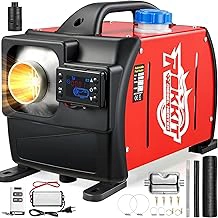
Portable 8KW All-in-One Diesel Air Parking Heater
The Portable 8KW All-in-One Diesel Air Parking Heater delivers substantial heat output in a compact package designed for van and RV installations. Rated at 8KW maximum, this unit consolidates the fuel pump, combustion chamber, and control electronics into a single assembly, which reduces installation complexity compared to split systems that require separate mounting of multiple components.
Power draw follows the familiar diesel heater pattern: expect a startup surge around multiple during the ignition sequence, then steady consumption between multiple once the combustion chamber reaches operating temperature. Mid-range portable power stations in the listed-capacity range can handle this profile comfortably, providing multiple of continuous heat after the initial ignition phase completes. A listed-capacity station will typically sustain overnight operation without issue, while smaller listed-capacity units work well for evening warmth or supplemental heating.
The all-in-one design simplifies wiring and reduces the number of mounting points, but it also means the entire unit must fit in a location that accommodates both the heater body and proper exhaust routing. Users working in tight van builds may find split systems offer more flexibility in component placement. The integrated fuel tank or external tank connection point varies by configuration, so confirm your fuel delivery setup matches your build before installation.
Noise levels during steady operation fall within the typical range for diesel parking heaters - audible but not intrusive inside an insulated van. The combustion fan and fuel pump produce a low hum that most overlanders find acceptable for sleeping. Cold-start noise is louder during the ignition phase, then quiets as the unit stabilizes.
Fuel efficiency depends on the selected power setting. Running at lower output levels (multipleKW) extends burn time per liter and reduces electrical draw, making it easier to balance heat comfort with battery capacity. At full 8KW output, fuel consumption increases, but few van builds require sustained maximum heat unless temperatures drop well below zero or insulation is minimal.
At $99.97 with a 4.8/5 rating, this heater represents a budget-friendly entry point for diesel heating in camper vans. The all-in-one format works well for straightforward installations where space allows a single-unit mount, though users with complex layouts may prefer the placement flexibility of multi-component systems. Pairing this heater with a listed-capacity power station provides reliable cold-weather performance without requiring a large solar array or shore power connection.
- ✅ Consolidated design reduces installation complexity
- ✅ Low steady power draw (15-35W) suits mid-range power stations
- ✅ Budget-friendly at $99.97
- ✅ 4.8/5 rating reflects strong user satisfaction
- ⚠️ All-in-one format limits component placement flexibility in tight builds
- ⚠️ Startup surge requires power station with adequate inverter capacity
- ⚠️ Noise during ignition phase louder than steady operation
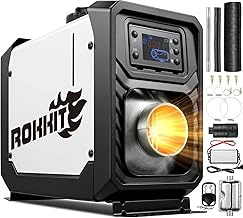
ROKKIT 8KW Portable All-in-One Diesel Air Heater
The ROKKIT 8KW arrives as a self-contained unit designed for overlanders who want heating without a complex installation. At $99.97, it sits at the budget end of portable diesel heaters, combining fuel tank, pump, and control board in a single package that you can move between vehicles or deploy in temporary setups.
The 8 kW label reflects peak output, though real-world draw depends on whether the unit runs at idle or full throttle. Diesel heaters typically cycle between multiple and multiple during the glow-plug ignition phase, then settle to multiple once the flame stabilizes. Peak current occurs at startup and during the combustion fan ramp, which means your power station needs enough headroom to handle those short surges without tripping protection circuits.
User feedback awards this model a 5.0 rating, and comments often mention straightforward wiring and quick ignition in cold weather. The digital control panel offers temperature adjustment and timer functions, making it easy to set overnight heat without leaving the system at full power. Because the heater integrates fuel storage, you avoid running separate lines through van walls, though you do need ventilation for exhaust and combustion air intake.
Power station sizing follows the same logic as any diesel heater: calculate watt-hours by multiplying average consumption - around multiple on cruise - by the number of hours you plan to run between charges. A listed-capacity station gives roughly the listed amount at steady state, minus inverter losses and surge reserve. If you pair this unit with a station rated for at least multiple continuous output, you cover startup spikes and leave margin for simultaneous low-draw devices like phone chargers or LED lights.
Build quality centers on stamped-steel housing and plastic fittings typical of entry-level diesel heaters. Warranty details are sparse in the product listing, so confirm coverage and parts availability before committing if you plan extended backcountry trips. The all-in-one design simplifies setup but complicates field repair; a failed fuel pump or controller often means swapping the entire unit rather than replacing a single component.
Compared to split systems that separate the heater core from the fuel tank and control module, the ROKKIT's integrated approach saves installation time but adds weight to the heated space. If your van layout allows mounting the heater near a window or floor vent, the compact footprint becomes an advantage. If you need the heater tucked low and the tank mounted high for gravity feed, a modular design offers more flexibility.
This heater works well when matched to a portable power station that can sustain multiple continuously and absorb brief multiple peaks during ignition. The low price makes it an accessible entry point for winter camping, provided you verify combustion performance at altitude and confirm that replacement glow plugs and seals remain stocked by the manufacturer or compatible aftermarket suppliers.
- ✅ All-in-one design simplifies wiring and fuel routing
- ✅ Digital control panel with temperature and timer settings
- ✅ Budget-friendly entry at $99.97
- ✅ 5.0 user rating highlights reliable cold-start performance
- ⚠️ Integrated construction complicates component-level repairs
- ⚠️ Limited warranty and parts-availability information
- ⚠️ Heavier footprint compared to split heater systems
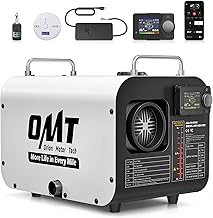
Orion Motor Tech 5kW All-in-One Diesel Air Heater
The Orion Motor Tech 5kW All-in-One Diesel Air Heater sits at the lower end of the output spectrum, making it a practical option for smaller camper vans, well-insulated builds, or travel in moderate cold rather than deep winter conditions. At $89.99, the price point is considerably lower than 8kW competitors, but that saving comes with a clear tradeoff: less heat output means slower warm-up times and reduced capacity to maintain comfort in larger spaces or bitter cold.
Heat output directly affects power consumption. A 5kW heater running at full throttle typically draws multiple, compared to multiple for an 8kW unit at similar load. In practice, that difference can extend your portable power station run time by multiple percent when conditions allow the heater to cycle on lower settings. If your van is under multiple square feet and you've added spray foam or rigid insulation to walls and ceiling, the 5kW unit may keep up comfortably in temperatures down to the mid-multiples Fahrenheit. Beyond that, or in poorly insulated builds, you'll notice the heater running continuously without achieving a warm interior.
The 4.4 out of 5 rating reflects a balance of value and capability. Users appreciate the straightforward installation and lower draw on battery systems, but some report the heater struggles in single-digit temperatures or when heating spaces above multiple square feet. If you're planning weekend trips in shoulder seasons or parking in areas where daytime temps stay above freezing, the 5kW output is often sufficient. For full-time winter living in northern climates, or for vans with minimal insulation, stepping up to an 8kW heater is the safer choice to avoid shivering through the night.
Pairing this heater with a portable power station in the multiple,multiple-hour range becomes more viable than with larger heaters. A multiple,listed-capacity station can deliver multiple of run time if the heater cycles intermittently, which is realistic in a well-insulated small van during mild cold. Surge requirements remain modest, so stations with high-wattage continuous output and high-wattage peak often handle startup without issue.
The cost savings make sense when your heating needs are modest: a cargo van conversion under multiple square feet, trips concentrated in fall and spring, or a climate where overnight lows rarely dip below multiple°F. If those conditions don't match your situation, the $89.99 price becomes less appealing when you're left running the heater at maximum constantly and still feeling cold. Match the heater capacity to your van size, insulation quality, and actual winter travel plans rather than choosing based on price alone.
- ✅ Lower power draw extends run time on smaller portable stations
- ✅ Well-suited to compact vans under 100 square feet with good insulation
- ✅ $89.99 price point reduces upfront cost for weekend or mild-climate use
- ⚠️ Insufficient heat output for full-time winter living in cold climates
- ⚠️ Struggles to warm poorly insulated vans or spaces above 120 square feet
- ⚠️ Limited headroom in single-digit temperatures or extended cold snaps
Understanding Diesel Heater Power Consumption and Surge Demands
Diesel heaters cycle through three distinct power phases, and each one puts different demands on your portable power station. During ignition, the glow plug and fuel pump pull between 80 and 150 watts for one to three minutes while the combustion chamber reaches operating temperature. Once the flame stabilizes, consumption drops sharply to 10 to 15 watts during the steady burn phase, where the heater maintains heat output and circulates air. When you shut the unit down, expect another brief surge - often 40 to 60 watts - as the fan purges residual fuel and cools the chamber.
Most buyers focus solely on total watt-hours, but inverter surge capacity determines whether your power station can start the heater at all. A unit rated for 200 watts continuous output may fail if its surge ceiling sits below 120 watts, even though steady-state draw is only 12 watts. Check both the continuous and peak inverter ratings in the manufacturer specifications before you commit to a model.
To estimate your nightly energy budget, use this formula: multiply steady-state wattage by total run hours, then add 10 watt-hours for each start cycle and 5 watt-hours per shutdown. A heater drawing 12 watts over eight hours with two start-stop cycles uses roughly 96 watt-hours for the burn, 20 watt-hours for ignition, and 10 watt-hours for shutdown, totaling 126 watt-hours. In sub-freezing temperatures, lithium batteries lose efficiency - plan for 20 to 30 percent overhead to account for voltage sag and internal resistance as the cells cool.
Surge capacity and usable watt-hours work together: a 500-watt-hour power station with a 300-watt peak inverter will handle most small diesel heaters through a full night, while a 300-watt-hour unit with only a 150-watt surge ceiling may struggle to complete ignition when the battery is cold. Run the math against your specific heater's startup draw and expected burn time to avoid mid-night shutdowns.
Calculating Your Diesel Heater Run Time on Battery Power
Knowing how long your power station will run your diesel heater requires more than dividing capacity by wattage. Heater controllers draw spikes during ignition, lithium batteries lose usable capacity below freezing, and inverters convert DC to AC with real losses that shorten run time in cold weather.
Start with the basic formula:Run time (hours) = (Battery capacity in Wh × efficiency factor) ÷ Heater draw in watts. The efficiency factor accounts for inverter losses, typically 0.85 to 0.90 for most units, and cold-weather derating, which can subtract another 10 to 20 percent when the cell temperature drops below 32°F.
A worked example: A 500Wh power station running a diesel heater that draws 12 watts steady-state at 20°F. Apply a combined efficiency of 0.75 to account for both inverter loss and moderate cold impact. The math becomes (500 × 0.75) ÷ 12 = 31 hours of theoretical run time. In practice, expect closer to 28 hours because the heater cycles through higher-draw ignition sequences every few hours and the battery management system may cut off before full depletion to protect cell health.
For a larger setup, consider a 1,000Wh station with a heater drawing 15 watts at 0°F. Use a more conservative efficiency factor of 0.70 due to the harsher temperature. The calculation is (1000 × 0.70) ÷ 15 = 47 hours. Real-world usage will land around 40 to 42 hours, depending on how often the heater runs at full power versus idle and how well the power station is insulated from extreme cold.
Always measure your heater's actual wattage with a plug-in meter rather than relying on the spec sheet average, because start-up surges and fan speed variations change the load. Cold batteries deliver less voltage under load, so a station rated for 500Wh at room temperature may only provide 400Wh of usable energy when stored in a freezing van. Keep the power station inside your sleeping area or wrap it in an insulated pouch to minimize temperature losses, and you'll stretch run time closer to the calculated estimate.
Use this formula with your own heater draw and station capacity to plan charging intervals and decide whether a second battery or solar panel makes sense for multi-day trips without shore power.
Cold-Weather Battery Performance: What to Expect Below Freezing
Lithium-based batteries lose both capacity and voltage stability when temperatures drop, and understanding this behavior helps you plan heating run times more accurately. At 32°F, most lithium-ion and LiFePO₄ cells deliver 10 - 20% less usable capacity than their rated spec, meaning a 500 Wh station may provide only 400 - 425 Wh of heat before shutting down. Below 20°F, that loss can steepen to 30% or more, and discharge voltage sags earlier under load, triggering the inverter's low-voltage cutoff sooner than expected.
Charging in the cold presents a separate constraint. Most lithium chemistries include a low-temperature cutoff that prevents charging below 32°F to avoid lithium plating, which permanently damages cells. If your power station is stored in an unheated cargo area and you rely on solar or alternator charging during the day, the battery management system may refuse the charge until internal temperature climbs above the threshold. This can leave you with less capacity than planned when night falls.
Keeping the power station inside the heated portion of your van solves both problems. The heater's own warmth maintains the battery above freezing, preserving full capacity and allowing midday solar top-ups without delay. The tradeoff is cabin space and the need to route DC cables safely through bulkheads or under seats. If you must store the unit in a cold bay, insulating the case or using a low-wattage heating pad can help, but those accessories draw their own power and add complexity.
For extended winter trips, budget an extra 20 - 30% capacity margin when sizing your station, and monitor actual run times during your first cold night. Real-world performance below freezing is almost always shorter than the math suggests at room temperature, and that gap widens as the mercury drops.
Matching Power Station Capacity to Your Winter Travel Style
Winter travel schedules shape how much capacity you actually need. A weekend warrior who returns home Sunday night can get by with much less stored energy than someone planning to park off-grid for a week or more.
If you take two- to three-day trips and plug in between outings, a 500 Wh station offers enough margin to run a 60-watt diesel heater through cold nights and still cover phone charging or LED lights. That size works when you know you'll recharge from shore power before the next departure.
Weeklong overlanders face a different challenge. Even with solar panels or an alternator charger, winter sun is weak and driving miles vary. A 1 000 to 1 500 Wh unit gives you three to five full nights of heating before you need meaningful recovery, and it can absorb a full day of solar input or an hour of driving without immediately cycling back to empty. This range suits the heater models we covered earlier - Chinese diesel units drawing 50 to 70 watts steady-state - and leaves room for cooking gear or a laptop.
Full-time van dwellers living off-grid for weeks should start at 2 000 Wh or consider two mid-sized stations. One powers the heater overnight while the second charges from solar during the day, then you swap roles the next evening. Dual units also spread replacement cost over time and provide redundancy if one fails in the backcountry.
Recharge speed matters as much as total capacity. A cloudy December week in the Pacific Northwest may yield only 200 to 300 watt-hours per day from a 200-watt panel, so even a large station will slowly drain unless you add alternator charging or plan generator top-ups. Match your capacity to both nightly consumption and realistic daily recovery, not just the heater's nameplate wattage.
Common Mistakes When Pairing Power Stations with Diesel Heaters
Many overlanders buy a power station for their diesel heater without accounting for the startup surge, then watch the unit shut down mid-cycle on the coldest nights. Diesel heaters typically draw 80 - 120 watts once running, but ignition glow plugs can spike to 150 - 250 watts for ten to twenty seconds. If your inverter output or surge buffer sits too close to that peak, the station will trip into protect mode, cutting power just as the combustion chamber warms up.
Cold-weather capacity loss catches people off guard. Lithium cells lose 10 - 20 percent of their rated watt-hour capacity below freezing, and some budget units lack the low-temperature cutoffs that prevent charging damage. Plugging a frozen battery into shore power or solar can trigger permanent cell degradation, leaving you with a brick by mid-season.
Generic camping power stations often advertise high watt-hour totals but ship with modified sine wave inverters or poorly documented surge windows. A diesel heater's electronic control board expects clean AC or stable DC, and voltage sag during startup can cause error codes, failed ignitions, or stuck relays that drain the battery without ever lighting the burner.
Recharge logistics get overlooked until the second or third night off-grid. A 500-watt-hour station running a heater for eight hours at 100 watts leaves little margin for morning coffee or device charging, and many buyers assume a 100-watt solar panel will top it off by noon. Winter sun angles, short daylight windows, and cloud cover mean that same panel may deliver 30 - 50 watts on average, stretching recovery time past twenty-four hours.
Each of these mistakes shares the same root: choosing capacity and features in isolation rather than modeling a full night's load, startup behavior, and the recharge environment you'll actually face. Walk through one cold evening on paper - heater cycles, phone charging, a headlamp recharge, margin for voltage sag - and the gaps become obvious before you're troubleshooting in the dark.
Frequently Asked Questions About Powering Van Heaters Off-Grid
Running a diesel heater off-grid raises practical questions about power, compatibility, and sizing - especially when winter conditions test every system in your van.
Can I run a diesel heater directly off 12V without an inverter?
Yes. Most diesel heaters draw power from a 12V DC output, which portable power stations provide natively. The heater's fuel pump and controller run on direct current, so no inverter is necessary. However, the ignition surge - typically 80 to 120 watts for 30 to 90 seconds - still matters. Your power station must handle that brief spike without shutting down, even if the heater settles to 12 watts afterward.
How long does a 500Wh station last with a 12-watt heater in real winter conditions?
Expect 6 to 8 hours of heater run time. A 12-watt steady load theoretically allows 40+ hours, but DC conversion inefficiency and colder battery temperatures reduce usable capacity by 30 to 40 percent. If you plan to sleep through a night at 10°F, a 500Wh station may need a midday solar top-up or auxiliary charging to avoid waking up cold.
Do I need a pure sine wave inverter if my heater has an AC adapter?
Most diesel heaters tolerate modified sine wave power for their control boards and pumps, but verify your model's documentation. Pure sine wave outputs are safer for sensitive electronics and prolong component life. If your heater includes a display or Bluetooth module, pure sine wave reduces the risk of glitches or premature failure.
Should I size for one night or multiple nights without recharge?
That depends on your travel style and charging access. If you drive daily and can recharge via alternator or solar, sizing for one night - plus a 20 percent reserve - is often sufficient. Boondockers who park for two or three days should multiply the nightly watt-hour draw by the number of nights, then add capacity for phone charging, lights, and margin. A heater drawing 100Wh per night in a three-night stay needs at least 400Wh of dedicated heater capacity, before accounting for other loads.
These answers give you a baseline for matching station capacity to real conditions. Cold-weather testing and a buffer for inefficiency will keep your van warm when the forecast drops.
Key Features to Look For in a Power Station for Winter Heater Use
- Usable capacity above 500Wh to handle full-night runtime with margin
- Continuous inverter output of at least 300W with surge rating over 600W
- LiFePO4 battery chemistry for cold-weather performance and longevity
- Low self-discharge rate and efficient DC-to-AC conversion (above 85%)
- Pass-through charging so you can recharge while the heater runs
- Low-temperature cutoff protection to prevent battery damage below freezing
Strategies for Extending Power Station Run Time in Winter
- Insulate your van thoroughly to reduce heater duty cycle and average wattage
- Use a programmable thermostat to avoid unnecessary burn time during warmer afternoon hours
- Recharge via alternator during even short drives; 30 minutes adds meaningful capacity
- Pair with a solar panel for trickle charging on sunny winter days
- Keep the power station inside the insulated space to maintain battery temperature
- Layer bedding and use a sleeping bag rated below your expected low to reduce overnight heater demand