We may earn a commission when you buy through links on this page, at no extra cost to you. How this works.
BLUETTI AC70 Portable Power Station, 768Wh LiFePO4 Solar Generator
Four verified power stations sized to handle surge wattage and sustained runtime for off-grid microwave use.
Use the matching tool first
Start with Watt-Hours to Amp-Hours Converter if you want to narrow the fit before checking current offers.
RV microwaves pull between 700 and 1,200 watts during steady cooking, but the startup surge - when the magnetron and cooling fan kick in simultaneously - can spike to 1,800 or even 2,400 watts for one to three seconds. Most portable power stations advertise continuous output but lack the surge headroom to absorb that initial draw, so the unit either shuts down mid-cycle or refuses to start the microwave at all.
Watt-hour capacity tells you how long a station can sustain a given load, yet a 1,000 Wh battery with only 1,500 W surge rating will trip before the microwave finishes its first heating cycle. You need both a high continuous rating - typically 1,800 W or more - and a surge ceiling above 3,000 W to handle repeated microwave use without cycling the inverter into protection mode.
The four power stations in this guide pair inverter surge capacity with enough watt-hour reserves to run a mid-size RV microwave through multiple cook cycles on a single charge. Each unit manages the startup spike reliably, and the differences come down to total runtime, recharge speed, portability, and whether you need dual AC outlets for simultaneous loads. If your microwave nameplate reads above 1,100 watts or your RV parks off-grid for days at a time, the balance between surge margin and battery size becomes the deciding factor.
Understanding Surge vs. Continuous Watts: Why Your RV Microwave is So Demanding
RV microwaves pull far more power than their rated cooking wattage suggests, and understanding the difference between surge and continuous watts prevents frustrating shutdowns mid-meal. A microwave rated at 1000W cooking power typically draws 1200 to 1500W continuously from the inverter to account for conversion losses and internal components. The real challenge arrives in the first second: the magnetron startup spike demands 2000 to 2400W of surge capacity, often double the continuous load.
This surge lasts only one to three seconds, but it tests the limits of your portable power station's inverter and battery chemistry. Lithium iron phosphate (LiFePO4) cells handle high discharge rates better than older lithium-ion blends, allowing inverters to deliver the brief surge without tripping overload protection. If the inverter's surge rating falls short, the unit shuts down before the microwave even begins to heat food.
Total watt-hours determine how many cooking cycles you can complete, but surge capacity determines whether the first cycle starts at all. A 2000Wh power station with a 2000W continuous and 4000W surge rating will run a typical RV microwave reliably. A 1500Wh unit with only 1800W surge capacity may fail during startup, even though the battery holds plenty of energy. Always match both the continuous draw during cooking and the momentary surge at ignition to avoid guesswork and wasted trips to the circuit breaker.
Inverter efficiency and battery voltage also influence real-world performance. Pure sine wave inverters reduce harmonic distortion that can confuse microwave control boards, and higher nominal voltages - 24V or 48V internal bus designs - sustain peak current delivery with less voltage sag. When comparing models, check the surge specification separately from continuous output, and confirm the battery chemistry supports the discharge rate your microwave will demand every time you press start.
Key Features to Look for in a Power Station for Your Microwave
- Inverter surge rating at or above 2400 W to handle startup magnetron draw
- Minimum 1000 Wh capacity for multiple cooking cycles without recharge
- LiFePO4 battery chemistry for high discharge rate and cycle longevity
- Pure sine wave output to prevent magnetron noise and control board errors
- Fast recharge options (solar, AC, car) to restore capacity between uses
- Weight under 40 lbs if you need to move the unit frequently
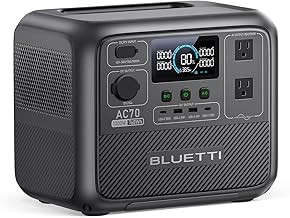
BLUETTI AC70 Portable Power Station, 768Wh LiFePO4 Solar Generator
The BLUETTI AC70 works best for RV owners who run smaller microwaves occasionally and value portability over extended runtime. With multiple-hours of LiFePO4 battery capacity, this unit handles high-wattage microwaves without difficulty, though you'll get fewer cooking cycles between recharges compared to larger stations.
A multiple,high-wattage continuous inverter and higher surge rating mean the AC70 accommodates the startup spike most RV microwaves demand. Expect two to three full microwave sessions - heating leftovers, popping popcorn, or reheating coffee - before the battery depletes, depending on your microwave's actual draw and cook time. That capacity suits weekend trips or infrequent off-grid stops rather than weeks of daily cooking.
The tradeoff is size and weight. At under the listed size, the AC70 stores easily in a cabinet or under a dinette seat, and one person can move it without strain.Check current price. The lower watt-hour reserve also means a shorter wait when recharging via solar panels or shore power, which matters if you rotate between campsites.
If your microwave pulls more than multiple or you cook multiple meals daily off-grid, you'll drain the AC70 quickly and spend more time managing charge cycles. For occasional microwave use in a compact RV setup, the balance between capacity, weight, and cost makes this station a practical entry point.
- ✅ 768Wh capacity handles 700 - 900W microwaves
- ✅ Under 23 pounds for easy storage and transport
- ✅ 1,000W inverter with surge capacity for microwave startup
- ✅ LiFePO4 battery chemistry for longer cycle life
- ✅ Lower price point at $359
- ⚠️ Fewer cooking cycles per charge than larger stations
- ⚠️ Not ideal for microwaves above 900W
- ⚠️ Limited runtime for daily off-grid meal prep
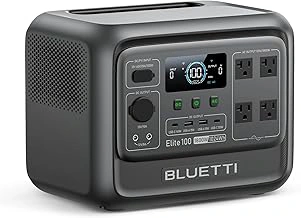
BLUETTI Elite 100 V2 Portable Power Station, 1024Wh LFP Solar Generator
For RVers who need to power a typical multiple microwave without the weight or expense of the largest power stations, the BLUETTI Elite 100 V2 offers 1024Wh of lithium iron phosphate capacity in a package that one person can still move comfortably. That translates to roughly eight to ten minutes of continuous microwave use at full power, which covers several heating and cooking cycles spread across a day - enough to warm breakfast, reheat lunch, and cook a quick dinner before the battery runs low.
The Elite 100 V2 handles the surge draw when a microwave compressor kicks in, though the margin is tighter than the AC70's multiple peak allowance. If your RV microwave pulls closer to multiple during startup, expect the inverter to work hard but manage the load. For microwaves rated multiple input, the station provides stable delivery without frequent shutdowns.
Recharge speed sits in the middle of the pack: solar input reaches multiple, so a pair of 100W panels can fill the battery in five to six hours of good sun. AC wall charging takes about four hours, and the station supports pass-through power, letting you run devices while plugged in. The built-in display shows remaining watt-hours and input/output in real time, which helps you gauge how much runtime remains before the next recharge cycle.
At $449.00, the Elite 100 V2 costs less per watt-hour than smaller units and avoids the premium attached to listed-capacity models. The tradeoff is capacity: you'll need to plan microwave use around available sunlight or shore power access, rather than running appliances freely for days.View full specsto confirm outlet count and solar input compatibility with your existing panels.
- ✅ 1024Wh capacity supports multiple daily microwave cycles
- ✅ Handles surge for most 1000W RV microwaves
- ✅ 200W solar input for mid-speed recharge
- ✅ Competitive price-to-capacity ratio at $449.00
- ⚠️ Tighter surge margin for high-draw microwaves
- ⚠️ Capacity limits extended off-grid use without recharge
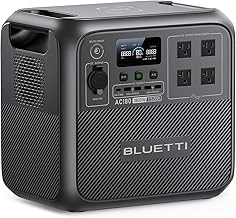
BLUETTI AC180 Portable Power Station, 1152Wh LiFePO4 Solar Generator
The BLUETTI AC180 delivers multiple-hours of lithium iron phosphate storage in a single unit, making it a practical choice for RVers who cook multiple meals off-grid between recharges. That capacity translates to roughly eight to ten microwave heating cycles for a typical high-wattage RV microwave running at medium power, or four to five full-power cook sessions before you need to tap solar panels or shore power.
At the listed size, the AC180 weighs more than compact units in the listed-capacity range, but the added reserve means you can run morning coffee, reheat lunch, and cook dinner without monitoring battery percentage after every use. The LiFePO4 chemistry supports thousands of charge cycles, so the upfront cost spreads across years of weekend trips or extended boondocking.Check availability.
This capacity makes sense if you regularly spend three or more days off-grid, or if your RV setup includes a microwave, laptop, CPAP, and other simultaneous loads. For occasional microwaving on short trips, a listed-capacity station will weigh less and cost less. But when you need the headroom to cook without rationing power or pausing to recharge mid-day, the AC180 offers the balance between portability and reserve that full-time or frequent travelers appreciate.
- ✅ 1152Wh capacity supports multiple cooking sessions per charge
- ✅ LiFePO4 battery chemistry rated for thousands of cycles
- ✅ Reduces need for mid-day solar recharge on extended trips
- ⚠️ 37-pound weight less convenient for frequent moves
- ⚠️ Higher upfront cost than compact alternatives
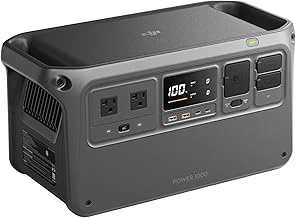
DJI Power 1000 Portable Power Station, 1024Wh LiFePO4 Solar Generator
The DJI Power 1000 offers multiple-hours of LiFePO4 capacity at a price point that often undercuts similar BLUETTI models, making it worth considering if you're watching your budget but still need enough reserve to run an RV microwave through several cycles. The unit uses a continuous 2multiple inverter with a high-wattage surge rating, which handles the startup draw of most high-wattage microwaves without issue.
Recharge speed sets this station apart: DJI quotes a full zero-to-100 charge in under multiple minutes via AC when both input ports are used simultaneously, roughly twice as fast as the AC180 and noticeably quicker than the EBmultipleS. If you park near shore power or a generator for a short window each day, that fast turnaround can be the deciding factor. The aluminum chassis feels solid, though the overall fit and finish leans utilitarian rather than refined - panel gaps are wider than BLUETTI's premium lines, and the handle attachment points are reinforced plastic rather than metal.
Real-world microwave runtime sits in the same ballpark as the AC180: expect six to seven two-minute heating cycles at multiple, accounting for inverter efficiency and the microwave's magnetron overhead. The screen is bright and readable in daylight, and the button layout is straightforward, but the mobile app offers less granular control than BLUETTI's ecosystem if you like remote monitoring. Port selection includes two AC outlets, USB-A, USB-C (up to multiple), and a car socket, which covers the basics without the extra AC outlet count found on larger BLUETTI units.
Choose the DJI Power 1000 when recharge speed and upfront cost matter more than brand familiarity or the last multiple-hours of reserve. If you already own DJI drones or gimbals and trust the brand's battery management, the Power multipletegrates that same engineering into a capable off-grid package.
- ✅ Recharges to full capacity in under 70 minutes via dual AC inputs
- ✅ 2200-watt continuous inverter with 4400-watt surge handles most RV microwaves
- ✅ 1024Wh LiFePO4 capacity at competitive price point
- ✅ 140-watt USB-C output for fast device charging
- ⚠️ Utilitarian build with wider panel gaps than premium BLUETTI models
- ⚠️ Mobile app offers less monitoring detail than BLUETTI ecosystem
- ⚠️ Two AC outlets may require a splitter for multi-appliance setups
How We Evaluated These Power Stations for Microwave Use
Matching a power station to a microwave requires attention to two critical numbers: continuous output and surge capacity. Most RV microwaves draw between 600 and 1,000 watts during operation, but the magnetron startup spike can briefly pull 1.5 to 2 times that amount. A unit rated for 1,000 watts continuous may fail to start a microwave if its surge rating sits below 1,800 watts, even if the steady load would be manageable.
We prioritized power stations with verified surge ratings of at least 2,000 watts and watt-hour capacities starting at 700Wh. That capacity floor allows for multiple short heating cycles - three to five runs of three to five minutes each - without draining the battery below the safe cutoff. LiFePO4 chemistry was non-negotiable; it tolerates the repeated high-drain pulses that microwaves produce far better than older lithium-ion cells, and it delivers more usable cycles over the life of the unit.
Pure sine wave output was another requirement. Modified sine wave inverters can cause humming, reduced power, or erratic behavior in sensitive appliances. Every selection here uses a pure sine wave inverter to ensure the microwave runs smoothly and the internal electronics stay protected. User reports confirming successful microwave operation - particularly with 700- to 1,000-watt models - helped validate real-world performance beyond the spec sheet.
We excluded units under 700Wh because they leave little margin for inefficiency or a second meal. We also passed over any station with a surge rating below 1,800 watts, since the startup demand of even a mid-sized microwave can exceed that threshold. The result is a short list of stations that balance portability with enough reserve to handle the unpredictable draw of microwave cooking off-grid.
Sizing Your Power Station to Your Microwave: A Quick Formula
Matching a power station to your RV microwave starts with finding the input wattage printed on the appliance label or in the owner's manual - this number is often 20 - 30% higher than the cooking wattage advertised on the front panel. Once you have the input wattage, multiply it by 1.2 to 1.5 to account for inverter efficiency losses and give yourself a comfortable headroom. The power station's continuous inverter rating must meet or exceed that figure, and its surge rating should be at least twice the continuous draw to handle the initial magnetron startup spike.
For a 700 W input microwave, budget for 840 - 1,050 W continuous capacity and a 1,400 W surge rating minimum. A 1,000 W input model needs 1,200 - 1,500 W continuous and 2,000 W surge, while a 1,200 W unit requires 1,440 - 1,800 W continuous and 2,400 W surge. These ranges keep the inverter within its safe operating band and prevent shutdown under load.
To locate your microwave's input wattage, check the metal compliance plate on the back or inside the door frame - it will list "Input" or "Power Consumption" in watts. If the label only shows cooking wattage, assume the input draw is roughly 1.4 times that figure. Running the calculation before you shop ensures the power station you choose can start and sustain your microwave without tripping protection circuits or draining the battery faster than expected.
Solar Recharging and Multi-Day Off-Grid Use
Solar recharging makes sense when you plan to cook once or twice a day and have five to seven hours of direct sun between sessions. A 200-watt panel will restore roughly 800 - 1,000 watt-hours over a full day of strong sun, which covers the energy two or three microwave cooking cycles consume. If your power station holds 1,500 watt-hours and you draw 500 watt-hours for breakfast and dinner prep, a single 200-watt panel can keep pace in summer.
A 400-watt folding array cuts recharge time in half and handles cloudier conditions or partial shade better. Most portable power stations accept solar input through an XT60 or MC4 connector and include a built-in MPPT charge controller that optimizes voltage from the panel. Check the station's maximum solar input rating - many cap it at 200 or 400 watts - and stay within that limit to avoid wasting extra panel capacity.
Cloudy weather or winter sun cuts panel output by 50 to 70 percent, so a 200-watt panel may deliver only 60 - 80 watts during overcast afternoons. When the forecast shows three gray days in a row, plug into shore power overnight or use your vehicle's alternator through a DC charging cable to top off the battery before the next meal. Relying solely on solar works best when your daily microwave energy draw stays below what your panel array can replace in the available daylight hours.
Common Mistakes When Pairing Power Stations with RV Microwaves
Choosing a portable power station for your RV microwave becomes frustrating when you focus on the wrong specifications or overlook inverter behavior during real-world use.
The most common mistake is comparing only watt-hour capacity and ignoring surge rating. Most microwaves draw two to three times their rated wattage for the first few seconds while the magnetron starts. A 700-watt microwave may pull 1,400 watts on startup, and if your power station supplies only 1,000 watts continuous, it will shut down or trigger overload protection before the microwave begins heating. Always verify that the inverter's surge capacity exceeds your microwave's inrush current, not just its running wattage.
Another frequent issue is pairing a microwave with a modified sine wave inverter. Many older or budget power stations use modified sine wave output to reduce cost and weight, but microwave electronics - especially control boards and digital timers - expect a smooth sine wave. Modified sine wave power can cause uneven heating, humming transformer noise, or intermittent faults that damage components over time. Pure sine wave inverters cost more and add weight, but they deliver stable voltage that keeps sensitive electronics running as designed.
Undersizing capacity for actual cooking frequency leads to dead batteries mid-trip. A single three-minute reheat cycle consumes roughly 35 watt-hours, but preparing breakfast and dinner daily for two people may total six to eight cycles. That daily load adds up to 280 watt-hours or more, and when you account for inverter efficiency losses - typically 10 to 15 percent - you need closer to 320 watt-hours just for microwave use. If you also run lights, charge devices, and power a fan, a 500-watt-hour station will drain before sunset. Plan your total daily consumption, then choose a capacity that covers microwave cooking plus your other essentials with at least 20 percent reserve.
Failing to account for inverter efficiency is the final pitfall. No inverter converts DC battery power to AC output at 100 percent efficiency; losses show up as heat. A 90 percent efficient inverter requires 778 watt-hours from the battery to deliver 700 watt-hours to your microwave. Check the manufacturer's efficiency curve, especially at high loads, and factor that overhead into your runtime estimates. Ignoring efficiency means your planned meal count will fall short, leaving you with a cold dinner and no margin for recharging delays.
Correct these mistakes by verifying surge rating before purchase, confirming pure sine wave output, calculating real daily usage including efficiency losses, and choosing a capacity that leaves room for unexpected demand. These steps turn guesswork into reliable off-grid cooking.
Frequently Asked Questions About Powering RV Microwaves Off-Grid
Can I run a 1200W microwave on a 1000Wh power station? A 1200W microwave typically pulls around 1400 - 1600W when accounting for inefficiencies and surge draw at startup. Most 1000Wh portable power stations rated for 1000W continuous output will not handle this load safely. You need a unit rated for at least 1800W continuous output (2000W or higher is safer) to cover both running wattage and the brief surge when the magnetron starts. The watt-hour capacity (1000Wh, 2000Wh, etc.) determines runtime, but the inverter's continuous and peak wattage ratings determine whether the station can start and run the microwave at all.
How many times can I heat food before recharging? A 2000Wh power station running a 1200W microwave at 80% inverter efficiency uses roughly 250Wh per five-minute heating cycle. That gives you about seven or eight heating sessions before the battery is depleted. A 1500Wh station would deliver five to six cycles under the same conditions. Actual results vary with microwave power level, food load, and ambient temperature, but these estimates reflect typical draw patterns for mid-size RV microwaves.
Will my microwave damage the power station? Standard RV microwaves with resistive magnetron loads are compatible with portable power stations as long as the inverter's continuous and surge ratings exceed the microwave's requirements. Avoid running the microwave simultaneously with other high-draw appliances, and do not exceed the station's rated output. Overloading the inverter can trigger thermal shutdown or, in rare cases, damage internal components. Most modern stations include overload and short-circuit protection, but staying within rated limits ensures safe operation.
Do I need a pure sine wave inverter? Yes. Microwave magnetrons and control circuits are designed for pure sine wave AC power. Modified sine wave inverters produce a stepped waveform that can cause humming, reduced heating efficiency, or premature failure of sensitive electronics inside the microwave. Every portable power station in this guide uses a pure sine wave inverter, making them safe for RV microwave use.
How long does solar recharge take? A 2000Wh power station paired with 400W of solar panels in full sun (roughly 5 - 6 peak hours per day) can recharge from empty in one to two days, depending on panel efficiency and weather. A 1500Wh unit with 200W of panels may take two to three days under the same conditions. Recharge time scales with panel wattage and available sunlight, so larger solar arrays or AC wall charging (typically four to six hours for most stations) offer faster turnaround when you need the capacity quickly.
Making the Right Choice for Your Off-Grid Kitchen
Choosing the right portable power station for your RV microwave starts with surge capacity - your microwave's startup demand typically doubles or triples its running wattage for a few seconds, and the power station must handle that spike without shutting down. Match the surge rating first, then compare usable capacity against how often you cook and how many other appliances share the same battery.
For weekend trips and lighter microwave use - 700 to 900 watts - the BLUETTI AC70 delivers enough surge headroom and runtime in a unit you can lift with one hand. Its 768 watt-hour battery runs a mid-size microwave for four or five heating cycles before you need to recharge, which covers occasional meal prep without the weight or cost of larger models.
The EcoFlow DELTA 2 Max (Elite 100 V2) and DJI Power 1000 sit in the middle: both handle full-size 1,000-watt microwaves comfortably and offer enough capacity for daily cooking across a long weekend. The Elite 100 V2 adds a few hundred extra watt-hours and faster AC charging, while the DJI Power 1000 weighs less and includes a second USB-C port. Either one works well if you plan to cook every day and want reserve power for a cooler or fan at the same time.
Heavy users - full-timers, families, or anyone running a microwave multiple times a day alongside other kitchen gear - should look at the BLUETTI AC180. The 1,152 watt-hour battery and 2,700-watt surge rating mean you can microwave back-to-back meals, boil water in an electric kettle, and still have capacity left for evening lights. The tradeoff is weight: at 37 pounds, it requires two hands and a clear path to your countertop.
Once surge and capacity align with your cooking routine, compare recharge speed and port layout. Faster AC input matters if you drive between campsites frequently or run a generator for short windows. Extra USB-C or DC outputs help if you charge laptops, lights, or a portable fridge from the same station. Ignore the temptation to buy more capacity than you need - every extra hundred watt-hours adds weight and cost, and most RV microwaves draw power for only a few minutes per meal.