We may earn a commission when you buy through links on this page, at no extra cost to you. How this works.
When a power outage strikes, the first challenge is often physical: getting your solar generator where it needs to be. Most mid-range units - the EcoFlow Delta Pro, Bluetti AC200MAX, and similar models - weigh between 60 and 120 pounds fully loaded. That weight turns a quick repositioning task into a two-person job or a strained-back risk, especially if you need to move the unit across a lawn to catch morning sun or haul it from a garage to the deck.
Heavy-duty carts solve this problem by putting the weight on wheels rather than your lower back. They let you reposition a generator solo, navigate gravel driveways or uneven patio stones, and move between storage and use without dragging or lifting. The stakes are real during an outage: you may need to shift the generator several times a day as shadows move, or roll it closer to the house if extension cords come up short.
The carts in this guide are utility platforms verified for weight capacity, wheel type, and bed dimensions - not products marketed specifically for generators. That means you're choosing based on load rating, wheel diameter, and deck size, then matching those specs to your generator's footprint and weight. The goal is stable transport over the surfaces you actually encounter, whether that's a smooth concrete path or a rutted gravel drive.
Quick comparison
| Gorilla Carts 600 lb Poly Garden Dump Cart with 4 Cu Ft Tub, Black | Check current price |
| Gorilla Carts Steel Utility Cart, 4 Cu Ft Bed, 800 lb Load Capacity, Red – Heavy-Duty Outdoor Hauling Wagon with Removable Side Panels for Yard, Lawn, Garden or Landscaping | Check current price |
| WDT 990lb Heavy Duty Rolling Utility Cart, NSF, Metal, Gray | Check current price |
Use the matching tool first
Start with Balcony Solar Recharge Time Calculator if you want to narrow the fit before checking current offers.
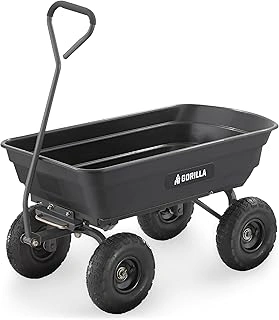
Gorilla Carts 600 lb Poly Garden Dump Cart with 4 Cu Ft Tub, Black
Moving a the listed size solar generator across a lawn, gravel driveway, or uneven yard during an outage calls for a cart that balances hauling capacity with stable wheels and a platform large enough to keep the unit secure. The Gorilla Carts 600 lb Poly Garden Dump Cart delivers a 600-pound weight capacity and a 4-cubic-foot poly bed that accommodates mid-sized generators such as the EcoFlow Delta series, Bluetti AC200 models, and Jackery multiple-range units without exceeding dimensional limits.
The larger pneumatic tires roll smoothly over grass, gravel, and dirt, spreading weight to minimize sinking on soft ground. Poly construction resists rust and keeps the cart lightweight when empty, yet the bed can flex slightly under concentrated point loads - secure the generator with straps to prevent shifting. The dump mechanism tilts the bed for unloading firewood, sandbags, or other supplies, though it raises the overall height by a few inches, which may complicate storage in tight sheds or under low shelving.
Because the cart ships without side panels, a ratchet strap or bungee system is necessary to keep the generator stable during transport, especially on slopes. The open bed simplifies loading from ground level and allows you to position the unit where cable ports face the direction you need. At $129.99, this cart fits budgets tighter than folding platform wagons while offering enough capacity for most portable power stations under the listed size. The dump feature adds utility if you plan to haul extension cords, sandbags for anchoring solar panels, or fuel cans alongside the generator, turning a single-purpose cart into a multi-task outage tool.
Plan your strapping route before the first trip: wrap once around the generator body and twice through the cart frame to prevent lateral movement. The poly bed wipes clean after muddy use, and the pneumatic tires hold air for months between refills, reducing maintenance between outage events.
- ✅ 600 lb capacity handles EcoFlow Delta, Bluetti AC200, and Jackery 2000-range generators
- ✅ 13-inch pneumatic tires roll smoothly over grass, gravel, and soft ground
- ✅ Poly bed resists rust and wipes clean after outdoor use
- ✅ Dump mechanism tilts for unloading extra gear like sandbags or firewood
- ✅ Open bed simplifies positioning generator with ports facing correct direction
- ⚠️ No side panels - straps are essential to prevent generator from shifting
- ⚠️ Poly bed flexes slightly under concentrated point loads
- ⚠️ Dump mechanism adds height, complicating storage in low sheds
- ⚠️ Pneumatic tires require occasional air refills between outage events
What to Look For in a Heavy-Duty Solar Generator Cart
Heavy-duty solar generators often weigh between 60 and 120 pounds, so selecting a cart that moves them safely across outdoor terrain requires attention to four core attributes: rated weight capacity, wheel construction, bed size, and side panel configuration.
Look for a cart with at least 500 pounds of rated capacity even if your generator weighs less. This safety margin accommodates uneven ground, ramps, and the dynamic load shifts that happen when rolling over obstacles. Carts rated just above your generator's weight may flex or wobble under real-world stress.
Wheel type dictates where the cart performs well. Pneumatic tires - air-filled rubber - absorb bumps and roll smoothly over grass, gravel, and dirt paths common during outages. Hard plastic wheels work on pavement and garage floors but dig into soft ground and transmit more vibration to the generator. If you expect to move equipment across a yard or unpaved driveway, pneumatic is the practical choice.
Bed dimensions must match or exceed your generator's footprint. Measure the base of your unit and compare it to the interior width and length of the cart bed. Generators with a narrow base relative to their height are more prone to tipping if the bed is too small or if weight distribution pushes the center of gravity past the wheelbase.
Side panel design affects how you load and secure the generator. Fixed steel panels offer structural rigidity and keep the unit contained during transport. Removable or fold-down panels lower the loading height, which helps when lifting from ground level, but they may reduce lateral stability unless the cart includes corner braces or a locking mechanism.
These carts are general-purpose garden or utility models repurposed for solar generator transport, not equipment designed specifically for power stations. That means features like built-in tie-down points, cushioned beds, or cable management are rare. Plan to add your own padding or straps if the generator has sensitive components or external handles.
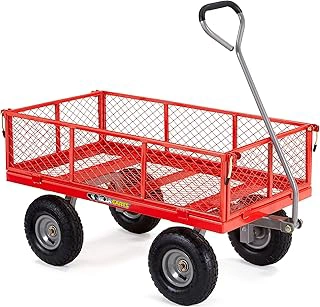
Gorilla Carts Steel Utility Cart, 4 Cu Ft Bed, 800 lb Load Capacity, Red – Heavy-Duty Outdoor Hauling Wagon with Removable Side Panels for Yard, Lawn, Garden or Landscaping
When you need to move a solar generator that weighs anywhere from the listed size across gravel, grass, or uneven ground during an outage, the Gorilla Carts Steel Utility Cart offers an 800 lb load capacity that leaves plenty of headroom. The 4 cubic foot steel bed measures large enough to hold most portable power stations while still fitting through doorways and between tight spaces.
The removable side panels make loading straightforward: drop one panel down, slide your generator onto the bed, and snap the panel back into place. This design reduces the need to lift equipment over high walls, which matters when you're working alone or in a hurry. The steel construction provides a rigid platform that won't flex under weight, keeping your generator stable as you roll it from garage to patio or driveway to shed.
Pneumatic tires handle mixed terrain better than hard plastic wheels. You can pull the cart across dirt, gravel, and grass without fighting to keep it upright. The tires absorb bumps and small obstacles, reducing the jostling your equipment experiences during transport. Steel beds hold up to repeated use and resist denting better than polymer alternatives, which can crack after impact or prolonged sun exposure.
Tradeoffs center on weight and maintenance. A steel frame and bed weigh more than poly versions, so the cart itself is harder to lift into a truck bed or store overhead. Steel also rusts if left outdoors in rain or humidity, so you'll need to keep it under cover or apply rust inhibitor to exposed welds and fasteners. At $131.09, the cart costs more upfront than lighter-duty models, but the combination of higher capacity, drop-side access, and long-term durability makes it a practical choice if you move heavy equipment regularly or expect to use the cart for years across different tasks beyond generator transport.
- ✅ 800 lb capacity provides substantial margin for heavy generators
- ✅ Removable side panels simplify loading without lifting over walls
- ✅ Steel bed resists flexing and offers rigid support under weight
- ✅ Pneumatic tires handle gravel, grass, and uneven surfaces smoothly
- ⚠️ Heavier than poly carts, harder to lift or store overhead
- ⚠️ Steel construction can rust if stored outdoors without protection
- ⚠️ Higher upfront cost compared to lighter-duty alternatives
How to Match a Cart to Your Specific Generator and Needs
Matching a cart to your generator starts with exact measurements. Place a tape measure along the base of your generator - length, width, and height with all handles and ports included - then compare those numbers to the cart's bed dimensions. Leave at least a two-inch margin on all sides so the unit sits stable and doesn't shift during transport over uneven surfaces.
Weight capacity matters more than most buyers expect. If your generator weighs 85 pounds, a cart rated for 100 pounds will technically work, but choosing one with double the capacity - 200 pounds or more - provides a meaningful safety margin when you're rolling over gravel, climbing a curb, or dealing with an uneven driveway. The extra headroom also accounts for any accessories, cables, or fuel cans you might load alongside the generator.
Terrain dictates wheel choice. Pneumatic tires with air-filled tubes handle grass, gravel, dirt, and cracked pavement because they absorb impact and distribute weight across soft ground. Solid rubber or hard plastic wheels roll smoothly on flat concrete or asphalt but dig into soil and catch on rocks, making them impractical for yards or unpaved areas during an outage.
None of the carts in this category ship with factory tie-downs, so plan to secure your generator with ratchet straps, cam buckle straps, or heavy-duty bungee cords. Loop the straps through the cart frame or around the bed rails, then anchor over the generator's frame - not across fragile panels or control screens. This step prevents the unit from sliding forward when you stop or tip when crossing a slope.
Storage space and rust resistance round out the decision. Foldable carts collapse to roughly six inches thick, fitting into a garage corner or closet, while fixed-frame models stay rigid and take up floor space year-round. If you plan to store the cart outdoors, look for powder-coated steel or galvanized frames; untreated steel develops surface rust within weeks in damp climates, especially along weld joints and fastener holes.
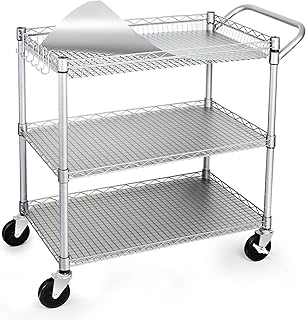
WDT 990lb Heavy Duty Rolling Utility Cart, NSF, Metal, Gray
The WDT 990lb Heavy Duty Rolling Utility Cart offers the highest weight capacity in this comparison at a notably lower price point of $104.99. The metal construction and NSF certification signal quality manufacturing standards, and the multi-shelf design provides flexibility for placing a large solar generator on the bottom tier while storing cables, accessories, or fuel-powered backup units on upper shelves.
This cart rolls on swivel casters designed for smooth, hard surfaces. It handles paved driveways, garage floors, and indoor concrete without issue, making repositioning a multiple- to multiple-pound generator quick and effortless. The caster wheels, however, will not navigate grass, gravel, or uneven outdoor terrain - they lack the diameter and tread pattern needed for soft or loose ground.
The open shelf design means you'll need to secure your generator with ratchet straps or bungee cords to prevent shifting during movement. There are no side rails or containment edges, so plan to anchor the unit yourself. This tradeoff keeps the cart versatile for other uses but requires a few extra seconds of setup each time you load the generator.
If you store your solar generator in a garage or carport and only need to move it short distances on concrete or asphalt - rolling it out to a driveway during an outage or repositioning it near a side door - this cart delivers the capacity and stability you need at the lowest cost. Users who must cross lawns, navigate gravel paths, or handle uneven ground should look at carts with pneumatic or all-terrain wheels instead.
- ✅ 990 lb weight capacity handles even the heaviest portable power stations
- ✅ NSF certification confirms quality manufacturing standards
- ✅ Multi-shelf design allows storage of cables and accessories
- ✅ Lowest price in this comparison at $104.99
- ⚠️ Caster wheels only work on smooth, hard surfaces - not grass or gravel
- ⚠️ Open shelf design requires straps or bungees to secure the generator
- ⚠️ No side rails or containment to prevent lateral shifting
Pre-Purchase Checklist: Verify Compatibility Before Buying
- Measure your generator base dimensions (length, width, height)
- Confirm generator weight including any added battery modules
- Identify your primary terrain: grass, gravel, pavement, or mixed
- Check cart bed dimensions and compare to generator footprint plus 2-inch margin
- Verify cart weight capacity is at least 2x your generator weight
- Confirm wheel type matches your terrain (pneumatic for soft ground, hard for pavement)
Making Your Emergency Power Truly Portable
Moving a solar generator when you need it most changes how useful it becomes during an outage. A cart with the right weight capacity and wheel design gives you options: reposition the unit to capture better sunlight as shadows shift, roll it from your garage to a porch or patio near essential appliances, or keep it stored in a protected area until weather clears. Mobility turns backup power into something you can adapt to conditions instead of leaving it fixed in one spot.
The three carts covered here were designed for general utility use - garden equipment, propane tanks, and heavy shop loads - not specifically marketed for solar generators. That makes their verified weight ratings, measured bed dimensions, and documented wheel specs all the more valuable. When a platform cart lists a 1,000-pound capacity and 24-by-48-inch steel bed, you know exactly whether your 80-pound generator and solar panels will fit and roll safely. No guesswork, no marketing promises about "generator-ready" features that aren't backed by measurable attributes.
Pneumatic wheels handle rough ground and gravel better than hard plastic, but they require occasional inflation. Flat-free tires eliminate maintenance but transmit more vibration on uneven surfaces. A longer bed gives you room to secure both the generator and a panel or two, while a compact cart fits through narrow doorways and stores in tighter spaces. Each choice involves a tradeoff, and matching those tradeoffs to your property and how you move equipment makes the difference between a cart that works and one that sits unused.
Reliable emergency power depends on more than battery capacity and inverter ratings. Being able to move that power where it's needed, when conditions demand it, extends the practical value of every watt-hour stored. Choose a cart based on real load limits, wheel performance on your terrain, and bed size that accommodates your specific generator footprint. The right cart doesn't add features you'll never use - it just makes the equipment you already own easier to deploy when the grid goes down.