We may earn a commission when you buy through links on this page, at no extra cost to you. How this works.
Apartment dwellers face a different set of solar challenges than homeowners. You don't control the roof, can't drill into walls or railings, and often work within lease agreements that prohibit permanent modifications. Foldable solar panels solve these constraints by offering portable, no-install power generation that fits on a balcony, patio, or even a windowsill - and packs away when you move.
A typical balcony offers 20 to 50 square feet of usable floor space, which limits panel size and total wattage. Expect realistic output in the 100- to 200-watt range under full sun, enough to charge laptops, phones, portable power stations, and small fans or lights. These panels won't replace your electric bill or run a window air conditioner all day, but they provide meaningful backup power and reduce reliance on grid outlets for everyday devices.
Foldable designs use hinged or bifold frames that collapse to briefcase size, making storage in a closet or under a bed straightforward. Most units include kickstands or built-in legs that let you angle the panel toward the sun without tools or brackets. This matters in apartment settings where south-facing exposure may be limited or obstructed by neighboring buildings.
Lease and HOA restrictions often forbid anything that alters the exterior or creates visual clutter. Foldable panels remain movable personal property, not permanent fixtures, which keeps you compliant while still capturing solar energy during peak hours. When weather turns or you need the space, you simply fold and stow.
This guide excludes rigid panels that require mounting hardware, systems marketed for whole-home backup, and any unit claiming wattage output inconsistent with its physical footprint. We focus on verified foldable models between 100 and 200 watts that balance portability, balcony fit, and realistic charging capability for renters and urban solar users.
Use the matching tool first
Start with Balcony Solar Recharge Time Calculator if you want to narrow the fit before checking current offers.
how to evaluate and Picked These Panels for Balcony Use
Balcony solar setups face constraints most ground or roof installations don't: limited floor space, shifting shade throughout the day, and restrictions on permanent mounts. We focused on panels that address those realities without requiring tools or landlord approval.
Each panel was evaluated on its unfolded footprint to ensure it could fit within a typical 4-by-8-foot balcony rail section. Weight mattered because repositioning a panel to chase the sun - common when buildings or neighbors cast moving shadows - becomes impractical above 30 pounds for most users. Storage dimensions were measured folded to confirm the unit would fit inside a closet or under a bed between uses.
Wattage was recorded in conditions apartment dwellers actually encounter: angled morning sun, partial afternoon shade from overhangs, and indirect light on cloudy days. Panels that dropped below 60 percent of their rated output in light shade were noted, since balconies rarely offer the unobstructed southern exposure assumed in manufacturer specs.
Cable length was checked against the distance from a typical balcony edge to an indoor outlet or portable power station, with 10 feet considered the minimum. Connector type was verified for compatibility with common MC4 and Anderson Powerpole standards; proprietary plugs that require separate adapters added cost and complexity we flagged. Each panel's kickstand or prop system was tested on both concrete and slatted balcony floors to confirm stability without drilling or adhesive mounts.
We excluded any panel over 50 pounds, units that required a separate inverter purchase to produce usable power, and models with connectors that locked users into a single brand ecosystem. The goal was portability, plug-and-use simplicity, and compatibility with the gear renters already own or can easily add.
Understanding Balcony Solar Output Expectations
Balcony solar panels rarely match the output you'd see on a rooftop or open yard. Building overhangs block early-morning and late-afternoon sun, neighboring walls create shade pockets, and the fixed angle of most balconies prevents you from tracking the sun's path. A 100-watt panel rated under laboratory conditions often delivers 60 to 75 watts in real balcony use, and only during the few hours when direct sunlight actually reaches your railing.
To estimate daily yield, multiply your panel's wattage by the number of peak sun hours your balcony receives, then cut that figure by 25 to 40 percent to account for angle loss and partial shading. A south-facing balcony in a city like Phoenix might see four peak hours in summer, meaning a 100-watt panel could generate around 240 to 300 watt-hours per day. The same panel on a north-facing balcony in Seattle during winter may produce fewer than 100 watt-hours, barely enough to top off a small power station overnight.
Smaller panels in the 60 to 80-watt range work well for trickle-charging phone batteries, portable speakers, or a single laptop throughout the day. Panels rated at 100 to 120 watts can keep a mid-sized power station alive for LED lights, a small fan, or occasional device charging. Larger foldable arrays above 200 watts become practical when you need to run a mini-fridge, charge power tools, or support multiple devices simultaneously, but only if your balcony enjoys consistent midday sun without tall buildings casting shadows.
Seasonal tilt matters more than most renters expect. Winter sun sits low on the horizon, so panels mounted flat against a railing catch fewer photons per hour than the same panel angled steeply in summer. If you can prop your panel at different angles or reposition it as the seasons shift, you'll recover some of that lost capacity. The key takeaway: treat your panel's nameplate wattage as a best-case ceiling, budget for half that number in daily planning, and you'll avoid frustration when your 100-watt panel doesn't fill a 500-watt-hour battery in five hours.
Storage and Seasonal Considerations
Foldable solar panels spend months on a balcony exposed to sun, rain, and temperature swings, but they also need a home when conditions turn extreme or you leave for vacation. Most panels marketed as portable use weather-resistant fabric and junction boxes rated IP65 or IP67, which means they can handle splashes and light rain but are not designed to sit in pooling water or heavy snow for weeks. If your balcony lacks an overhang, plan to bring panels inside during storms or extended wet periods to protect the ports and fabric backing from moisture damage.
Heat is rarely a dealbreaker - monocrystalline cells tolerate full summer sun - but high winds are. Panels propped at an angle catch wind like a sail, and a sudden gust can flip a 20-pound unit into railings or glass. If your forecast shows sustained winds above 20 mph, fold the kickstands flat or move the panel indoors. Some designs include grommets for tiedown cords; use them if your balcony is exposed on multiple sides.
When you do store a panel, the folded footprint matters more than you expect in a small apartment. A 100 W panel folds to roughly the size of a carry-on suitcase, but a 200 W model can approach 24 inches wide and weigh 25 pounds. Check that your closet shelf or under-bed space can accommodate both the dimensions and the weight without crushing the fabric hinges. Panels with sewn-in carrying handles make the trip from balcony to closet manageable; models that rely only on grab loops or no handle at all become awkward when you're navigating a narrow hallway.
Dust and pollen build up on cells over time and cut output by five to ten percent. Wipe the surface with a damp microfiber cloth every few weeks during active use, and do a final cleaning before long-term storage so grit doesn't work into the seams. Store the panel in a dry room-temperature space, away from heating vents and direct sunlight, to prevent adhesive breakdown in the laminate layers. If you plan to leave your balcony setup idle for months - winter in a northern climate, for example - disconnect the charge controller, coil the cables, and fold the panel completely to relieve stress on the hinges.
Weight and handle design become especially important if you live above the second floor and need to carry a panel up stairs during a power outage or move. A 15-pound panel with padded handles is easy; a 30-pound model with thin nylon straps will leave marks on your hands after one flight. Consider how often you'll realistically move the panel before committing to a high-wattage folding unit that prioritizes output over portability.
Matching the Right Panel to Your Power Needs
Power output determines which devices you can run and how quickly you can recharge a portable power station. A 100-watt panel will trickle-charge phones, tablets, and small USB-powered gear, but expect slow progress on anything larger. If you rely on a laptop for remote work or need to power LED lights and a fan during an outage, a 200-watt panel delivers enough current to keep those devices running without waiting hours between uses.
Panels rated at 400 watts suit users with higher draw appliances - think mini fridges, CPAP machines, or faster turnaround on a 500 Wh power station. The tradeoff is footprint: a 400 W array unfolds to roughly twice the area of a 100 W unit, so measure your balcony floor or railing mount before committing. Budget follows the same curve; doubling wattage typically doubles cost.
Start by listing the devices you want to charge, noting their wattage and how many hours of sunlight your balcony receives on average. If your space is narrow or shaded past noon, a smaller, more affordable panel may deliver similar real-world yield to a larger one that never sees full sun. Use the checklist in this guide to confirm your balcony dimensions and check the buying-guide section for any local restrictions on exterior equipment before you order.
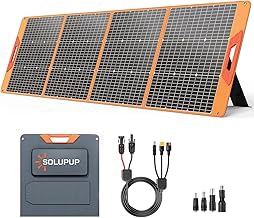
SOLUPUP 200W Portable Foldable Solar Panel
The SOLUPUP 200W foldable solar panel sits between compact multiple units and bulky multiple arrays, delivering enough wattage for apartment balcony use without taking over your entire floor space. At multiple, it can charge a portable power station during a sunny afternoon, making it a practical option for renters who want meaningful output but still need to fold and stow the panel at day's end or when weather turns.
Footprint matters on a balcony. When unfolded, this panel spreads wider than a multiple option but remains narrow enough to fit most standard balcony widths without blocking walkways. Folded, it condenses to a size that slides under a bed or stands upright in a closet. Weight sits in the middle range for foldable panels - you can carry it solo and reposition it to follow sun angles throughout the day, but it's not as light as smaller single-panel designs.
Real-world output depends on your balcony orientation and shade patterns. A south-facing balcony with unobstructed midday sun will let the panel approach its rated capacity; east or west exposure cuts usable hours, and nearby buildings or overhangs reduce peak wattage. The panel includes a kickstand for angling toward the sun, which helps when your balcony receives indirect light. Cable length determines where you place your power station - check that the included leads reach your indoor charging spot or plan for a short extension.
This panel requires a charge controller if you're connecting directly to a battery; most portable power stations have controllers built in, so you plug straight into the input port. The 200W output matches well with mid-size power stations (multiple-hour capacity), letting you top off the battery in a few hours of good sun rather than waiting all day with a smaller panel.
Compared to the multiple picks, this unit delivers roughly double the wattage in less than double the folded size. Compared to multiple arrays, it sacrifices some charging speed but saves significant weight and storage space. That tradeoff makes sense for balconies where you need to move the panel indoors regularly and can't dedicate a permanent outdoor spot.
Check current price and availability
- ✅ 200W output balances charging speed with manageable size
- ✅ Folds compact enough for closet or under-bed storage
- ✅ Weight allows solo repositioning to follow sun angles
- ✅ Kickstand adjusts angle for balconies with indirect light
- ⚠️ Heavier than 100W panels, less portable for frequent moves
- ⚠️ Cable length may require extension for indoor power station placement
- ⚠️ Output drops significantly on east/west balconies or in partial shade
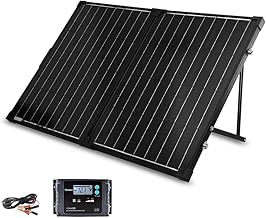
Renogy 100W Portable Foldable Solar Panel Kit with Controller
The Renogy 100W foldable panel fits balconies where space and weight matter more than raw output. At the listed output, this kit produces enough power to charge phones, tablets, a laptop, or run a small USB fan - useful for keeping a power bank topped up or running low-draw devices during daylight hours. The built-in charge controller removes one decision point and one cable from your setup, which matters when you're working in a few square feet.
Real-world wattage will sit below the 100W nameplate in typical apartment balcony conditions: partial shade from railings, non-ideal tilt angles, and morning or afternoon sun rather than midday peaks. Expect multiple in good light, less if your balcony faces east or west. That's enough to recover a drained power station over a long afternoon but not enough to run a mini-fridge or charge multiple devices simultaneously at full speed.
This panel weighs less and folds smaller than the multiple and multiple units in this guide, so it stores in a closet or under a bed without rearranging furniture. The tradeoff is capacity: if you want to charge a listed-capacity power station in a few hours or run higher-draw gear, the larger panels justify their bulk. The Renogy 100W works when your power needs are modest, your balcony is narrow, and portability between indoor storage and outdoor use matters daily.
At $199.98, you're paying roughly the listed amount per watt - higher than the per-watt cost of the multiple models. The controller adds convenience, but if you already own a standalone controller or plan to plug directly into a power station with built-in MPPT, you're covering redundant circuitry. Choose this panel if your highest priority is a compact, light package that handles phone and laptop charging without occupying half your balcony or requiring a dedicated storage spot.
View product details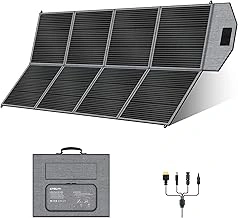
400W Portable Foldable Solar Panel Charger
If your balcony measures at least the listed size wide and you need to charge multiple devices, run a portable cooler, or support longer off-grid sessions, the 400W Portable Foldable Solar Panel Charger offers the wattage headroom smaller panels cannot match. At $229.49, this panel delivers roughly the listed amount per watt - competitive for a folding design in this capacity class.
When unfolded, the panel occupies significantly more floor or railing space than multiple or multiple units, so measure your available balcony footprint before ordering. The larger surface area captures more sunlight during shorter winter afternoons, but repositioning the panel to track sun angles requires more effort due to the increased size and weight. You'll want a clear path along your balcony rail or floor to adjust orientation without lifting over furniture or planters.
Compared to the Greenmagic 400W, this panel costs about multipleess. The Greenmagic justifies its premium with IP67 waterproofing and more robust kickstands that hold angle adjustments on uneven balcony surfaces. If your balcony is fully covered or you plan to bring the panel indoors every evening, the standard weather resistance here is adequate and the price difference funds a larger power station or additional accessories. If your balcony faces unpredictable rain or you leave equipment out overnight, the Greenmagic's sealed junction box and reinforced frame reduce long-term moisture risk.
The 400W output pairs well with mid-capacity power stations (listed-capacity to listed-capacity) commonly used by apartment dwellers who want backup power for a mini-fridge, laptop, and phone without running extension cords to a car. On a south-facing balcony in full sun, expect multiple to multiple in real conditions - enough to recharge a listed-capacity station in under two hours. Partial shade from an overhead awning or neighboring building can drop output by multiple percent, so prioritize unobstructed midday sun exposure when positioning the panel.
Storage remains straightforward: the panel folds into a briefcase-style case, though the folded dimensions are roughly the listed amount by the listed size, so plan for closet or under-bed space rather than a narrow shelf. For renters with larger balconies and higher daily power budgets, this panel offers the wattage needed to charge multiple devices without constant repositioning or waiting for slow trickle rates.
- ✅ 400W capacity supports multiple devices and mid-size power stations
- ✅ $229.49 delivers competitive price-per-watt for foldable design
- ✅ Larger surface area captures more light during shorter winter days
- ✅ Folds into briefcase case for closet or under-bed storage
- ⚠️ Requires 40+ inches of balcony space when unfolded
- ⚠️ Heavier and bulkier to reposition than 100W or 200W panels
- ⚠️ Standard weather resistance less robust than Greenmagic IP67 rating
- ⚠️ Folded dimensions (24×20 inches) need more storage space
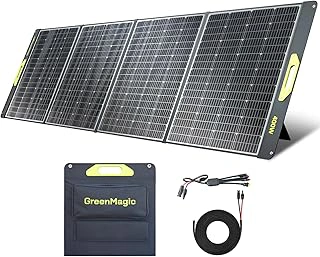
Greenmagic 400W Portable Foldable Solar Panel Charger
The Greenmagic 400W portable foldable solar panel offers the same wattage output as premium options but at a much lower upfront cost, making it a practical choice for renters who want balcony solar capacity without stretching their budget. At $329.99, it delivers the power needed to run a small power station or charge devices throughout the day, though the price difference signals tradeoffs in build materials and warranty coverage compared to higher-end 400W alternatives.
This panel fits the budget-conscious user who plans occasional or seasonal balcony charging - someone who values having the option to generate 400W but doesn't rely on it daily for critical loads. If your setup sees weekend use or serves as backup capacity during good weather, the Greenmagic hits a practical middle ground between entry-level multiple panels and the most durable 400W units designed for constant outdoor exposure.
The foldable design stores flat in a closet or under a bed when not deployed, and the 400W capacity means fewer hours of sunlight to top off a mid-size power station compared to lower-wattage options. However, users prioritizing daily power generation or multi-year outdoor durability should weigh the cost savings against the materials and support that come with more expensive 400W models. Real-world balcony conditions - wind, humidity, temperature swings - put ongoing stress on panels, and long-term reliability often correlates with build quality.
Choose the Greenmagic if upfront cost matters more than extended warranty coverage, or if your balcony power needs are intermittent rather than constant. Spend more on a premium 400W panel if you're building a daily-use system where panel longevity and manufacturer support become worth the investment over time.
- ✅ 400W capacity at a significantly lower price point
- ✅ Foldable format stores easily in small apartments
- ✅ Provides same wattage as premium options for occasional use
- ⚠️ Build materials and warranty coverage reflect the lower price
- ⚠️ Better suited to intermittent use than daily outdoor exposure
Key Factors for Choosing a Balcony Solar Panel
- Measure balcony floor space and railing clearance when panel is fully unfolded
- Check folded dimensions against your storage options (closet, under bed, behind furniture)
- Calculate daily sun hours on your balcony (morning, afternoon, seasonal shifts)
- Verify output connectors match your power station or device charging cables
- Confirm weight allows you to reposition panel solo to track sun angle
- Review local HOA or lease restrictions on visible equipment and temporary structures