We may earn a commission when you buy through links on this page, at no extra cost to you. How this works.
Most DIY van electrical systems run sensitive electronics - laptops, camera batteries, induction cooktops, and refrigerators - that require clean AC power to function without interference or damage. Modified sine wave inverters produce a choppy approximation of household current that causes motors to overheat, chargers to buzz, and audio equipment to hum. Pure sine wave inverters deliver smooth, grid-identical power that protects your gear and prevents the high-frequency noise that can corrupt USB charging and audio circuits.
Choosing the right inverter for a campervan build comes down to four practical factors. Continuous wattage determines what you can run simultaneously without overload. Surge capacity handles the brief startup draw from compressors and power tools. Physical footprint dictates where the unit fits in tight under-seat or floor compartments. Safety shutoffs - over-temperature, low voltage, and short-circuit protection - prevent battery drain and fire risk when something goes wrong.
This comparison covers four pure sine wave inverters sized for real van life electrical loads: a 2000-watt model for minimal builds, two mid-range 2200 - 2500W options that balance size and output, and a 3000-watt unit for larger systems with air conditioning or high-draw appliances. Each section explains how continuous and surge ratings translate to actual device compatibility, what the installation footprint means for cramped van spaces, and which thermal and voltage protections matter most when you're off-grid for days at a time.
Quick comparison
| GIANDEL 2000 Watt Pure Sine Wave Power Inverter 12V DC to 120V AC | Check current price |
| 2000 Watts Pure Sine Wave Inverter 12V DC to 110V/120V AC Converter, 4000W Peak, LCD Remote Control, 4 AC Outlets, USB & Type-C – for RV, Truck, Off-Grid Solar, Emergency Power Backup | Check current price |
| 2500W Pure Sine Wave Inverter 12V DC to 120V AC | Check current price |
Use the matching tool first
Start with Balcony Solar Recharge Time Calculator if you want to narrow the fit before checking current offers.
How to Size Your Inverter for Your Van Build
Sizing your inverter starts with knowing your actual continuous wattage demand, not just the capacity you think you might want. List every AC appliance you plan to use - laptop charger, coffee maker, blender, power tools - and add their running wattages. Pay close attention to startup surge: induction motors and compressors can draw three to five times their running wattage for a second or two at startup, and your inverter must handle that peak without shutting down.
Once you have your total continuous wattage, convert that demand into amps at 12V to size your battery bank and cables correctly. The formula is straightforward: divide watts by 10.5 (the lowest safe discharge voltage for a 12V system) to get the DC amperage your inverter will pull. A 1500W inverter at full load draws roughly 143 amps, which means you need a battery bank capable of delivering that current without voltage sag, plus cable thick enough to carry it safely - typically 2/0 AWG or larger for runs over three feet.
Undersizing your inverter relative to your continuous load causes voltage drop under load, triggering low-voltage shutoffs and reducing battery lifespan. The inverter's continuous rating is what it can sustain indefinitely; the peak or surge rating is only for seconds. If your total continuous demand sits under 1500W, a 2000W inverter provides headroom for surge. Between 1500W and 2000W continuous, step up to a 2500W model. Over 2000W continuous, you need a 3000W inverter and the battery and cable infrastructure to match.
Build your electrical system around measured demand, not guesswork, and size each component - inverter, battery, cable - so no single weak link forces the rest to work harder than designed.
Installation and Safety: Wiring, Fusing, and Ventilation
Proper wiring and protection are the foundation of a safe van electrical system. Undersized cables cause voltage drop, heat buildup, and fire hazards, so sizing wire to match inverter current draw is not optional. For a 2000-watt inverter pulling 12 volts, expect around 170 amps at full load; use at least 2/0 AWG copper cable for runs under four feet. Longer runs or higher wattages require 3/0 or 4/0 AWG to keep voltage drop under three percent. Online AWG charts tailored to DC systems make this calculation straightforward.
Every positive cable between the battery and inverter must be protected by a fuse or breaker rated to the inverter's maximum continuous draw. Install the fuse holder within seven inches of the battery terminal to isolate the cable if a short circuit occurs. ANL fuses and Class T fuses are common choices; choose a rating that matches your inverter's spec sheet, typically 200 to 300 amps for mid-size units. Never skip this step or place the fuse farther down the cable run.
Crimp cable lugs using a hydraulic or hammer crimper designed for the lug size and wire gauge. Loose crimps create resistance, heat, and potential failure points. Strip only enough insulation to seat the wire fully inside the barrel, then apply heat shrink over the connection to seal out moisture. At the inverter terminals, torque the lugs to the manufacturer's specification - usually listed in the manual - and double-check tightness after the first day of operation as connections can settle.
Grounding the inverter chassis to the vehicle frame or a dedicated ground bus reduces shock risk and noise in sensitive electronics. Some units require a separate ground lug; others rely on the negative cable connection. Consult the manual to confirm whether a chassis bond is needed and use at least 6 AWG wire for that connection.
Ventilation keeps thermal shutoff from interrupting your power mid-use. Most pure sine wave inverters have built-in temperature sensors that cut output when internal heat exceeds safe levels. Mount the inverter in a space with at least three inches of clearance on all vented sides, and avoid enclosed cabinets without airflow. If you must install in a cabinet, add computer-style exhaust fans or louvered panels to move hot air out. Check fan operation periodically and clear dust from cooling fins to maintain full capacity during sustained loads.
Real-World Loads: What Each Inverter Can Actually Run
Understanding what your inverter can actually power helps you choose the right size and plan realistic energy use for van life. A 2000W pure sine wave inverter handles everyday electronics without trouble: laptops draw 50-100W, phone chargers 10-20W, countertop blenders 300-500W, small microwaves 600-1000W, and LED TVs 50-150W. Running a laptop, charging two phones, and heating lunch in a microwave simultaneously sits comfortably within the continuous output window, leaving headroom for surge draw when the microwave compressor kicks in.
A 2500W inverter opens the door to higher-draw cooking and climate control. Portable induction cooktops pull 1200-1800W, and small rooftop or window air conditioners demand 1000-1500W depending on BTU rating and ambient temperature. You can run the induction cooktop or the air conditioner alongside your laptop and phone chargers, but not both high-draw appliances at once without risking overload shutdown. This tier suits van builders who want flexible cooking options or occasional AC without stepping up to a 3000W unit.
At 3000W continuous output, you gain the ability to operate multiple high-draw devices simultaneously. Running an induction cooktop and a microwave together becomes feasible, and corded power tools - circular saws, drills, or sanders drawing 1000-1500W - fit within the budget for mobile work setups. The larger inverter also provides a comfortable buffer when startup surges from refrigerators, air conditioners, or pumps overlap with baseline loads.
Runtime depends on your battery bank capacity and inverter efficiency. A 200Ah lithium battery at 12V stores roughly 2400 usable watt-hours. Running a 1000W load through a 90% efficient inverter draws about 1110W from the battery, giving you around two hours before the bank reaches 50% depth of discharge. A 400Ah bank doubles that window to four hours under the same load. Efficiency loss typically ranges from 10% at moderate loads to 15% at very light or very heavy draw, so plan for 85-90% conversion when calculating daily energy budgets. Recharging a depleted 200Ah bank requires 200-300W of solar for several sunny days or shore power and a capable battery charger for faster turnaround. Matching inverter size to actual daily loads and battery capacity keeps your system sustainable without constant generator use or shore hookups.
Common Mistakes and How to Avoid Them
Choosing the wrong inverter or installing it incorrectly can leave you without power when you need it most. Many van builders focus on peak wattage numbers without considering continuous output, which leads to overloads during normal use. An inverter rated for 2000 watts peak may only handle 1000 watts continuously, and running a hair dryer or microwave near that ceiling will trigger the overload shutdown. Always size your inverter based on the continuous rating that matches your highest regular load, not the surge number.
Undersizing the battery bank or using cables that are too thin creates a this product that no inverter can overcome. A 2000-watt inverter drawing from a 12-volt system can pull over 160 amps at full load, and 10-gauge wire will overheat under that demand. Use 2/0 or larger cable for high-wattage inverters, and match your battery bank capacity so you're not draining it below 50 percent regularly. This protects both the batteries and the inverter from voltage sag.
Mounting an inverter in a sealed compartment without airflow is a common oversight that shortens its life. Inverters generate significant heat, and even models with built-in fans need space around the vents to exhaust warm air. Install in a location with at least three inches of clearance on all sides, and consider adding a vent fan if the compartment stays above 80°F during use.
Skipping the inline fuse or circuit breaker between the battery and inverter removes the primary protection against short circuits and cable fires. A fuse rated slightly above the inverter's maximum draw, placed within 18 inches of the battery terminal, will blow before a damaged cable can melt its insulation. This is not optional for safe van electrical systems.
Using a modified sine wave inverter to save money creates problems with laptops, CPAP machines, audio equipment, and anything with a sensitive power supply. These devices expect the smooth waveform that pure sine wave inverters deliver, and modified wave output can cause buzzing, reduced efficiency, or permanent damage. The price difference is small enough that pure sine wave should be the default choice.
Ignoring idle draw means your inverter slowly drains the battery even when you're not running any loads. Some models consume 1 - 2 amps per hour just staying on, which adds up to 24 - 48 amp-hours per day. Use a remote switch to turn the inverter off completely when it's not needed, or choose a model with low standby consumption if you need always-on capability for a refrigerator or other continuous appliance.
Making Your Final Decision
Choosing the right inverter depends on your actual load and how you plan to recharge. The GIANDEL 2000W delivers dependable performance with straightforward installation, making it a solid match for most van builds that run laptops, a blender, and occasional power tools. If you want USB-C charging built in and prefer spending less, the LCD remote 2000W handles the same continuous loads while adding modern device ports. The compact 2500W fits tighter under-bed or cabinet spaces when you need extra surge headroom for inductive appliances like compressors or coffee grinders. High-demand setups - running microwaves, air conditioners, or multiple simultaneous devices - call for the 3000W, provided your battery bank and alternator or solar array can sustain the draw.
Size your inverter for continuous wattage plus at least 20 percent margin, not peak or surge ratings alone. Verify that your battery cables, fuses, and charge sources can deliver the current your inverter will pull under full load. A 2000 W inverter drawing from a 12 V system pulls roughly 170 amps, so cable gauge and connection quality matter as much as the inverter itself. Match your daily energy budget to your solar input or alternator runtime so you avoid waking up to a depleted bank mid-trip.
Before you order, revisit your appliance list one more time to confirm the wattages and startup surges you recorded earlier, then choose the inverter that covers your real-world usage without unnecessary overhead.
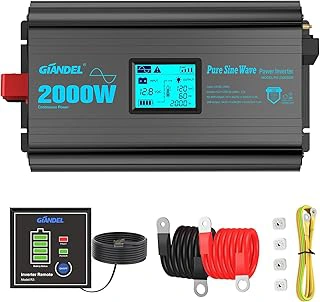
GIANDEL 2000 Watt Pure Sine Wave Power Inverter 12V DC to 120V AC
The GIANDEL 2000 Watt Pure Sine Wave Power Inverter delivers 2000W continuous output and a surge capacity, making it a practical choice for van builds that need to run laptops, blenders, microwaves, and other AC appliances off a 12V battery bank. Rated 4.6 out of 5, it balances performance with a price point of $209.95 that fits most DIY budgets.
This inverter converts 12V DC to 120V AC using pure sine wave output, which means sensitive electronics like phone chargers and laptop power supplies run without interference or overheating. The dual AC outlets and a pair of USB ports give you flexibility to charge multiple devices simultaneously. An LCD display shows real-time input voltage, output wattage, and battery status, so you can monitor power draw without guesswork.
At roughly the listed size long, the listed size wide, and the listed size tall, the unit fits into most under-bed or cabinet mounting spots in a campervan. It weighs around the listed size, manageable for a solo install. You'll need 2 AWG or thicker battery cables to handle the full 2000W load safely; thinner wire will heat up and create voltage drop that limits performance.
The built-in cooling fan activates under load, and while it's audible at higher wattages, the noise is comparable to a desktop computer fan rather than a vacuum cleaner. Thermal performance holds steady during moderate use - running a microwave for a few minutes or a blender for smoothies - but sustained loads near 2000W will generate heat, so leave ventilation space around the inverter and avoid mounting it inside a sealed compartment.
For typical van life appliance loads, this inverter handles a multiple microwave, a multiple blender, and simultaneous laptop and phone charging without issue. The surge rating covers startup spikes from devices like coffee makers or power tools, though you should verify your specific appliance's surge draw to avoid nuisance shutdowns. If your setup includes high-draw tools or a residential refrigerator, budget for the inverter's efficiency losses - expect around multiple% efficiency under load, meaning your battery bank will drain faster than the rated wattage suggests.
The GIANDEL 2000W works best in systems with at least 200Ah of lithium or multiple of AGM battery capacity to avoid excessive depth of discharge. Pair it with properly sized fuses or circuit breakers on both the positive and negative DC lines, and double-check all connections before powering on. The unit includes basic protections - overvoltage, undervoltage, overload, and short circuit - but these are last-resort safeguards, not substitutes for correct wiring and appropriately rated components upstream.
- ✅ 2000W continuous output with 4000W surge capacity handles common van appliances
- ✅ LCD display provides real-time voltage and wattage monitoring
- ✅ Pure sine wave output protects sensitive electronics
- ✅ Compact dimensions fit standard under-bed or cabinet mounting locations
- ⚠️ Cooling fan becomes audible under moderate to heavy loads
- ⚠️ Requires 2 AWG or thicker battery cables for safe full-power operation
- ⚠️ 85-90% efficiency under load increases battery drain compared to rated wattage
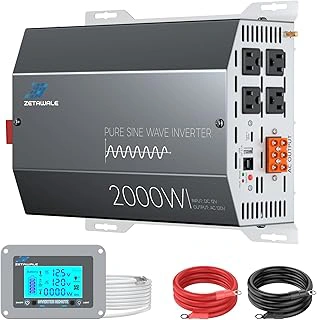
2000 Watts Pure Sine Wave Inverter 12V DC to 110V/120V AC Converter, 4000W Peak, LCD Remote Control, 4 AC Outlets, USB & Type-C – for RV, Truck, Off-Grid Solar, Emergency Power Backup
When you're building a van electrical system on a tight budget, the 2000 Watts Pure Sine Wave Inverter delivers the essential features without the premium price tag. At $189.99, this 12V DC to 110V/120V AC converter offers 2000W continuous power and 4000W surge capacity - matching the peak performance of pricier units like the GIANDEL while leaving more room in your build budget for batteries or solar panels.
The LCD remote control sets this inverter apart in its price bracket. You can mount the display panel on your dashboard or bedside, monitoring voltage, wattage, and battery status without opening cabinets or crawling under the bed platform. The remote connects via a standard RJ45 cable, so you can run it wherever it's most useful in your layout.
Four AC outlets give you flexibility for simultaneous loads - laptop, fan, water pump, and a phone charger - without needing a power strip. The integrated USB-A and USB-C ports handle phone and tablet charging directly, eliminating the need for wall adapters and freeing up the AC outlets for higher-draw appliances. The USB-C port is particularly useful for newer laptops and devices that can pull higher charging rates.
The 4000W surge rating handles momentary spikes when a fridge compressor kicks on or a power tool starts up, covering the same inrush scenarios as inverters twice the price. Physical footprint is comparable to other 2000W units, though the remote panel adds a second mounting point to plan for during installation.
The tradeoff for the lower price is less brand visibility and warranty transparency. While the product earns a 4.6/5 rating on Amazon, there's limited information about long-term reliability or customer support responsiveness compared to established names like Renogy or Victron. The documentation may be less detailed, which can matter when troubleshooting wiring issues or understanding low-voltage cutoff behavior. If this is your first DIY electrical build, that learning curve may tilt you toward a brand with more robust support resources, even at a higher cost.
For van lifers who've already completed a build or have electrical experience, the feature set and price make this inverter a practical choice. The remote display and direct USB charging add real convenience, and the $189.99 price leaves budget for other critical components. Just plan for less hand-holding if you run into installation questions.
- ✅ Budget-friendly at $189.99 with full 2000W continuous, 4000W surge capacity
- ✅ LCD remote control allows dash or bedside monitoring without accessing the inverter
- ✅ Four AC outlets plus USB-A and USB-C ports eliminate need for adapters
- ✅ 4000W surge handles compressor and tool startup spikes
- ⚠️ Less brand visibility and warranty clarity than established names
- ⚠️ Limited documentation and support resources for troubleshooting
- ⚠️ Unknown long-term reliability track record
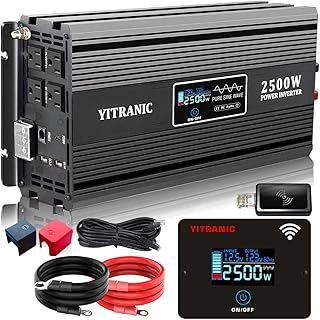
2500W Pure Sine Wave Inverter 12V DC to 120V AC
When a microwave, induction cooktop, or small air conditioner are part of your van life plan, the 2500W Pure Sine Wave Inverter 12V DC to 120V AC provides the continuous output headroom those appliances demand without stepping up to a full high-wattage chassis. Priced at $199, it sits between the multiple and multiple models, offering an efficient middle ground for builders who need more capacity but still want to keep the inverter footprint and cost under control.
This inverter carries a 5.0/5 rating and delivers clean sine wave output suitable for sensitive electronics, small power tools, and appliances with compressor motors. The 2500-watt continuous rating means you can run an high-wattage induction burner alongside a laptop charger and LED lighting, or operate a high-wattage microwave with buffer for startup surge. If your build includes a rooftop air conditioner rated around multiple, this inverter provides the margin needed for compressor cycling without tripping the overload cutoff.
Running multiple continuously at multiple pulls roughly the listed amount from your battery bank, so you need a lithium battery system with at least multiple-hours of usable capacity to avoid deep discharge on longer cooking or climate-control sessions. Wire gauge becomes critical: 2/0 AWG copper cable is the minimum for the DC side, and the run from battery to inverter should stay under four feet to keep voltage drop within safe limits. Undersized wire will heat up, waste energy, and create a fire risk at this current level.
The physical dimensions are smaller than typical high-wattage units, which helps in vans where every inch of under-bed or cabinet space matters. Mounting location should allow airflow around the cooling fans - inverters at this wattage generate significant heat, and adequate ventilation helps reduce the chance of thermal shutdown during sustained loads. If your appliance schedule rarely exceeds multiple, the next model down will save money and space; if you plan to add a second high-draw device later, the 2500W rating provides useful flexibility without the bulk of larger inverters.
This model works best for DIY builders who have mapped their total load, confirmed their battery bank can handle the draw, and installed properly sized wire and fuse protection. For builds centered on cooking, cooling, or occasional power-tool use, the 2500-watt continuous output and $199 price point deliver the capacity you need without paying for wattage you won't use.
- ✅ 2500W continuous output handles induction cooktops, microwaves, and small air conditioners
- ✅ 5.0/5 rating
- ✅ $199 price point between 2000W and 3000W models
- ✅ Smaller footprint than 3000W units
- ✅ Pure sine wave output safe for sensitive electronics
- ⚠️ Requires 400 - 500 Ah lithium battery bank for sustained use
- ⚠️ Pulls ~208 amps at full load, demanding 2/0 AWG wire and short cable runs
- ⚠️ Generates significant heat, needs adequate ventilation space
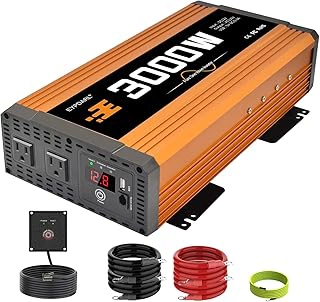
3000 Watt Pure Sine Wave Power Inverter 12V to 110V
Van builds that include air conditioning, microwave ovens, or power tools need an inverter that can handle sustained high loads without voltage drop or thermal shutdown. The 3000 Watt Pure Sine Wave Power Inverter 12V to 110V delivers 3000W continuous output at a $179 price point that sits well below what most 3000W models command, making it worth evaluating for DIY electrical systems where budget and capacity both matter.
This inverter converts 12V DC battery power to 110V AC with a pure sine wave output suitable for sensitive electronics and appliances. The 3000W rating means you can run a rooftop air conditioner (typically multiple startup, multiple running) alongside other moderate loads, or operate a full-size microwave without immediately tripping the inverter. For van builds designed around climate control or mobile workshop use, that capacity opens up options that multiple or multiple units simply cannot support.
The $179 price is notably lower than competing 3000W inverters, which often range from multiple. This gap may reflect newer market entry, streamlined distribution, or differences in component selection and build construction. The 4.3 out of 5 rating suggests generally positive user experience, though the price-to-wattage ratio means you should verify cable terminations, cooling fan operation, and idle draw during installation to confirm the unit meets your expectations.
Running 3000W continuous from a 12V battery bank requires serious electrical infrastructure. At full load, the inverter will draw roughly the listed amount from the battery (3000W ÷ 12V), which means you need 0 AWG or 2 AWG cable to safely carry that current without excessive voltage drop or heat buildup. Anything smaller creates resistance that wastes power and risks damaging cables. A battery bank rated for at least multiple of usable capacity is the practical minimum to support a 3000W inverter without depleting the bank too quickly or stressing the cells; multiple or more provides better longevity and allows you to run high-draw appliances for longer periods between charging cycles.
Installation demands careful planning. The inverter needs secure mounting close to the battery bank to minimize cable length, adequate ventilation to dissipate heat during sustained loads, and fusing or circuit breaker protection rated for the full DC amperage. If your van build includes solar or alternator charging, confirm that your charging system can replenish the battery bank quickly enough to match your daily power consumption, especially if you plan to run air conditioning or cook with electric appliances regularly.
This inverter makes the most sense for van builds where high-power appliances are part of the core design, not occasional extras. If your electrical plan already includes a large battery bank, heavy-gauge wiring, and robust charging, the 3000W capacity and low price offer a straightforward path to running equipment that smaller inverters cannot handle. For lighter-duty builds focused on phones, laptops, and LED lighting, a multiple or multiple model will cost less, require thinner cables, and avoid the idle draw and space requirements that come with a 3000W unit.
- ✅ 3000W continuous capacity supports air conditioning, microwaves, and power tools
- ✅ $179 price point is significantly lower than most 3000W models
- ✅ Pure sine wave output compatible with sensitive electronics
- ⚠️ Requires 400Ah+ battery bank and 0 or 2 AWG cables for safe operation
- ⚠️ Lower price may reflect newer market presence or different component choices
- ⚠️ High idle draw and space requirements unnecessary for light-duty builds
Key Factors Before You Buy
- Continuous wattage matches your highest simultaneous AC load plus 20% headroom
- Peak surge rating covers startup draw of motors and compressors (typically 2-3x continuous)
- Physical dimensions fit your electrical compartment with 2 inches clearance for airflow
- Battery bank provides at least 4x the inverter's max amp draw in usable capacity
- Cable gauge meets or exceeds inverter manufacturer spec (typically 2 AWG for 2000W, 0 AWG for 3000W)
- Fuse or breaker rated for inverter max current is installed within 7 inches of battery positive terminal