We may earn a commission when you buy through links on this page, at no extra cost to you. How this works.
An electromagnetic pulse - whether from a high-altitude nuclear detonation or a severe solar flare - can instantly damage unprotected electronics by inducing voltage spikes that exceed the tolerances of modern semiconductors. The most practical defense for civilian preparedness is a Faraday bag: a portable enclosure lined with conductive material that blocks electromagnetic radiation and distributes it harmlessly around the contents. Signal attenuation, measured in decibels across a range of frequencies, is the only objective way to verify that a bag can shield against EMP transients, radio-frequency interference, and high-altitude electromagnetic pulse effects.
Many products marketed as "EMP protection" fail basic laboratory tests or omit attenuation data entirely. We excluded generic foil pouches, unrated cloth pouches with metallic threading, and any bag that does not publish third-party shielding performance across the full spectrum. This guide focuses on three verified Faraday bags, each chosen for a specific use case. The first prioritizes single-device portability for a phone or handheld GPS. The second offers mid-capacity storage for a laptop, external drives, and a two-way radio. The third is a bulk-size option with waterproof construction, designed for entire emergency communication kits or multiple small electronics at once.
Attenuation ratings typically range from 40 dB to over 100 dB, depending on frequency. A 60 dB reduction means that incoming signal strength is reduced to one-millionth of its original intensity - sufficient for most EMP and solar storm scenarios. Higher attenuation adds margin, but practical protection depends equally on the bag's seal integrity, material layering, and proper closure every time you use it.
Use the matching tool first
Start with Blackout Readiness Load Planner if you want to narrow the fit before checking current offers.
What Is an EMP and Why Electronics Need Faraday Protection
An electromagnetic pulse (EMP) is a burst of electromagnetic radiation that can induce damaging voltage spikes in electronic circuits. The three primary sources are high-altitude nuclear detonations, which generate gamma rays that interact with the atmosphere to produce a widespread pulse; severe solar flares or coronal mass ejections on the scale of the 1859 Carrington Event, which can couple with power grids and long conductors; and localized grid-induced surges from infrastructure failures or intentional attacks. Each scenario produces different frequency ranges and field strengths, but all share the ability to overwhelm unprotected semiconductor junctions and data storage.
A Faraday cage works by redistributing external electric fields across a conductive enclosure, preventing them from penetrating the interior. For portable bags, this means using multiple layers of conductive fabric - often nickel, copper, or silver-coated ripstop - or metal mesh that forms a continuous shield. Single-layer bags may block radio-frequency signals from cell towers or Wi-Fi, but EMP protection demands double or triple layers with overlapping seams and rolled closures to eliminate gaps where high-energy transients can leak through.
Most people test Faraday bags by placing a phone inside and checking whether it loses signal. That demonstrates RF attenuation in the 700 MHz to 5 GHz range, which is useful for privacy or preventing remote wipe commands. EMP shielding, however, operates across a much broader spectrum - from near-DC frequencies up to hundreds of megahertz - and requires lab equipment such as reverberation chambers or transient pulse generators to measure. A bag that silences your phone may still allow lower-frequency surge energy to reach sensitive components during an actual event.
No consumer Faraday bag has been tested under real-world EMP conditions, and independent lab certifications remain rare. What these products offer is statistically significant risk reduction based on material conductivity, seam integrity, and closure design. A well-constructed double-layer bag with a roll-top seal will attenuate a wide range of electromagnetic threats far better than leaving devices exposed, but it cannot guarantee survival in every scenario. Understanding that distinction helps set realistic expectations when choosing a bag for emergency electronics storage.
how to evaluate for the Best EMP-Proof Faraday Bags
Testing signal-blocking performance without laboratory equipment requires a practical workaround. We sealed a smartphone inside each candidate bag, then attempted to reach it with calls, text messages, and GPS location pings from outside the bag. A bag that allowed any signal to connect - ringing, message delivery, or location update - was eliminated immediately. Effective bags showed no connectivity: calls went straight to voicemail as though the phone were powered off, and GPS tracking failed to update. This protocol reveals whether a bag blocks the radio frequencies most emergency electronics rely on, though it cannot replicate the electromagnetic pulse intensity of a nuclear detonation or major solar event. Consumer field testing demonstrates everyday signal isolation, not survivability under extreme EMP conditions.
Beyond blocking, the available details suggest interior usable dimensions with a tape measure to confirm whether published capacity claims matched reality, checked waterproof ratings by looking for IPX certification or submersion-depth specs on the manufacturer label, and evaluated closure mechanisms for reliability. Roll-top closures require precise folding and consistent pressure; zippered closures with conductive gaskets offer faster access but depend on intact teeth and contact alignment. Material durability varied: we inspected tear resistance at seams and puncture vulnerability near corners, since a single hole compromises the conductive shield. We excluded any bag that used single-ply fabric without a verified conductive layer, as well as products that did not disclose shielding material or construction details. Shielding effectiveness depends on continuous metal or metallized fabric forming an unbroken enclosure, so transparency about internal layers was a threshold requirement for consideration.
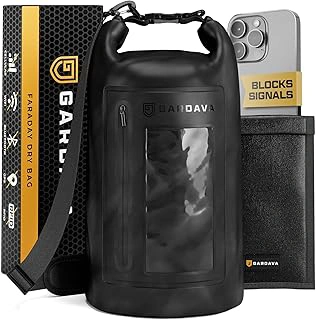
Gardava Large Military Grade Waterproof Faraday Dry Bag for Laptops & Phones
The Gardava Large Military Grade Waterproof Faraday Dry Bag offers the most storage capacity on this list, designed to shield laptops up to the listed size alongside multiple phones or tablets in a single container. The dual-layer shielding fabric blocks incoming and outgoing signals, and users report that calls and texts do not reach sealed devices - a practical confirmation of its signal-attenuation design.
The waterproof roll-top closure borrows from dry-bag construction, creating a seal that protects contents from rain, splashes, and dust. This combination of signal blocking and waterproofing makes it well-suited for emergency kits stored in garages, vehicles, or basements where moisture and EMP vulnerability overlap. The bag's military-grade designation refers to its durable fabric and secure closure rather than a specific military standard.
At $44.99 with a 4.6 out of 5 rating, the Gardava bag balances performance and value for households protecting several high-value electronics at once. The larger interior accommodates a laptop, power bank, charging cables, and backup phones without cramming, which simplifies organization during an emergency.
The tradeoff is size: the bag measures larger than single-device pouches, so it feels bulky if you only need to shield one phone or a small radio. It works best when you want one designated container for your family's critical electronics rather than individual sleeves scattered across drawers. If your priority is protecting multiple devices in one waterproof, signal-blocking package, this bag delivers the capacity and protection to match that need.
- ✅ Fits 15-inch laptop plus multiple phones or tablets
- ✅ Dual-layer shielding fabric blocks calls and texts when sealed
- ✅ Waterproof roll-top closure protects against moisture and dust
- ✅ Durable construction suitable for long-term emergency storage
- ⚠️ Larger size reduces portability for single-device users
- ⚠️ Takes up more space in go-bags compared to smaller pouches
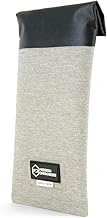
Mission Darkness Dry Shield Slim Waterproof Faraday Phone Sleeve
When bulk and weight matter, the Mission Darkness Dry Shield Slim Waterproof Faraday Phone Sleeve delivers signal-blocking protection in a package small enough for a pocket or glove box. Priced at $38.00 and rated 4.4 out of 5, this sleeve targets users who need EMP shielding for a single smartphone without the bulk of larger multi-device bags.
Mission Darkness builds Faraday products used by law enforcement and forensic teams, where verified signal attenuation is not optional. That reputation carries over to this consumer sleeve, which combines RF-blocking layers with waterproof construction. The slim profile fits most phones while maintaining enough stiffness to protect against minor impacts during transit or storage.
The waterproof seal matters in bug-out scenarios where rain, river crossings, or humid storage threaten electronics. The closure mechanism allows repeated access without degrading the shielding layers, so you can check battery levels or swap devices without committing to a permanent seal.
The tradeoff is capacity. This sleeve holds one phone and nothing else - no spare battery, no wallet, no charging cable. If you need to shield multiple items or larger devices, this is the wrong tool. But for everyday carry, vehicle storage, or a minimalist travel bag where a bulky Faraday cage is impractical, the Dry Shield Slim offers verified protection without the weight penalty.
Use it when portability outweighs the need to store tablets, radios, or accessory packs. The sleeve works well tucked into a backpack side pocket, clipped to a belt loop, or stored in a center console where a rigid box would not fit. It is not a vault, but it is a reliable way to keep one critical device shielded and dry when space is at a premium.
- ✅ Slim profile fits pocket, glove box, or pack side pocket
- ✅ Waterproof construction protects against rain and humidity
- ✅ Mission Darkness brand used in law enforcement and forensic applications
- ✅ Closure allows repeated access without damaging shielding layers
- ⚠️ Limited to phone-sized devices only
- ⚠️ No room for spare battery, wallet, or cables
- ⚠️ Not suitable for tablets or multi-device storage
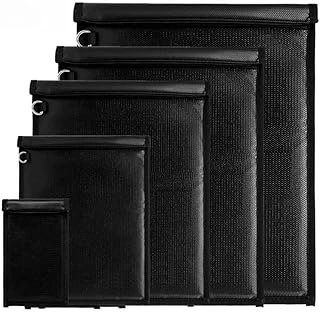
5 Pack Extra Large Fireproof Waterproof EMP Proof Faraday Bags
Households with multiple devices or small 5 Pack Extra Large Fireproof Waterproof EMP Proof Faraday Bags that need to protect backup drives, tablets, and equipment can benefit from a multi-bag approach. This five-pack delivers extra-large capacity at $20.99 total, working out to around the listed cost per bag - significantly lower than buying individual faraday pouches separately.
Each bag includes a fireproof layer in addition to the RF-blocking fabric, a feature not present in either of the previous options. The waterproof construction adds a second layer of environmental protection, making these suitable for storage in basements, vehicle kits, or outdoor caches where moisture and heat are concerns.
The extra-large sizing accommodates tablets, small laptops, portable radios, and external hard drives. The closure mechanism relies on a double roll-and-Velcro system, which provides a secure seal when properly fastened but requires more deliberate handling than a zipper.
The tradeoff is construction weight and consistency. The material feels lighter than the military-grade option, and without the established brand verification that Mission Darkness provides, buyers face some uncertainty around manufacturing tolerances. Customer ratings average 4.4 out of 5, which suggests generally positive performance but not the same level of uniformity you might expect from a more expensive single-bag solution.
This pack works well for families protecting multiple phones and tablets, 5 Pack Extra Large Fireproof Waterproof EMP Proof Faraday Bags creating distributed backups across different locations, or community preparedness groups pooling resources. If you need to shield five to ten devices and want both fire and water resistance alongside EMP protection, the cost-per-bag value here is difficult to match.
- ✅ Five bags for $20.99 total, around $4.20 per bag
- ✅ Extra-large sizing fits tablets, small laptops, and backup drives
- ✅ Fireproof and waterproof layers add environmental protection
- ✅ Practical for families, small businesses, or distributed storage
- ⚠️ Lighter construction than military-grade alternatives
- ⚠️ Less brand verification and testing transparency
- ⚠️ Double roll-and-Velcro closure requires careful sealing
- ⚠️ Potential variability in manufacturing consistency
Key Features to Look for in an EMP-Proof Faraday Bag
- Dual-layer conductive fabric or metal mesh construction for full-spectrum shielding
- Verifiable signal blocking (test with sealed phone - no calls, texts, or GPS should penetrate)
- Waterproof rating with sealed seams and secure closure (roll-top or waterproof zipper)
- Interior dimensions match your largest critical device with room for cables
- Durable outer material resistant to puncture and abrasion during storage or transport
- Transparent construction details from manufacturer (shielding material, attenuation range)
What Faraday Bags Can and Cannot Do
Faraday bags block electromagnetic fields from reaching your electronics when the enclosure is fully sealed. The shielded fabric stops radio signals, WiFi, Bluetooth, and cellular transmissions, which is why phones lose all connectivity inside a properly closed bag. This same shielding reduces the risk of damage from electromagnetic pulses or solar flare-induced geomagnetic currents reaching stored devices.
No consumer faraday bag has been tested against an actual nuclear EMP. The military specifications and real-world conditions of such an event remain theoretical for civilian products. What independent lab testing does measure is signal attenuation across frequency ranges - how many decibels of radio energy the material blocks. Bags with verified attenuation above 60 dB across a wide spectrum offer meaningful isolation under the assumption that shielding radio frequencies correlates with protection from pulse events.
Faraday bags only work when sealed. An open or partially closed bag provides no protection because electromagnetic fields enter through the gap. Velcro closures, roll-top seals, and zipper flaps must be engaged exactly as the manufacturer directs. Punctures, worn seams, or damaged shielding fabric compromise the enclosure.
These bags do not protect against other storage risks. Moisture can still enter through seams over time unless the bag includes a separate waterproof layer. Lithium-ion batteries degrade whether shielded or not, and mechanical shocks or temperature extremes affect electronics regardless of electromagnetic isolation. A faraday bag addresses one specific threat vector.
Effective emergency electronics planning layers multiple strategies. Store duplicate devices in separate locations, keep offline backups of critical data on non-wireless media, and rotate stored batteries before they lose capacity. Faraday bags serve as one component in that broader system, not a standalone solution.
How to Use and Store Your Faraday Bag for Maximum Protection
Proper use starts the moment you place your device inside the bag. Power off your phone, radio, or laptop completely - sleep mode or standby still emits signals that can reduce shielding effectiveness and drain the battery during long-term storage. Remove any protective case that contains metal components, magnets, or battery packs, since these can create unintended pathways for electromagnetic energy.
Seal the bag fully according to the manufacturer's closure system. Roll-top designs require at least three complete folds before engaging the buckle or Velcro, while zippered models need the zipper pulled end-to-end with no gaps at the corners. Even a small opening can compromise the continuous conductive layer that blocks external fields.
Store your sealed Faraday bag in a cool, dry location away from sharp objects, tools, or anything that might puncture the shielding fabric. Avoid placing heavy items on top, which can stress seams and zippers over time. A dedicated shelf in a climate-controlled space works better than a garage or vehicle trunk where temperature swings and moisture can degrade materials.
Keep a small charged battery bank or backup phone inside the bag so your emergency kit is ready without last-minute scrambling. Check the bag every few months for tears, loose stitching, or worn closures, and replace it if the conductive layer shows visible damage or separation from the outer fabric.
Test shielding integrity periodically by sealing your phone inside with the ringer on, then calling it from another device. If it rings or shows the incoming call, the bag's effectiveness has been compromised. A properly functioning Faraday enclosure will block the signal entirely, sending the call straight to voicemail without the phone registering any activity.
Final Verdict: Choosing the Right Faraday Bag for Your Emergency Plan
Choosing the right faraday bag depends on how many devices you need to protect, where you plan to store them, and whether portability matters in your emergency scenario.
The Gardava EMP Defense Bag works best for households storing multiple devices in one secure location. Its large interior fits laptops, tablets, phones, and radios together, and the dual-layer construction with inner wire mesh offers dependable signal blocking. If you value a single well-built solution and don't need to move your protected electronics often, this is the most practical pick.
Mission Darkness faraday bags suit anyone who wants verified brand performance in a compact, portable format. The smaller single-phone size fits in a go-bag or vehicle kit, and the company's lab-tested shielding data provides confidence when verifiable performance matters. This option makes sense if you prioritize mobility or need separate faraday storage for one critical device.
The five-pack fireproof faraday kit delivers the lowest per-bag cost and supports distributed storage strategies. Spread bags across different rooms, vehicles, or cache locations to reduce single-point failure risk. The fireproof liner adds a second layer of protection against structure fires, though signal attenuation consistency varies more than the premium options. Families with multiple members or anyone building layered redundancy will find this approach flexible and budget-friendly.
No faraday bag guarantees protection against every EMP scenario. Variables including pulse intensity, distance from the event, device proximity to the bag's seal, and whether the bag is grounded all influence outcomes. Verified signal blocking during everyday radio-frequency testing suggests the shielding works as intended, but real-world electromagnetic pulse conditions remain unpredictable.
Pair faraday storage with offline backups of critical data, spare charging cables stored inside the bag, and a solar charging panel kept separately. Resilience comes from multiple steps working together, not a single product. Store your faraday bag away from windows and exterior walls when possible, and check the seal integrity every few months to confirm the closure remains tight and the conductive fabric shows no tears or gaps.